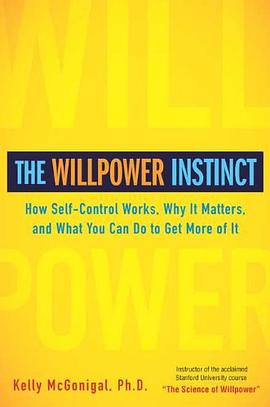
[美国] 凯利·麦格尼格尔
publishing house:
Avery
2011
other title:
The Willpower Instinct: How Self-Control Works, Why It Matters, and What You Can Do to Get More of It
Based on Stanford University psychologist Kelly McGonigal's wildly popular course "The Science of Willpower," The Willpower Instinct is the first book to explain the science of self-control and how it can be harnessed to improve our health, happiness, and productivity.
Informed by the latest research and combining cutting-edge insights from psychology, economics, neuroscience, and medicine, The Willpower Instinct explains exactly what willpower is, how it works, and why it matters. For example, readers will learn:
• Willpower is a mind-body response, not a virtue. It is a biological function that can be improved through mindfulness, exercise, nutrition, and sleep.
• Willpower is not an unlimited resource. Too much self-control can actually be bad for your health.
• Temptation and stress hijack the brain's systems of self-control, but the brain can be trained for greater willpower
• Guilt and shame over your setbacks lead to giving in again, but self-forgiveness and self-compassion boost self-control.
• Giving up control is sometimes the only way to gain self-control.
• Willpower failures are contagious-you can catch the desire to overspend or overeat from your friends-but you can also catch self-control from the right role models.
In the groundbreaking tradition of Getting Things Done, The Willpower Instinct combines life-changing prescriptive advice and complementary exercises to help readers with goals ranging from losing weight to more patient parenting, less procrastination, better health, and greater productivity at work.
Kelly McGonigal, Ph.D., is an award-winning psychology instructor at Stanford University, and a lecturer and program developer at the Stanford Center for Compassion and Altruism Research and Education. She is also the author of
The Joy of Movement,
The Upside of Stress, and
Yoga for Pain Relief. McGonigal lives in the San Francisco Bay Area.