
English

The Great Gatsby
Douban
[美] F·Scott Fitzgerald
publishing house:
Wordsworth Editions Limited
1993
Generally considered to be F. Scott Fitzgerald's finest novel, The Great Gatsby is a consummate summary of the 'roaring twenties' and a devastating expose of the 'Jazz Age'. Through the narration of Nick Carraway, the reader is taken into the superficially glittering world of the mansions which lined the Long Island shore of the American seaboard in the 1920s, to encounter Nick's cousin Daisy, Jay Gatsby and the dark mystery which surrounds him. The Great Gatsby is an undisputed classic of American literature from the period following the First World War and is one of the great novels of the twentieth century.
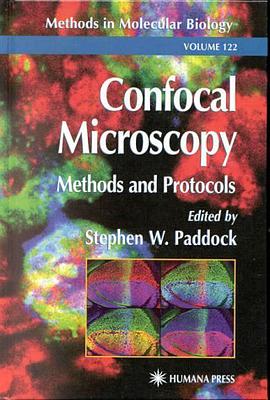
Confocal Microscopy Methods and Protocols (Methods in Molecular Biology)
Douban
Paddock, Stephen W. 编
publishing house:
Humana Press
1999
- 1
Stephen Paddock and a highly skilled panel of experts lead the researcher using confocal techniques from the bench top, through the imaging process, to the journal page. They concisely describe all the key stages of confocal imaging-from tissue sampling methods, through the staining process, to the manipulation, presentation, and publication of the realized image. Written in a user-friendly, nontechnical style, the methods specifically cover most of the commonly used model organisms: worms, sea urchins, flies, plants, yeast, frogs, and zebrafish. The powerful hands-on methods collected here will help even the novice to produce first-class cover-quality confocal images.
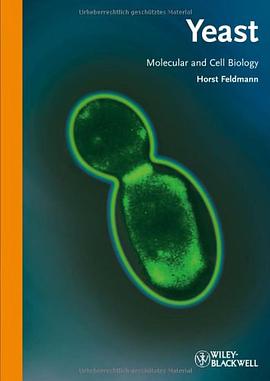
Yeast
Douban
Feldmann, Horst
2010
- 1
“... This book provides the essentials in a simple and easy to understand way, suitable for use as a primer for researchers new to this highly studied microbe, especially if coming to yeast from another organism... very well referenced, providing both classic seminal studies as well as more recent publications, making it a useful text for those starting out in the field...” – Phenotype, 2010 Yeast is one of the oldest domesticated organisms and has both industrial and domestic applications. In addition, it is very widely used as a eukaryotic model organism in biological research and has offered valuable knowledge of genetics and basic cellular processes. In fact, studies in yeast have offered insight in mechanisms underlying ageing and diseases such as Alzheimers, Parkinsons and cancer. Yeast is also widely used in the lab as a tool for many technologies such as two-hybrid analysis, high throughput protein purification and localization and gene expression profiling. The broad range of uses and applications of this organism undoubtedly shows that it is invalubale in research, technology and industry. This book is an up-to date resource providing a comprehensive account of yeast biology and its use as a tool and model organism for understanding cellular and molecular processes of eukaryotes. Topics covered range from the fundamentals of yeast biology such as cell structure, biochemistry, genetics and signaling, to current approaches and applications such as metabolomics, disease models and uses in biotechnology. Written by a top expert in the field, this book offers an invaluable companion to beginners and experts in yeast research.
The Body in the Library
Douban
[英] 阿加莎·克里斯蒂
publishing house:
New Amer Library
2000
- 1
A beautiful, but dead, blonde is discovered in the library of Gossington Hall. And only Miss Marple can read the clues to find the killer.
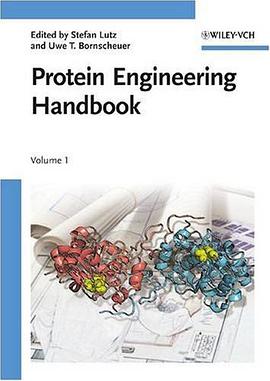
Protein Engineering Handbook
Douban
Lutz, Stefan/ Bornscheuer, Uwe Theo
publishing house:
BERTRAMS
2009
- 1
Unparalleled in size and scope, this new major reference integrates academic and industrial knowledge into a single resource, allowing for a unique overview of the entire field. Adopting a systematic and practice-oriented approach, and including a wide range of technical and methodological information, this highly accessible handbook is an invaluable 'toolbox' for any bioengineer. In two massive volumes, it covers the full spectrum of current concepts, methods and application areas.
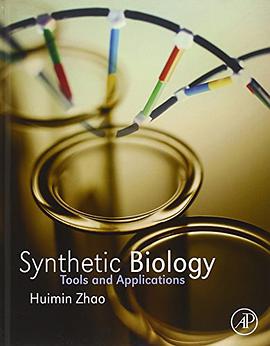
Synthetic Biology
Douban
Zhao, Huimin 编
publishing house:
Academic Press
2013
- 6
Synthetic Biology provides a framework to examine key enabling components in the emerging area of synthetic biology. Chapters contributed by leaders in the field address tools and methodologies developed for engineering biological systems at many levels, including molecular, pathway, network, whole cell, and multi-cell levels. The book highlights exciting practical applications of synthetic biology such as microbial production of biofuels and drugs, artificial cells, synthetic viruses, and artificial photosynthesis. The roles of computers and computational design are discussed, as well as future prospects in the field, including cell-free synthetic biology and engineering synthetic ecosystems. Synthetic biology is the design and construction of new biological entities, such as enzymes, genetic circuits, and cells, or the redesign of existing biological systems. It builds on the advances in molecular, cell, and systems biology and seeks to transform biology in the same way that synthesis transformed chemistry and integrated circuit design transformed computing. The element that distinguishes synthetic biology from traditional molecular and cellular biology is the focus on the design and construction of core components that can be modeled, understood, and tuned to meet specific performance criteria and the assembly of these smaller parts and devices into larger integrated systems that solve specific biotechnology problems. It includes contributions from leaders in the field presents examples of ambitious synthetic biology efforts including creation of artificial cells from scratch, cell-free synthesis of chemicals, fuels, and proteins, engineering of artificial photosynthesis for biofuels production, and creation of unnatural living organisms. It describes the latest state-of-the-art tools developed for low-cost synthesis of ever-increasing sizes of DNA and efficient modification of proteins, pathways, and genomes. It highlights key technologies for analyzing biological systems at the genomic, proteomic, and metabolomic levels which are especially valuable in pathway, whole cell, and multi-cell applications. It details mathematical modeling tools and computational tools which can dramatically increase the speed of the design process as well as reduce the cost of development.

Molecular Genetics
Douban
Gunther S. Stent
/
Richard Calendar
publishing house:
W.H.Freeman & Co Ltd; 2nd Revised edition edition
1978
- 9

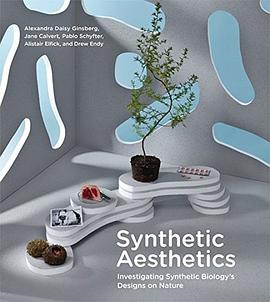
Synthetic Aesthetics
Douban
Alexandra Daisy Ginsberg
/
Jane Calvert
…
publishing house:
The MIT Press
2014
- 2
As synthetic biology transforms living matter into a medium for making, what is the role of design and its associated values?
Synthetic biology manipulates the stuff of life. For synthetic biologists, living matter is programmable material. In search of carbon-neutral fuels, sustainable manufacturing techniques, and innovative drugs, these researchers aim to redesign existing organisms and even construct completely novel biological entities. Some synthetic biologists see themselves as designers, inventing new products and applications. But if biology is viewed as a malleable, engineerable, designable medium, what is the role of design and how will its values apply?
Review
Far from an ivory tower text, Synthetic Aesthetics is a true collaboration between scientists, designers and thinkers who cross borders and disciplines to test the limits of biology in the digital world. Can bacteria be programmed to alert you when you're ill? Will we one day devise a synthetic organism that can suck up pollution in the wild? Is it possible to decentralise the petrochemical industry and distribute production and power? How long until machines take on lives of their own? Sooner than most of us imagine, it seems. By joining forces, the authors are able to bring disparate theories into the world, closer to life and into language even the laymen can understand.—Wallpaper—
Synthetic Aesthetics…is a freewheeling book with 20 authors and may irritate conventional scientists—some of the ideas were dreamed up while 'performing a dance based on the myth of the Golem', for example. But it certainly explains the key ideas of the field and leads you to many lateral conversations about what it may become. In the first few chapters, one central concern is what is meant by 'design'. An engineer might think of designing a bridge to a particular specification; a synthetic biologist of designing a microorganism with a new commercial application, pumping out green gasoline for example; but a real designer, a fashion designer, for example, is doing something else. As artist Daisy Ginsberg puts it, design 'is about possibility', the unimagined things that life could be. Synthetic biology, she writes, has been addressing 'humanity's needs'—limitless fuel, for example—rather than 'our needs as individual, diverse and complex humans'. This is refreshing: worries about the separation between the top-down design of the future and those who must live with the designs are quite rare in science.
—New Scientist—
Synthetic Aesthetics is wise in not attempting a comprehensive survey of this fast changing and much contested industry, but by taking a collaborative approach that attempts to integrate design based questioning with scientific practice, it provides lots of juicy clues about where we could be headed.
—PostMatter—
Review
Just as post-war designers Ray and Charles Eames showed us how molded plywood techniques for building airplane wings could result in unexpected, and now timeless, pieces of furniture, artists and designers like Daisy Ginsberg are showing us how bacteria and other biological building blocks may give us entree to an entirely new species of experiences.
―John Maeda, Design Partner, Kleiner Perkins Caufield & Byers

Sad Cypress
Douban GoodreadsAs a condemned murderess stands before the court, her eyes meet those of the only man who believes in her innocence. But Hercule Poirot must prove it before it's too late.


Introduction to Genomics
Douban
Lesk, Arthur M.
2012
- 4
Our genome is the blueprint to our existence: it encodes all the information we need to develop from a single cell into a hugely complicated functional organism. But it is more than a static information store: our genome is a dynamic, tightly-regulated collection of genes, which switch on and off in many combinations to give the variety of cells from which our bodies are formed. But how do we identify the genes that make up our genome? How do we determine their function? And how do different genes form the regulatory networks that direct the processes of life? Introduction to Genomics is a fascinating insight into what can be revealed from the study of genomes: how organisms differ or match; how different organisms evolved; how the genome is constructed and how it operates; and what our understanding of genomics means in terms of our future health and wellbeing. Covering the latest techniques that enable us to study the genome in ever-increasing detail, the book explores what the genome tells us about life at the level of the molecule, the cell, and the organism. Learning features throughout make this book the ideal teaching and learning tool: extensive end of chapter exercises and problems help the student to fully grasp the concepts being presented, while end of chapter weblems (web-based problems) and lab assignments give the student the opportunity to engage with the subject in a hands-on manner. The field of genomics is enabling us to analyze life in more detail than ever before; Introduction to Genomics is the perfect guide to this enthralling subject. Online Resource Centre The Online Resource Centre to accompany Introduction to Genomics features For lecturers: Figures from the book in electronic format For students: Answers to end-of-chapter exercises Guided tour of web sites in genomics Hints to end-of-chapter problems Rotating figures

Comparative Genomics
Douban
Nadeau, Joseph H.; Sankoff, David; Nadeau, J. H.
2000
- 9
A comprehensive account of genomic rearrangement, focusing on the mechanisms of inversion, translocation, gene and genome duplication and gene transfer and on the patterns that result from them in comparative maps. Includes analyses of genomic sequences in organelles, prokaryotes and eukaryotes as well as comparative maps of the nuclear genomes in higher plants and animals. The book showcases a variety of algorithmic and statistical approaches to rearrangement and map data.
Directed Evolution Library Creation
Douban
Georgiou, George 编
publishing house:
Humana Pr Inc
A comprehensive compendium of cutting-edge protocols for the generation of molecular diversity. Described in step-by-step detail to ensure experimental success, these protocols include readily reproducible methods for random mutagenesis of entire genes or segments of genes, for homologous and nonhomologus recombination, and for constructing in vivo libraries in bacteria and yeast. In addition to the various protocols for creating libraries, this volume also describes ways to analyze libraries, particularly those made by recombination. An accompanying volume, Directed Enzyme Evolution: Screening and Selection Methods (ISBN: 1-58829-286-X), is devoted entirely to selection and screening methods that can be applied to the directed evolution of enzymes. Copy for Both VolumesDirected Evolution Library Creation: Methods and Protocols and Directed Enzyme Evolution: Screening and Selection Methods constitute an extraordinary collection of all the key methods used today for directed evolution research. Described in step-by-step detail to ensure robust experimental results, these methods will enable both newcomers and more experienced investigators to design and implement directed evolution strategies for the engineering of novel proteins. The first volume describes methods for the creation of mutated DNA molecules, or DNA libraries, encoding variants of desired proteins. The second volume describes methods for screening DNA libraries to isolate mutant proteins that exhibit a specified function.

Guide to Yeast Genetics and Molecular Cell Biology
Douban
Guthrie, Christine (EDT)/ Fink, Gerald R. (EDT)
publishing house:
Lightning Source Inc
2002
- 6
This volume and its companion, Volume 351, are specifically designed to meet the needs of graduate students and postdoctoral students as well as researchers, by providing all the up-to-date methods necessary to study genes in yeast. Procedures are included that enable newcomers to set up a yeast laboratory and to master basic manipulations. Relevant background and reference information given for procedures can be used as a guide to developing protocols in a number of disciplines. Specific topics addressed in this book include basic techniques, making mutants, genomics, and proteomics.


The Da Vinci Code
DoubanRobert Langdon, Harvard Professor of symbology, receives an urgent late-night call while in Paris: the curator of the Louvre has been murdered. Alongside the body is a series of baffling ciphers. Langdon and a gifted French cryptologist, Sophie Neveu, are stunned to find a trail that leads to the works of Da Vinci – and further. The curator, part of a secret society named the Priory of Sion, may have sacrificed his life to keep secret the location of a vastly important religious relic hidden for centuries. It appears that the clandestine Vatican-sanctioned Catholic sect Opus Dei has now made its move. Unless Landon and Neveu can decipher the labyrinthine code and quickly assemble the pieces of the puzzle, the Priory’s secret – and a stunning historical truth – will be lost forever.