身体
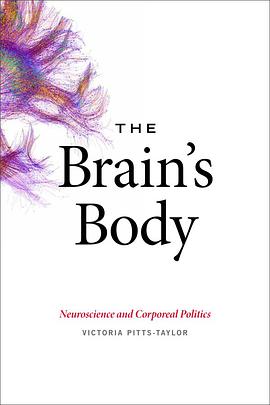
The Brain′s Body Douban
author: Victoria Pitts-Taylor publishing house: Duke University Press 2016 - 3
In The Brain's Body Victoria Pitts-Taylor brings feminist and critical theory to bear on new development in neuroscience to demonstrate how power and inequality are materially and symbolically entangled with neurobiological bodies. Pitts-Taylor is interested in how the brain interacts with and is impacted by social structures, especially in regard to race, class, gender, sexuality, and disability, as well as how those social structures shape neuroscientific knowledge. Pointing out that some brain scientists have not fully abandoned reductionist or determinist explanations of neurobiology, Pitts-Taylor moves beyond debates over nature and nurture to address the politics of plastic, biosocial brains. She highlights the potential of research into poverty's effects on the brain to reinforce certain notions of poor subjects and to justify particular forms of governance, while her queer critique of kinship research demonstrates the limitations of hypotheses based on heteronormative assumptions. In her exploration of the embodied mind and the "embrained" body, Pitts-Taylor highlights the inextricability of nature and culture and shows why using feminist and queer thought is essential to understanding the biosociality of the brain.

生命政治的诞生 Douban Eggplant.place
Naissance de la biopolitique
★ 8.0 (6 ratings) author: [法] 米歇尔·福柯 translator: 莫伟民 / 赵伟 publishing house: 上海人民出版社 2011 - 8
作者1978-1979年的演讲。本书分析了市民社会相对于社会治理的多重角色,它既相对自主,同时又是治理干预的对象。由此,市民社会决不是国家的对立面,而是自由治理的相关物。
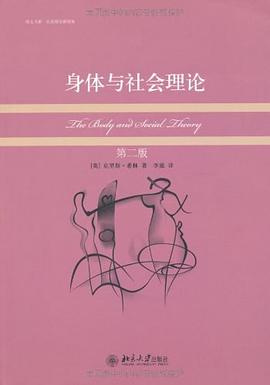
身体与社会理论(第二版) Douban BooksTW
Body and social theory
★ 8.7 (6 ratings) author: [英] 克里斯·希林 translator: 李康 publishing house: 北京大学出版社 2010 - 9 other title: 身體與社會理論
《身体与社会理论(第2版)》内容简介:在当代消费社会,身体越来越成为现代人自我认同的核心,身体问题在西方社会文化理论中正在变得越来越重要,作为西方身体社会学领域的一本代表作,《身体与社会理论(第2版)》纵览该研究领域诸多研究路径的长短优劣,全面展现各路发展如何推动身体成为突破场所,探寻晚近来自女性主义、现象学、行动导向思路的身体研究,考察“身体规划”、“身体面具”和“身体潜势”等方面最新论述,分析身体与自我认同之间关系,提出了整合论的身体观,对国内相关领域研究具有较大参考与启发价值。
身体与社会 Douban
author: 【英】布莱恩·特纳(Bryan S. Turner) translator: 马海良 / 赵国新 publishing house: 春风文艺出版社 2000 - 3
简介

《身体与社会》初版于1984年,你现在看到的是该书的第二个版本。此书的作者布莱恩.特纳把关于身体的研究从最基础的医学身体层面上升到精神身体的层面。正如作者在第二版序言里所述:“随着《身体与社会》第二版的出版,应该及时思考人文学科及社会学科中对人类身体与体现(embodiment)进行艺术再现这个问题。”为了达到这一目的,作者充分运用了其广博的知识,从梅洛.庞蒂的以身体为基础的存在现象学到弗洛伊德的精神分析学,从社会学到女性主义,都为作者提供了理论源泉。全书共分十章,从医学、社会学、宗教学、伦理学的观点讨论了包括厌食症和恐旷症的历史,对基督教对待人类性事的态度的批判以及人的身体在游戏和欲望中的作用等具体问题。除此之外,作者还提出了身体社会学家们在未来的研究课题以及应该优先考虑的一些主题。

序言

《身体与社会》一书综合了社会学、文化人类学、精神分析学、女性主义等领域的研究成果,糅合了梅洛.庞蒂、费尔巴哈、青年马克思、福柯、弗洛伊德等大师的理论,力图把身体的研究从简单的肉体层次提高到更高的层面。

内容摘要

身体问题处于社会理论的重要问题的交接点上。自从新康德主义运动以来,社会学的认识论问题集中在人类在自然和文化中的双重成员身份(the dual membe hi)上。人的身体屈从于诞生、衰弱和死亡等过程,但是源于身体在自然界中的存在的这些过程也是位于文化信仰、符号和实践世界中的“有意义的”事件。在个体层面上,我的身体是被体验的一种极限环境,但是我们的意识也表现我既拥有身体,又是身体。这种区分的部分内容可以通过疾病和病痛之间的差异加以说明。我们可能称一个患股骨头坏死的人患有股骨变性,在这种情况下,股骨生病(diseased)但未有病感(sick)。类似地我们可以说苹果生病,但不能说它感到病痛(ill)。“病痛”(illness)和“病感”(sickness)这样的概念是用于描述个人的状况的社会一文化范畴而不是描述人的肌肉、骨骼和神经。疾病不是一种社会角色,但它使得将“病感角色”看做带有适宜行为标准闭社会立场变得有意义(Parsons,1951)。由此可认为我不但感到病痛(illnes),而且我“做”怕(do)或表现出我的病痛,这似乎言之成理。对笛卡见主义进行的现象学批判的价值在于表明意识是体现的也是意向性的。

在社会学看来,现象学的局限性是由它对我的身体和他者的身体的排他性的关注所决定的。身体总是由社会形成并由社会定位的。如何做男人或女人是一种社会界定,因为生理学总是以文化为中介的。正如福柯(1980b)所表明的那样,拥有一个“真正”的性属是医学/文化实践的产物,就阴阳人而言,医学/文化实践排除了拥有两性身份的可能性。“畸形”也是由社会建构的(Howell and Ford,1980)。

尽管从真正的现象学意义上说,我们拥有对我们身体的统治权,但是在人口的社会再生产屈从于制度的约束(“乱伦禁忌”)。权力(父权制的形式)、意识形态(欲望与理性的对比)和经济(要求通过家庭、典型地以长子继承制形式稳定地分配财产)意义上而言,这绝不是在真正社会性的。在传统上,社会是在老人统治/父权制结合的情况下组织起来的,其中臣属门的性行为受到上帝、国王、教士和丈夫组成的集体的约束。因此,身体问题不仅仅是认识论和现象学问题,也是有关权幻、意识形态和经济学的争论的理论定位。
文化、技术与社会中的身体 Douban
The Body in Culture, Technology and Society
author: 【英】克里斯·希林 translator: 李康 publishing house: 北京大学出版社 2011 - 1
本书概述了身体研究领域的最新进展,提出创新框架来分析具身体现,融贯了有关该主题的古典探讨与当代研究,力主将身体解读为社会之构成过程中的多维中介;并在此基础上铺陈一系列具体分析,从经济、文化、社交、工作到运动、音乐、技术,将身体与多个领域联系到一起,为研究者聚焦主题,引初学者进入殿堂。
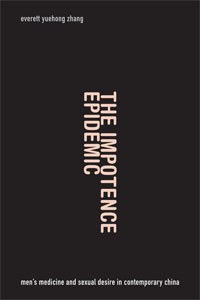
The Impotence Epidemic Douban
author: Everett Yuehong Zhang publishing house: Duke University Press Books 2015 - 3
Since the 1990s China has seen a dramatic increase in the number of men seeking treatment for impotence. Everett Yuehong Zhang argues in The Impotence Epidemic that this trend represents changing public attitudes about sexuality in an increasingly globalized China. In this ethnography he shifts discussions of impotence as a purely neurovascular phenomenon to a social one. Zhang contextualizes impotence within the social changes brought by recent economic reform and through the production of various desires in post-Maoist China. Based on interviews with 350 men and their partners from Beijing and Chengdu, and concerned with de-mystifying and de-stigmatizing impotence, Zhang suggests that the impotence epidemic represents not just trauma and suffering, but also a contagion of individualized desire and an affirmation for living a full life. For Zhang, studying male impotence in China is one way to comprehend the unique experience of Chinese modernity.
Jan. 31, 2018 read
和想象的方向不太一样(完全没怎么涉及老中医啦莆田系啦什么的),但还挺扎实有意思的。。作者前面提到定性定量都用来人,可后面怎么也没展示出来。。
人类学 中国 性别研究 身体