技术史
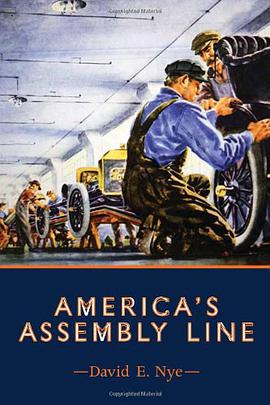
America's Assembly Line
Douban
David E. Nye publishing house: MIT Press 2013 - 2
The assembly line was invented in 1913 and has been in continuous operation ever since. It is the most familiar form of mass production. Both praised as a boon to workers and condemned for exploiting them, it has been celebrated and satirized. (We can still picture Chaplin's little tramp trying to keep up with a factory conveyor belt.) In America's Assembly Line, David Nye examines the industrial innovation that made the United States productive and wealthy in the twentieth century. The assembly line -- developed at the Ford Motor Company in 1913 for the mass production of Model Ts -- first created and then served an expanding mass market. It inspired fiction, paintings, photographs, comedy, cafeteria layouts, and cookie-cutter suburban housing. It also transformed industrial labor and provoked strikes and union drives. During World War II and the Cold War, it was often seen as a bastion of liberty and capitalism. By 1980, Japan had reinvented the assembly line as a system of "lean manufacturing"; American industry reluctantly adopted this new approach. Nye describes this evolution and the new global landscape of increasingly automated factories, with fewer industrial jobs in America and questionable working conditions in developing countries. A century after Ford's pioneering innovation, the assembly line continues to evolve toward more sustainable manufacturing.
Read
Jan. 28, 2022
非常值得推荐。对于工业大生产的剖析非常透,当然,正如书的主题所说,主要围绕福特制和汽车行业展开,我个人感觉其代表性足够了。从历史的角度看,美国式的大规模理性化流水线其实挺短命的──依赖于卖方市场和廉价能源,这两个条件成立的时间可以自己算算。一旦跳出耐用品市场,在消费品领域便竞争不过欧洲、日本以及后来的中国。至于为什么如此,书里还有详细描述。
历史 技术史 经济史 职业社会学 美国
Track Changes
Douban Skybridge
Matthew G. Kirschenbaum publishing house: Belknap Press 2016 - 5 other title: Track Changes: A Literary History of Word Processing
The story of writing in the digital age is every bit as messy as the ink-stained rags that littered the floor of Gutenberg’s print shop or the hot molten lead of the Linotype machine. During the period of the pivotal growth and widespread adoption of word processing as a writing technology, some authors embraced it as a marvel while others decried it as the death of literature. The product of years of archival research and numerous interviews conducted by the author, Track Changes is the first literary history of word processing. Matthew Kirschenbaum examines how the interests and ideals of creative authorship came to coexist with the computer revolution. Who were the first adopters? What kind of anxieties did they share? Was word processing perceived as just a better typewriter or something more? How did it change our understanding of writing? Track Changes balances the stories of individual writers with a consideration of how the seemingly ineffable act of writing is always grounded in particular instruments and media, from quills to keyboards. Along the way, we discover the candidates for the first novel written on a word processor, explore the surprisingly varied reasons why writers of both popular and serious literature adopted the technology, trace the spread of new metaphors and ideas from word processing in fiction and poetry, and consider the fate of literary scholarship and memory in an era when the final remnants of authorship may consist of folders on a hard drive or documents in the cloud.
Read
May 1, 2023
文字处理系统在文学领域内的历史。从1964年IBM MT/ST写起,到Apple II时代。例子五花八门很多,也很有趣(作者是个科幻迷,有作家登场)。核心是一部关于界面的技术史,改变我们与「书写」的关系。The technological regime is writing’s interface, by which I mean not only what is literally depicted on a screen (menus, icons) but also an interface in the fuller sense of a complete, embodied relationship between a writer and writing materials.
技术史