行为经济学
Picoeconomics
Douban
Ainslie, George 2010 - 11
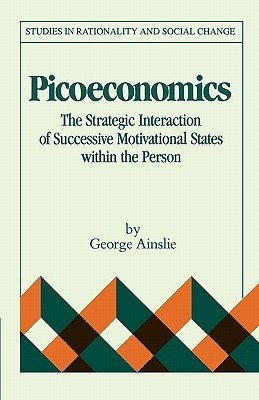
Originally published in 1992, this book examines an elementary human paradox: that we are endangered by our own wishes; or, as Oscar Wilde put it, 'When the gods want to punish us they answer our prayers.' Even though this observation is ancient and confirmed by wide experience, none of the disciplines that deal with decision making explain it adequately. Dr. Ainslie uses findings from behavioral experiments to show that there is a basic tendency for humans to form temporary preferences for the poorer but earlier of two goals, when the poorer goal is closer at hand. The implications provide a rationale for puzzling behavior, from Frued's defense mechanism to the force of willpower, as well as conspicuous failures of willpower in addictions and other psychiatric disorders. This approach also sheds light on subjects that have been controversial in moral philosophy: weakness of will, self-deception, freedom, and responsibility.
how change happens
Douban
Cass R. Sunstein publishing house: The MIT Press
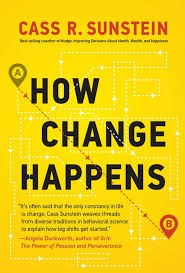
The different ways that social change happens, from unleashing to nudging to social cascades. "Sunstein's book is illuminating because it puts norms at the center of how we think about change."—David Brooks, The New York Times How does social change happen? When do social movements take off? Sexual harassment was once something that women had to endure; now a movement has risen up against it. White nationalist sentiments, on the other hand, were largely kept out of mainstream discourse; now there is no shortage of media outlets for them. In this book, with the help of behavioral economics, psychology, and other fields, Cass Sunstein casts a bright new light on how change happens. Sunstein focuses on the crucial role of social norms—and on their frequent collapse. When norms lead people to silence themselves, even an unpopular status quo can persist. Then one day, someone challenges the norm—a child who exclaims that the emperor has no clothes; a woman who says “me too.” Sometimes suppressed outrage is unleashed, and long-standing practices fall. Sometimes change is more gradual, as “nudges” help produce new and different decisions—apps that count calories; texted reminders of deadlines; automatic enrollment in green energy or pension plans. Sunstein explores what kinds of nudges are effective and shows why nudges sometimes give way to bans and mandates. Finally, he considers social divisions, social cascades, and “partyism,” when identification with a political party creates a strong bias against all members of an opposing party—which can both fuel and block social change.