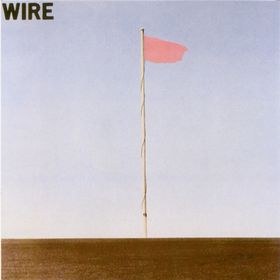
Wire
10:20
Douban
Wire
release date 2020-06-19 publisher: Pink Flag
When Wire play live there are different three classes of pieces that are performed, new songs, old songs and “new old” songs. The latter often involves taking something that existed on a previous release and re-working it, very often evolving a stage highlight from it. There are also pieces that have never seen a major release but for some reason never fitted on an album. The best of these ideas were recorded in two sessions - one relating to Red Barked Tree but recorded in 2010 and another relating to Wire’s album Mind Hive released in 2020. Incidentally celebrating the decade Matt Simms has been with the band. The album divides in to two halves - the 2010 side and the 2020 side - hence the title. - 10:20
Mind Hive
Douban
Wire genre: Rock
release date 2020-01-24 publisher: Pink Flag
Wire exhibit little inclination to look back - rather they remain resolutely focused on producing music that is smart, vital and defiantly modern. Mind Hive is the group’s first newly recorded material since 2017’s 'Silver/Lead'. That album garnered rave reviews. Yet, if 'Silver/Lead' set the bar pretty high, Mind Hive seems to have no problem vaulting over it. Talking track by track ..... 'Be Like Them' is a super-angular composition, utilising a recently rediscovered Wire lyric from 1977. Colin Newman and Matthew Simms’ guitars constantly mesh and diverge, whilst the rhythm section ensures the song prowls forward with an unstoppable menace. 'Cactused' is the first of Mind Hive’s pop moments. The vocal is wide eyed and wired, with effects-heavy guitar work creating a bright web of noise, with the song’s stop/start moments providing a series of precise energy bursts. 'Primed And Ready' rides out on a tightly pulsing synth sequence punctuated by icy slivers of guitar. This is Wire at their most compressed yet propulsive. 'Off The Beach' is another prime pop song. With its breezy, optimistic melody, and blend of electric and acoustic guitars, the song initially sees the group seemingly celebrating the joys of everyday life but things are destined to turn a shade stranger. 'Unrepentant' explores the kind of bucolic soundscape early Pink Floyd would have been proud to call their own. Boasting one of the album’s finest texts, the song radiates out into a shimmering sonic heat haze. 'Shadows' pulls the classic Wire trick of placing a dark and cruel lyric in a musical setting of tender beauty. Never has the recounting of atrocity been so seductively pitched. 'Oklahoma' is the muscular and dramatic joker in the pack. Lewis’ dark vocal swims through a rich compound of guitar textures and synth tones, building into a masterclass of tension and release. 'Hung' is the album’s centrepiece. This 8-minute excursion matches a brief but evocative lyric with a dense, mesmeric guitar grind. Simms and Newman’s keyboards add a plaintive note, as the song moves through a series of sections, each with its own distinct atmosphere. 'Humming' is a beat-less autumnal drift, fashioned from delicate keyboard textures and rich soaring guitar tones. Newman delivers a state of the world lyric with a touching sense of innocence, whilst the piece ends with Lewis’ husky baritone listing locations and their difficult associations. An elegiac end to a supremely confident album. 'Mind Hive' arrives at a time when Wire are being cited as an influence by yet another generation of bands. A career spanning feature documentary called 'People in a Film' is due for release late 2020. Quite how a group that has been operating for such a long period is still able to produce such exciting and essential work is difficult to understand. And yet here we are.
Nocturnal Koreans
Douban
Wire genre: Rock
release date 2016-04-22 publisher: Pink Flag
Having completed a preliminary round of work on their eponymous 2015 album at Rockfield Studios, Wire found themselves with 19 tracks. Among them, there was a critical mass of 11 aesthetically unified songs. In typical Wire fashion, however, the remaining material was something other: it had the sound of a band already moving in a different direction, beyond the album project in which they were engaged at that time. These tracks were the basis for Nocturnal Koreans. The difference between the two clusters of work birthed at Rockfield has its roots in discrete approaches to the studio process itself. “The WIRE album was quite respectful of the band,” explains Colin Newman, “and Nocturnal Koreans is less respectful of the band—or, more accurately, it's the band being less respectful to itself—in that it's more created in the studio, rather than recorded basically as the band played it, which was mostly the case with WIRE. A general rule for this record was: any trickery is fair game, if it makes it sound better.” Nocturnal Koreans emphasises studio construction over authentic performance, using the recording environment as an instrument, not just as a simple means of capturing Wire playing. After Rockfield, the band reconvened at Brighton Electric studios to contribute additional parts, and the work was then further honed and developed by Newman at Swim studio. Although it's become de rigueur to talk about Wire's capacity for self-reinvention, that's never the whole story. Certainly, the impulse to pursue fresh ideas with each phase of work is buried deep in their artistic DNA, but they've balanced that commitment to the new with a core character and attitude that's always at some level recognisable as Wire—without being reducible to a formulaic sound. It's this enduring dialectic that gives Wire their unique status as a long-established band that continues to forge ahead with original music: always unmistakably Wire but always reimagined and reframed with each successive project. The tracks “Internal Exile” and “Numbered” encapsulate this dynamic. The latter kicks off in vintage Wire mode with rigid, staccato insistence, but quickly moves through the gears to motor forward on a neo-kosmische glide driven by guitar arpeggios and Harmonia-esque synth. There's a key, of sorts, in the lyrics: Newman playfully gestures to past glories (“You think I'm a number / Still willing to rhumba”) but refuses to rest on them for an instant (“As if I care”). The synthetic, waltzing gait of “Internal Exile” channels the spirit of underappreciated '80s Wire (think: “The Queen of Ur and the King of Um”), but relocates it in a broader organic landscape, intriguingly fleshed out with Matthew Simms's lap-steel guitar and, for the first time in Wire's history, trumpet. Here, the band looks backwards and forwards simultaneously, all the while managing to avoid joining “the queue of future has-beens” mentioned in Graham Lewis's lyric. Nocturnal Koreans is striking in its diversity, the band fluently negotiating an expansive stylistic range, from immensely catchy pop to ambient introspection and beyond. Chronicling a sleepless night that Wire spent in a seedy Boston-area hotel on their 2013 US tour, the title track is the kind of charging, urgent tune that's always been Newman's forte. Lewis's lyrics make this one of Simms's favourites on the record, largely because of the associated memories: “It's a great snapshot of touring America, and when I hear or play that song, it reminds me of the many weird and wonderful times, places and people that cross your path.” Wire aren't exactly famous for thumping-great major-chord anthems, but “Still” is just that. “Graham hated it,” says Newman, “because it's all major chords. I'd in fact used them quite deliberately. I was thinking about ‘Map Ref.'—which is all major chords—and how most of my songs have minor chords in them, or even weirdo chords, jazz chords. So this was like making a song with an almost bog-standard riff: there's a billion records with that chord sequence.” The wide-screen scope of “Still,” which sounds massive despite its sub-three minute duration, comes down to Newman's production choices, starting with Robert Grey's drums: “We had Rob re-record his parts on everything through a mini-disc to create another layer of drums and ambience squashed with compression, so it sounds more lively and distorted and a bit more modern. You could accuse us of being fashion-conscious, but your records have to live in the world with lots of other releases, and you can't sound a bit old-fashioned. So, on ‘Still' we made the drums heavier and then the guitars heavier, with some synth underneath doing the same chords, so you end up with this big, rolling sound.” At the other end of the spectrum is the beatless “Forward Position,” an austere psychodrama of drones, lap steel and spectral ambience. Despite its quiet fragility, it bristles with icy tension, amplified by reportage-style lyrics that seem to fuse personal trauma and the landscape of war, with Newman intoning the unsettling threat-cum-statement, “I am black box, I remember / Every promise that you broke.” Compared with the other tracks, this is the album's equivalent of a prog-rock epic, clocking in at just under five minutes: “There's a ridiculously compressed timescale on these tracks,” laughs Newman. “Look at the length of them: the longest one's only 3:30, and most of them are short enough to be pop singles, except ‘Forward Position'—it's too long, and it's not cheerful enough for radio.” No Wire album would be truly complete without a Graham Lewis lead vocal, and the closing “Fishes Bones” doesn't disappoint. Just when you think Lewis isn't going to show up—after seven tracks on which Newman sings lead—it's as if the studio door has been kicked open and there he is, a deranged thespian delivering a disciplined-yet-unhinged stream-of-consciousness slam to a driving, increasingly chaotic accompaniment. Simms found this track liberating, as it opened up creative space for the band members to express themselves: “Recording ‘Fishes Bones' in Rockfield was exciting to me as it's the only song for those sessions that was able to be approached differently, in that it was written as a band and Graham added the vocals later the same evening. I think it contains aspects of the interesting identity of each musician in Wire and presents them together in an unusual way, the result of which I like a lot.” It's been almost a decade since Wire reemerged from their post-Send hiatus, during which—not for the first time in its history—the band appeared to have run its course; in the intervening years, over four albums, they've enjoyed a late-career creative-growth spurt, settling into an inspired, industrious new lineup. Nocturnal Koreans is another unambiguous statement of how far Wire have come since 2007, a timely measure of a band in rude health, still brimming with ideas, imagination and energy. Wilson Neate (author of Pink Flag and Read & Burn: A Book about Wire)
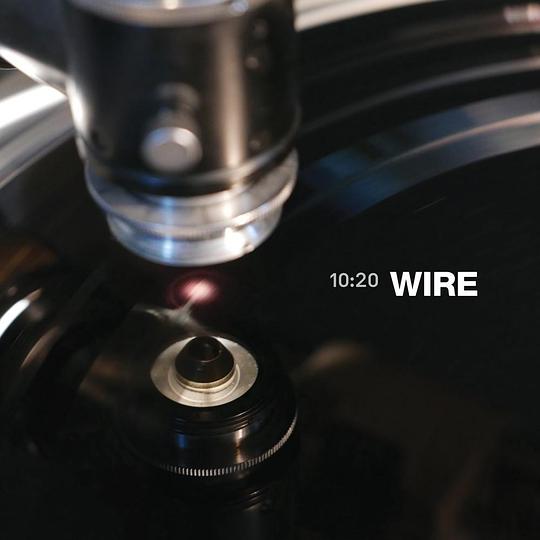
Wire
Douban
★ 8.4 7 ratings
Wire genre: Rock
release date 2015-04-13 publisher: Pink Flag
Right from their inception in 1976, back in the first stirrings of punk, Wire went about making music in a subversive, conceptual way, setting themselves apart from both their peers and their influences. "I had this idea that I wanted to avoid things that had a particular kind of tradition," explains singer and guitarist Colin Newman. "I thought the three-chord trick was too simplistic and that the one-chord trick would be better. Or the two chord trick where the second chord is definitely not the right chord." Bass guitarist and vocalist Graham Lewis identifies another trait that has run throughout the group's lifetime. "People said, we were mysterious, arch and dark. But the only way of doing that successfully, is by also having a sense of humour. You have to have that balance. With Wire there's a peculiarity, a contrariness and that can be funny." This questing approach has served them well in guarding against repetition and cliché. In context, Wire's last album, 2013's aptly titled Change Becomes Us was another case of 'Expect the unexpected' as it found them extensively reworking a rich cache of material abandoned amid a temporary break-up in the early 80s. Their 13th studio album - simply titled Wire comprises material that was written with the album in mind, but toured extensively first, as well as songs that Newman introduced to the group in the studio just prior to recording. The idea was to get the most spontaneous reaction possible from the musicians, and far from the rough and ready results one might expect from such a tack, Wire is full of swooning pop melodies with a 60s tinge and an irresistible, near motorik rhythmic momentum. One can recognise certain melodic inflections, guitar and bass motifs, and drum rhythms from Wire's idiosyncratic vocabulary but it has a remarkable freshness. The basic tracks were recorded at Rockfield Studios with overdubs added at Brighton Electric. The 11 tracks selected for release were the ones that came together most naturally. From the outset Wire was an alliance between four very different characters and continues today with the addition, in 2012, of It Hugs Back guitarist Matthew Simms, who is around thirty years younger than the other group members. "With Matt there was a really new dynamic that had appeared in the group s sound and that was something we wanted to capture, utilise and be creative with," says Lewis. Wire is the first album where Simms has been involved in formulating the material from the ground up, but when the group's particular chemistry starts working he is now very much part of the process. Lewis provides most of the lyrics for the album, their subject matter encompassing love songs, cryptic narratives and coded messages. One time, Newman asked Lewis to send over some unfinished, unformatted text so he wouldn't be bound by what to use for the chorus. This material spawned two songs written on the same day, 'Split Your Ends' and the droll 'In Manchester'. The latter has the disorientating and rather absurd situation of having "In Manchester" as a soaring chorus, when the song is not about Manchester beyond a single line in the lyric. As the album progresses, some of the sunlit pop tunes become more shadowy and it ultimately plunges into the musical black hole of 'Harpooned', eight churning minutes of the group's darkest, most abrasive music to date, and a favourite in live performances since 2013. "The point where our personal narratives meet is all about change - moving on and keeping it interesting for ourselves," says Newman. "We're in it for the long haul and this is a one-way trip." Live dates outside the UK will be announced soon.
Red Barked Tree
Douban
Wire genre: Rock
release date 2011-01-10 publisher: Pink Flag
The twefth album by UK post-punk pioneers WIRE. The trio now consisting of Colin Newman, Graham Lewis, and Robert Grey continues the reductive sheet metal guitar approach of their previous two albums "Send" and "Object 47". Did we mention that it's killer? It's killer!
Object 47
Douban
Wire
release date 2008-07-07 publisher: Pink Flag
Object 47 (the 47th object in their discography) is only Wire's eleventh studio album. It is the second product of an arc of work that began in 2006 and it has so far yielded the rather well-received EP Read And Burn 03 (from which no tracks appear on Object 47), and stands as a confident statement of where Wire is in 2008-as ever, looking forward! While retaining Wire's idiosyncratic mix of an avant-garde mindset with classic pop timing, this album boasts 'tunes with zoom', a unique formula that somehow manages to sound wholly Wire (in a classic sense) and wholly contemporary. Wire will play festivals throughout Europe and tour USA in October of 2008. In the five years since the May 2003 release of their last full length album, Send, Wire is not the same as it was before-but then Wire is never the same as it was before.
Send
Douban
Wire
release date 2003-05-06 publisher: Pink Flag
Compelling 2003 record from one of the most influential and respected alternative rock acts of the last 30 years. Send contains four completely unheard new pieces, four taken from the mailorder-only Read & Burn 02, and three from Read & Burn 01. Digipak. Pink Flag.
Chairs Missing
Douban
★ 8.3 17 ratings
Wire genre: Rock
release date 1993-07-01 publisher: Restless Records
Remastered reissue with the original 1978 album plus 3 bonus tracks from 1979 'Outdoor Miner' (2 mins 54 secs), 'A Question Of Degree' (3 mins 9 secs) & 'Former Airline' (3 mins 20 secs). EMI. 2002.
154
Douban
★ 7.8 8 ratings
Wire
release date 1979-01-01 publisher: Restless Records
Listened
Sept. 7, 2021
A-
不只是后朋的审美对象。
1979 Wire
Pink Flag
Douban
★ 8.3 23 ratings
Wire genre: Rock
release date 1989-01-01 publisher: Restless Records