中国研究

The Spirit of Chinese Politics
Douban
Lucian W. Pye
publishing house:
Harvard University Press
1992
Lucian W. Pye, one of the most knowledgeable observers of China, unfolds in this book a deep psychological analysis of Chinese political culture. The dynamics of the Cultural Revolution, the behavior of the Red Guards, and the compulsions of Mao Tse-tung are among the important symptoms examined. But Pye goes behind large events, exploring the more enduring aspects of Chinese culture and the stable elements of the national psychology as they have been manifested in traditional, Republican, and Communist periods. He also scans several possible paths of future development. The emphasis is on the roles long played by authority, order, hierarchy, and emotional quietism in Chinese political culture as shaped by the Confucian tradition and the institution of filial piety, and the resulting confusions brought about by the displacements of these traditions in the face of political change and modernization.
In this new edition Pye adds a chapter on the basic tension between consensus and conflict in the operation of Chinese politics, illustrating the “spirit” in action, and another discussing the great gap that persists between the worlds of the political leadership and of society at large in post-Tiananmen China.
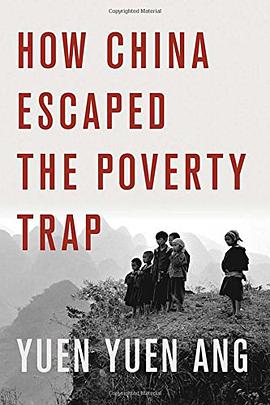
How China Escaped the Poverty Trap
Douban
Yuen Yuen Ang
publishing house:
Cornell University Press
2016
- 11
Acclaimed as "game changing" and "field shifting," How China Escaped the Poverty Trap advances a new paradigm in the political economy of development and sheds new light on China's rise.
How can poor and weak societies escape poverty traps? Political economists have traditionally offered three answers: "stimulate growth first," "build good institutions first," or "some fortunate nations inherited good institutions that led to growth."
Yuen Yuen Ang rejects all three schools of thought and their underlying assumptions: linear causation, a mechanistic worldview, and historical determinism. Instead, she launches a new paradigm grounded in complex adaptive systems, which embraces the reality of interdependence and humanity's capacity to innovate.
Combining this original lens with more than 400 interviews with Chinese bureaucrats and entrepreneurs, Ang systematically reenacts the complex process that turned China from a communist backwater into a global juggernaut in just 35 years. Contrary to popular misconceptions, she shows that what drove China's great transformation was not centralized authoritarian control, but "directed improvisation"—top-down directions from Beijing paired with bottom-up improvisation among local officials.
Her analysis reveals two broad lessons on development. First, transformative change requires an adaptive governing system that empowers ground-level actors to create new solutions for evolving problems. Second, the first step out of the poverty trap is to "use what you have"—harnessing existing resources to kick-start new markets, even if that means defying first-world norms.
Bold and meticulously researched, How China Escaped the Poverty Trap opens up a whole new avenue of thinking for scholars, practitioners, and anyone seeking to build adaptive systems.
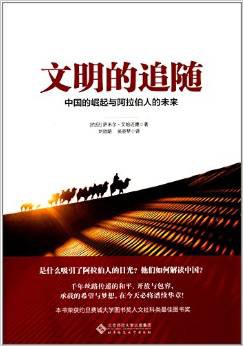
文明的追随
Douban
艾哈迈德·萨米尔
translator:
刘欣路
/
吴晓琴
2014
- 9
《文明的追随:中国的崛起与阿拉伯人的未来》旨在对停滞了数十年的阿拉伯复兴事业做出文明的审视。作者认为阿拉伯人以往关注和追随的对象一直是西方,但历史证明西方没有帮助阿拉伯世界实现复兴,反而使其陷入了更大的危机。随着中国国家实力和国际地位的显著提升,阿拉伯人不仅应当进一步加强与中国各领域的友好关系,还应当积极学习和借鉴中国的发展经验,努力实现“文明的追随”。作者在书中回顾了新中国自成立以来的发展历程,总结了中国成功的经验,并且认为“非模式化”是中国发展经验的精髓,阿拉伯人应积极借鉴。此外,作者还详细分析了中阿进一步加强合作的历史基础和现实条件,认为中、阿两大文明可以相互扶持,从而实现“中国梦”和“阿拉伯梦”。