漫画研究
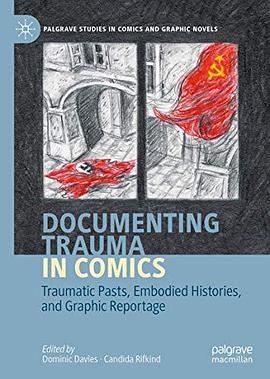
Documenting Trauma in Comics
Douban
Dominic Davies / Candida Rifkind publishing house: Palgrave Macmillan 2020 - 5
Why are so many contemporary comics and graphic narratives written as memoirs or documentaries of traumatic events? Is there a specific relationship between the comics form and the documentation and reportage of trauma? How do the interpretive demands made on comics readers shape their relationships with traumatic events? And how does comics’ documentation of traumatic pasts operate across national borders and in different cultural, political, and politicised contexts? The sixteen chapters and three comics included in Documenting Trauma in Comics set out to answer exactly these questions. Drawing on a range of historically and geographically expansive examples, the contributors bring their different perspectives to bear on the tangled and often fraught intersections between trauma studies, comics studies, and theories of documentary practices and processes. The result is a collection that shows how comics is not simply related to trauma, but a generative force that has become central to its remembrance, documentation, and study.
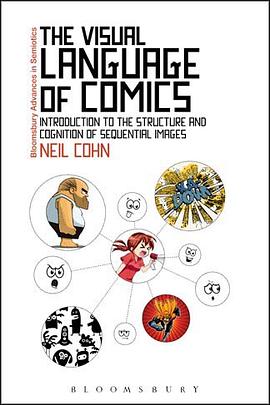
The Visual Language of Comics Introduction to the Structure and Cognition of Sequential Images
Douban
Neil Cohn publishing house: Bloomsbury Academic 2014 - 1
Drawings and sequential images are an integral part of human expression dating back at least as far as cave paintings, and in contemporary society appear most prominently in comics. Despite this fundamental part of human identity, little work has explored the comprehension and cognitive underpinnings of visual narratives—until now. This work presents a provocative theory: that drawings and sequential images are structured the same as language. Building on contemporary theories from linguistics and cognitive psychology, it argues that comics are written in a visual language of sequential images that combines with text. Like spoken and signed languages, visual narratives use a lexicon of systematic patterns stored in memory, strategies for combining these patterns into meaningful units, and a hierarchic grammar governing the combination of sequential images into coherent expressions. Filled with examples and illustrations, this book details each of these levels of structure, explains how cross-cultural differences arise in diverse visual languages of the world, and describes what the newest neuroscience research reveals about the brain’s comprehension of visual narratives. From this emerges the foundation for a new line of research within the linguistic and cognitive sciences, raising intriguing questions about the connections between language and the diversity of humans’ expressive behaviours in the mind and brain.
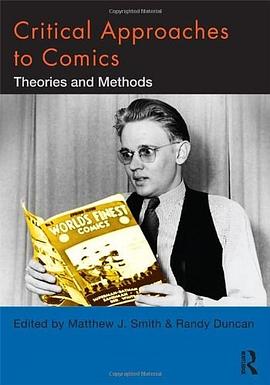
Critical Approaches to Comics
Douban
Matthew J. Smith / Randy Duncan publishing house: Routledge 2011 - 10
Critical Approaches to Comics offers students a deeper understanding of the artistic and cultural significance of comic books and graphic novels by introducing key theories and critical methods for analyzing comics. Each chapter explains and then demonstrates a critical method or approach, which students can then apply to interrogate and critique the meanings and forms of comic books, graphic novels, and other sequential art. The authors introduce a wide range of critical perspectives on comics, including fandom, genre, intertextuality, adaptation, gender, narrative, formalism, visual culture, and much more. As the first comprehensive introduction to critical methods for studying comics, Critical Approaches to Comics is the ideal textbook for a variety of courses in comics studies. Contributors: Henry Jenkins, David Berona, Joseph Witek, Randy Duncan, Marc Singer, Pascal Lefevre, Andrei Molotiu, Jeff McLaughlin, Amy Kiste Nyberg, Christopher Murray, Mark Rogers, Ian Gordon, Stanford Carpenter, Matthew J. Smith, Brad J. Ricca, Peter Coogan, Leonard Rifas, Jennifer K. Stuller, Ana Merino, Mel Gibson, Jeffrey A. Brown, Brian Swafford
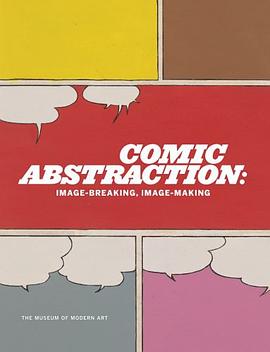
Comic Abstraction
Douban
Roxana Marcoci publishing house: The Museum of Modern Art, New York 2007
In recent years, a number of artists have transmuted the lexicon of comic strips and films, cartoons and animation into a new representational mode to address perplexing issues about war and global conflicts, the legacy of September 11th and ethnic and cultural stereotyping. From Julie Mehretu's intricately layered paintings, to Arturo Herrera's psychological collages, made by slicing and reconfiguring the pages of Walt Disney coloring books, to Ellen Gallagher's seductively Minimalist paintings, permeated by "blackface" signs culled from minstrel performances, to Rivane Neuenschwander's wiped-out cartoon characters, the world of comic abstraction reflects the intensely personal relationship that many contemporary artists maintain with the political makeup of the world. This publication, which accompanies a Spring 2007 exhibition of the same name at The Museum of Modern Art, presents the first major investigation into the experimental outgrowths of this form of popular culture. This volume features recent work by 13 artists and a selection of 30 large-scale works and installations that bridge the rift between abstract form and social consciousness in ways that are at once critical and playful. It also includes a critical essay, interviews with the artists, and a selected exhibition history and a bibliography. Features work by Polly Apfelbaum, Inka Essenhigh, Ellen Gallagher, Arturo Herrera, Michel Majerus, Julie Mehretu, Juan Munoz, Takashi Murakami, Rivane Neuenschwander, Philippe Parreno, Gary Simmons, Franz West and Sue Williams.
成人漫畫表現史
エロマンガ表現史 Douban
★ 6.8 13 ratings
稀見理都 translator: 陳識中 publishing house: 台灣東販 2018
「乳首殘像」 「觸手」 「斷面圖」 「啊嘿顏」 etc... 成人漫畫特有的表現方式是何時誕生、又是如何成為「共同語言」的呢? 本書將用大量資料與證詞揭開色情漫畫的神秘面紗與不為人知的歷史。 現在已難以入手的傳說同人誌「乳首殘像」(『エロマンのゲンバ』增刊)的訪談也重新收錄!