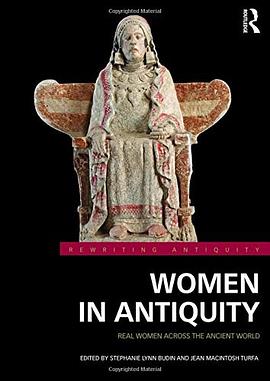
This substantial volume is the third published in Routledge's Rewriting Antiquity series. Its seventy-four essays are arranged in ten sections, viz. Mesopotamia, Egypt, the Hittites, Cyprus, the Levant and Carthage, the Aegean (Bronze Age and historical), Etruria and the Italian archipelago, Rome, cultures outside the Mediterranean ("At the edges"), and a Coda ("Continuities in rape and tyranny in martial societies from antiquity onward"). Most sections are preceded by short introductions that give an overview of the history of the region and its culture(s). Rome's overview, however, is included in the introduction to Etruria and the Italian archipelago; it is a single short paragraph, accompanied by five dates indicating Rome's major governmental changes (e.g. "Republic") and a longer list of dates forming "A few landmarks of Roman history" (745-746). A map accompanies each introduction except for the sections on Etruria and the Italian archipelago, Rome, and the Coda. (Readers are referred to the Mesopotamian map for the sections on the Hittites, and the Levant and Carthage; that city, however, does not appear on this map.) Each essay is followed by a bibliography and there is a detailed index to the volume. Two hundred twenty B&W images illustrate the essays.
In the brief, general introduction Budin explains that her dissatisfaction with existing volumes on women in antiquity lay in their focusing almost exclusively on Greece and Rome and, secondly, their concentration on "literary characters, fictional constructs invented by men mostly for other men." (1). Turfa emphasizes the range of topics that concern the lives of real women in this volume: e.g. female administration, motherhood, health, family traditions, social power, religious life, bioarchaeology, work and economic life, status in society, female royalty and leaders, violence against women, ethnic dress, and women living in military and other settlements (2-3). As the range of topics, geography, and timeline is so great, I will review several papers focusing on one theme common to many of the sections: women and economic life.
The paper of Louise Steel (“The social and economic roles played by the women of Alashiya” [Cyprus]) is one that I would have assigned my class on women in antiquity because of her nuanced use of material culture to interpret women’s lives. Aside from the brief encounter of the shipwrecked Egyptian priest Wenamun with the princess Hatiba at the end of the Late Bronze Age, we have no texts from Cyprus or elsewhere regarding Cypriot culture. Steel cautions, “One of the problems we face when trying to establish gender roles in ancient communities is essentialist assumptions, namely unquestioningly imposing certain roles, activities, and practices...according to assumed universals of male/female biology and experience” (387). For example, the bronze four-sided stand from Enkomi Tomb 97 is decorated with the “women at the window” motif, generally interpreted as referring to temple prostitution. Steel points out that temple prostitution and sacralization of sex is increasingly controversial, and we should regard it more likely as evidence of women’s participation (as priestesses, perhaps) in temple cult. A second example is the interpretation of the signet rings found in a rich burial of a young woman: is it correct to read the name on these rings as her husband’s based on an assumption that women were illiterate and could not own property? Or should we allow for the possibility that, as such rings were “personalized items conveying concepts of ownership, power, and authority, ...the woman...would have used this object in her own right to authorize transactions and mark her property"? Perhaps these rings are evidence that at least one woman was able to write and read her own name (394).
The usefulness of seals in reconstructing women’s lives is also shown in two papers in the Mesopotamia section. One area of the palace, interpreted as the administrative locus for the queen, produced a number of items with sealings naming Queen Uqnitum and two of her important servants, Zamena, the royal wet- nurse, and Tuli, the royal cook. Marilyn Kelly-Bucellati ("Women's power and work in ancient Urkesh," [Tell Mozan, northeastern Syria]) points out that the seals' distinctive iconography suggests that the designs were invented to serve the queen, who came from the Akkadian court in the south. One type of seal is interpreted as the queen indicating her will that her son be designated the crown prince: she is shown sitting opposite the king and holding a young child on her lap, while another child touches the lap of the king. Her daughter is shown on another seal in a similar motif of lap touching, perhaps indicating the daughter's future role in an inter-dynastic marriage (53). Other distinctive seals of Uqnitum sharing a similar design are interpreted as establishing the authority of various administrators under her supervision. For example, Zamena is shown holding the wrist and touching the lap of a child seated on Uqnitum's lap. Kelly-Bucellati suggests that Uqnitum (and others of the court, including the king) "successfully created a unique system of personal identification and evidence of power" and so became "a focal point of new ideas not found in the Mesopotamian south nor western Syria in this time period or before" (61).
In the other paper, "Businesswomen and their seals in early Mesopotamia," Andrew McCarthy points out that despite the capabilities of women in accounting, production, and business negotiations, they lived in a world controlled by men; yet under certain circumstances they could rise in rank and gain more independence (102). Most women worked in and for a family business. Their seals, however, were inscribed with their names and reveal not only that they engaged in trade with customers outside their household, but also that they could guarantee transactions for a third party (103). Other seals indicate that women served as supervisors in state administration, overseeing work crews of up to twenty women.
Some aspects of the lives of Hittite women, who also lived within the constraints of a patriarchal society, are delineated in a collection of two hundred laws discussed by Trevor R. Bryce ("The role and status of women in Hittite society"). The reigning queen, called the Tawananna, had mainly a religious role as Chief Priestess, which she held for life. One Tawananna apparently used her power against the king, who issued a law that no one should speak of her or her children under penalty of having his throat cut and body hung on his house gate (304). Other laws, though more in the nature of guidelines, covered contentious situations in arranging marriages and dealing with elopement or divorce. Such legal guidelines also dealt with marriages between or with slaves, including women that marry slaves; Bryce interprets one law as indicating that the male slave's payment of a bride price legitimized his marriage with a free woman (312-313). Laws protected women available for hire for seasonal farm work, or for weaving, cooking, baking: e.g. a female harvester had a stipulated wage for three months' work (315).
Even fuller information on Athenian women’s presence in the cash economy of Classical Athens enables Edward E. Cohen’s investigation into the societal values that promoted their participation in the business economy (“The Athenian businesswoman”). Drawing upon inscriptions, whether publishing state documents or personal information, and literary sources such as forensic speeches, he finds that the Athenian conceptualization of andreia, which restricted male citizens from business enterprises, promoted women’s participation in such (715). As manager of the household, the wife had the responsibility for all its revenues and expenditures, and, even when widowed, could manage it on behalf of her adult son, handling family banking businesses, factories, and marketing. Some women acted as creditors or suppliers of building materials, others worked as doctors, or midwives, or manufacturers. Despite the legal requirement that women have a male relative acting as her guardian in legal transactions, Cohen finds that women in the fourth century were recognized as true property owners, and some had the status of “self-representative” (717).
In “Roman women in the urban economy: occupations, social connections, and gendered exclusions,” Hilary Becker enumerates the various lines of work (midwives, food or luxury retail, production of cloth and perfume, etc.) well known from inscriptions and reliefs. However, there were social restrictions on what lines of commerce women could enter. One restriction was from collegia, guilds that served different trades, because such guilds were socio-political clubs, and women were excluded from voting or running for office. Elite women, however, did function as patrons of guilds, bestowing their prestige and funds to the members (923-924). On the other hand, women could serve as institutores, or intermediaries, managing apartment buildings, for example, or leasing ships and arranging for cargoes (924).
One paper, Judith Swaddling’s “Seianti Hanna Tlesnasa: an Etruscan aristocrat" deals with a specific woman. As I have several times admired her well-known, lovely sarcophagus in the British Museum, this paper personally interested me. Swaddling analyzes Seianti’s tomb and sarcophagus, along with her grave goods of silver toiletry items, which clearly indicate her wealth and high status. The jewelry adorning her terracotta image, like her himation and chiton, show that Seianti followed Greek fashions. Inside her sarcophagus was her almost complete skeleton that gives clues to significant health events in her life. Analysis revealed that she was significantly shorter than her nearly two meter image, had borne at least one child, and suffered from dental abscesses, arthritis, and slight scoliosis. Her right side and her face had received a great traumatic blow when she was about fifteen to twenty years old, resulting in difficulty in eating and possibly speaking. Facial reconstruction shows that the terracotta image presents a significantly younger Seianti, with only slight, if that, indication of her facial injuries, but it is definitely a portrait of this woman, making it perhaps one of the earliest, if not the earliest, of realistic Etruscan portraits (775-776).
This valuable collection of papers reveals the multifarious ways ancient women participated at all levels of their societies. Of particular value is, first, its inclusion of cultures usually overlooked in other collections of essays (the Celtic, Scandinavian, Hittite), second, its temporal spread from the early Bronze Age well into the Iron Age, and, third, its focus on archaeological realia, documents, inscriptions and the like, rather than on male-authored literature for male-audience consumption. This collection of papers is an essential library resource for programs in gender studies, ancient studies, and archaeology.