艺术史
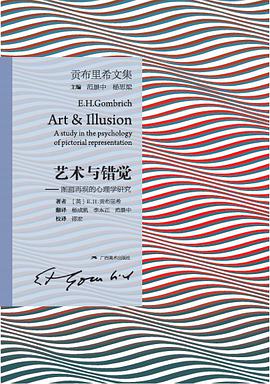
艺术与错觉
Art & Illusion Douban Goodreads
★ 9.5 8 ratings
[英国] E·H·贡布里希 / 校注 邵宏 translator: 杨成凯 / 李本正 … publishing house: 广西美术出版社 2012 - 6
被肯尼思•克拉克描述为“我所读过的最才华横溢的艺术批评著作之一”的《艺术与错觉》,是一部有关制像的经典研究。它试图回答一个简单的问题:何以会有被称作风格的东西?这个问题也许简单,却很难回答。贡布里希教授对图画再现的心理学及历史的探索,充满睿智而包罗万象,从而引领他进入许多重要领域。在说明肖像制作远比它看起来要困难这一问题的过程中,贡布里希对许多新老看法作出了考证、质疑与再评价,那些新老观点包括模仿自然、传统的功能、抽象问题、透视的有效性,以及对表现的解释。 本书虽然出版于40多年前,至今仍不失其活力与重要性。贡布里希为理解艺术和处理复杂的观点与理论问题提供了缜密的科学发现。他对人类大脑无穷无尽的能力,对人类观看世界与制作和观看艺术时的微妙关系始终抱有探究之心。当验证各种假说时,他以他深厚的学识和与生俱来的清晰的表达能力,提出了符合科学精神的论辩。再现是艺术史最基本的问题,而《艺术与错觉》是任何对理解艺术有兴趣的人的必读书。《艺术与错觉》第六版包括最新增加的序言,作者在其中讨论了图像与符号的关键差别。
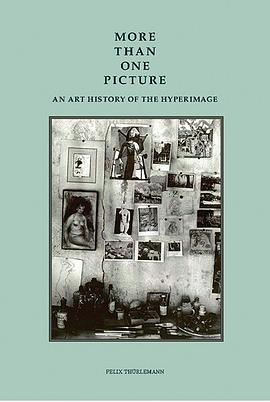
More than One Picture
Douban
Felix Thurlemann publishing house: Yale University Press 2019 - 11
In exhibitions, illustrated art books, and classrooms, artworks or their photographic reproductions are arranged as calculated ensembles that have their own importance. In this volume, Felix Thurlemann develops a theory of this type of image use, arguing that with each new gathering of images, an art object is reinterpreted. These hyperimages have played a major role in the history of art since the seventeenth century, and the main actors of the art world are all hyperimage creators. In part because the hyperimage is not permanently available, this interplay of images has been largely unexplored. Through case studies organized within three groups of producers-collectors and curators, art historians, and artists-Thurlemann proposes a theory of the hyperimage, explores the semiotic nature of this plural image use, and discusses the arrangement and interpretation of such pictures in order to illuminate the phenomenon of Western image culture from the beginning of the seventeenth century until today. His analysis of the ways in which images are assembled and associated provides a crucial context for the explosive present-day deployment of images on digital devices.
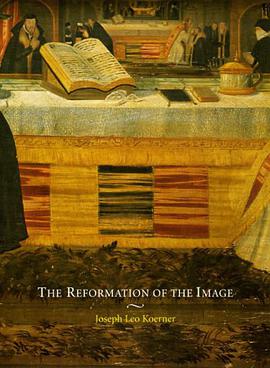
The Reformation of the Image
Douban
JL Koerner publishing house: Chicago University Press 2009 - 2
Martin Luther preached the radical notion that we are saved through faith alone. With one stroke, he overturned a thousand years of practice and teaching. Gone was the need for saintly intercessors and a special priesthood or the richly decorated and image-filled churches in which such mediation could take place. What counted now was faith arriving inwardly, in each individual, through the text of the Bible - the naked Word of God itself. But if words - not iconic images - led the believer to salvation, why didn't religious imagery disappear during the Reformation? The answer, according to Joseph Leo Koerner's masterful "The Reformation of the Image", lies in the paradoxical nature of Protestant religious imagery itself, which is at once both iconic and iconoclastic. According to Koerner, it is this "iconoclash" that characterizes Reformation art. "The Reformation of the Image" compellingly shows how visual art became indispensable to a religious movement built on words. It also reveals in Protestant images a powerful instance of modern disenchantment: the disappearance of magic both from images and from the world.
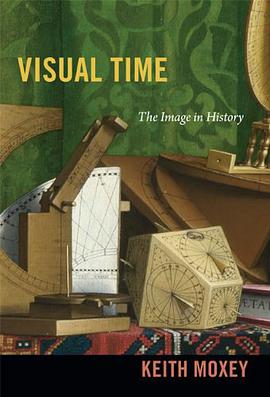
Visual Time
Douban
Keith Moxey publishing house: Duke University Press Books 2013 - 6
Visual Time offers a rare consideration of the idea of time in art history. Non-Western art histories currently have an unprecedented prominence in the discipline. To what extent are their artistic narratives commensurate with those told about Western art? Does time run at the same speed in all places? Keith Moxey argues that the discipline of art history has been too attached to interpreting works of art based on a teleological categorization—demonstrating how each work influences the next as part of a linear sequence—which he sees as tied to Western notions of modernity. In contrast, he emphasizes how the experience of viewing art creates its own aesthetic time, where the viewer is entranced by the work itself rather than what it represents about the historical moment when it was created. Moxey discusses the art, and writing about the art, of modern and contemporary artists, such as Gerard Sekoto, Thomas Demand, Hiroshi Sugimoto, and Cindy Sherman, as well as the sixteenth-century figures Pieter Bruegel the Elder, Albrecht Dürer, Matthias Grünewald, and Hans Holbein. In the process, he addresses the phenomenological turn in the study of the image, its application to the understanding of particular artists, the ways verisimilitude eludes time in both the past and the present, and the role of time in nationalist accounts of the past.
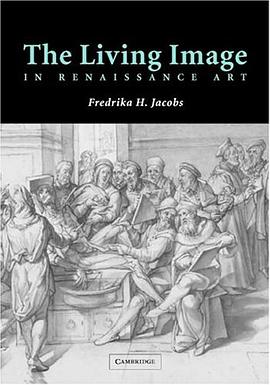
The Living Image in Renaissance Art
Douban
Fredrika H. Jacobs publishing house: 劍橋大學出版社 2005 - 4
Since classical antiquity, artists have rendered images in painting and sculpture that are so highly mimetic as to be nearly lifelike. Within this long history of strikingly lifelike images, works produced during the Italian renaissance are of special interest. During the sixteenth century, the critical language describing such works of art was codified. This same period witnessed the advent of early modern medicine and anatomical science. As art critics and theorists discussed the vivid immediacy and illusionist potency of art works in terms of aliveness, physicians such as Andreas Vasalius and Realdo Columbo investigated aliveness as a physiological condition of being, and particularly the nature of the soul. Bringing together a wealth of research and ideas from the histories of art, medicine, and natural philosophy, this book demonstrates the significance of lifelikeness for contemporaries and also considers the implications of claims that artwork is 'a living thing.'
Patterns of Intention
Google Books Douban Goodreads
Baxandall, Michael publishing house: Yale University Press 1985 - 01 other title: Patterns of Intention: On the Historical Explanation of Pictures
Distinguished art historian Michael Baxandall here discusses the historical understanding of works of art - how we can discover the intentions of an artist living in a different time and culture and to what extent we can test and evaluate a historical interpretation of a picture. Analyzing in detail paintings by Picasso, Chardin, and Piero della Francesca, Baxandall shows how this inferential criticism sharpens our legitimate satisfaction in the art works themselves.
Meaning in the Visual Arts
Douban
E. Panofsky publishing house: University Of Chicago Press 1983 - 3
Since its original publication, Erwin Panofsky's Meaning in the Visual Arts has been standard reading for students of art history. It is both an introduction to the study of art and, for those with more specialized interests, a profound discussion of art and life in the Middle Ages and Renaissance. Panofsky's historical technique reveals an abundance of detail, detail he skillfully relates to the life and work of individual painters and their times. The papers in this volume represent a cross-section of Panofsky's major work. Included are selections from his well-known Studies in Iconology and The Life and Art of Albrecht Dürer, plus an introduction and an epilogue—"The History of Art as a Humanistic Discipline" and "Three Decades of Art History in the United States: Impressions of a Transplanted European"—as well as pieces written especially for this collection. All display Panofsky's vast erudition and deep commitment to a humanistic conception of art and art history.
Techniques of the Observer
Douban
Jonathan Crary publishing house: The MIT Press 1992 - 2
In Techniques of the Observer Jonathan Crary provides a dramatically new perspective on the visual culture of the nineteenth century, reassessing problems of both visual modernism and social modernity.Inverting conventional approaches, Crary considers the problem of visuality not through the study of art works and images, but by analyzing the historical construction of the observer. He insists that the problems of vision are inseparable from the operation of social power and examines how, beginning in the 1820s, the observer became the site of new discourses and practices that situated vision within the body as a physiological event. Alongside the sudden appearance of physiological optics, Crary points out, theories and models of "subjective vision" were developed that gave the observer a new autonomy and productivity while simultaneously allowing new forms of control and standardization of vision.Crary examines a range of diverse work in philosophy, in the empirical sciences, and in the elements of an emerging mass visual culture. He discusses at length the significance of optical apparatuses such as the stereoscope and of precinematic devices, detailing how they were the product of new physiological knowledge. He also shows how these forms of mass culture, usually labeled as "realist," were in fact based on abstract models of vision, and he suggests that mimetic or perspectival notions of vision and representation were initially abandoned in the first half of the nineteenth century within a variety of powerful institutions and discourses, well before the modernist painting of the 1870s and 1880s.Jonathan Crary is Assistant Professor of Art History at Barnard College and Columbia University. He is a founding editor of Zone and Zone Books.
Studies in Iconology
Douban
Erwin Panofsky / Gerda S. Panofsky publishing house: Westview Press 1972 - 3
Here, the themes and concepts of Renaissance art are analysed and related to both classical and medieval tendencies.
Art and Agency
Douban
Alfred Gell publishing house: Oxford University Press 1998
Review This book changes the very basis of the way art has been viewed in the human sciences. It presents what is the first fundamental theory for an anthropology of art. Its publication is a major event. Maurice Bloch, FBA, Professor of Anthropology, London School of Economics. This is a remarkable work ... witty, elegant, broad in its compass and scintillating in its detail. It is characteristically polemical ... alive with his sense of purpose and his quite original and captivating account of how we are captivated by relations between forms ... The book know what to do with the limits of form--one suddenly sees how anthropology might surpass itself. Marilyn Strathern, FBA, Professor of Social Anthropology, University of Cambridge An extraordinary achievement. Gell offers a profound new understanding of collective agency which completely reshapes the anthropology of art, redefines its objects of study, and inspires new conclusions. Caroline Humphrey, Reader in Asian Anthropology, University of Cambridge Review "[This] is not only a contribution to anthropology but a subtle and original counterweight to the banalities of globalization theory."--Times Literary Supplement
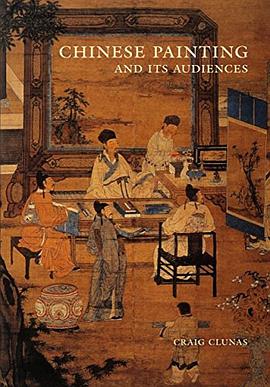
Chinese Painting and Its Audiences
Douban
Craig Clunas publishing house: Princeton University Press 2017 - 3
What is Chinese painting? When did it begin? And what are the different associations of this term in China and the West? In Chinese Painting and Its Audiences, which is based on the A. W. Mellon Lectures in the Fine Arts given at the National Gallery of Art, leading art historian Craig Clunas draws from a wealth of artistic masterpieces and lesser-known pictures, some of them discussed here in English for the first time, to show how Chinese painting has been understood by a range of audiences over five centuries, from the Ming Dynasty to today. Richly illustrated, Chinese Painting and Its Audiences demonstrates that viewers in China and beyond have irrevocably shaped this great artistic tradition. Arguing that audiences within China were crucially important to the evolution of Chinese painting, Clunas considers how Chinese artists have imagined the reception of their own work. By examining paintings that depict people looking at paintings, he introduces readers to ideal types of viewers: the scholar, the gentleman, the merchant, the nation, and the people. In discussing the changing audiences for Chinese art, Clunas emphasizes that the diversity and quantity of images in Chinese culture make it impossible to generalize definitively about what constitutes Chinese painting. Exploring the complex relationships between works of art and those who look at them, Chinese Painting and Its Audiences sheds new light on how the concept of Chinese painting has been formed and reformed over hundreds of years.
美术学院的历史
Douban
[英]尼古拉斯·佩夫斯纳 translator: 陈平 publishing house: 商务印书馆 2015
《美术学院的历史》向读者展示了从文艺复兴至20世纪上半叶欧洲美术学院发展的历史画卷。 本书开篇将academy这一术语的起源追溯到古希腊时期柏拉图学园的哲学传统,并介绍了在美术学院诞生之前这一古典传统在意大利文艺复兴时期复活并得到蓬勃发展的大背景。在接下来的篇章中,作者以大量的史实和生动的叙述,从佛罗伦萨美术学院,到法国皇家美术学院,再到巴黎美术学院和国立包豪斯学校,一步步引领读者领略了美术学院兴起与发展的图景。 佩氏以讲述四百年欧洲各地美术学院的性质、目标、组织法与教学法的演进为主线,讨论了艺术家的社会地位、美术学院与行会的关系、艺术家与公众及政府的关系、艺术创作与艺术市场的关系等重要话题,其中不乏鲜为人知的史料与趣闻。 作者将美术教育这一主题置于欧洲广阔的社会政治与经济背景下进行考察,他就艺术教育所提出的问题是超时代的,至今依然具有启示意义,同时也使得本书成为从社会学角度(趣味史、艺术品交易史、展览史、收藏史)研究美术史的一个早期范例。
The Art of Art History
Douban
Donald Preziosi publishing house: OUP Oxford 2009 - 2
This masterly collection of texts interrogates the raging academic question, What is art history? Editor Preziosi, who directs ground-breaking critical studies of art history and museology, provides introductions to 35 challenging readings gathered in nine chapters. This plethora of alternatives is curiously complicated, even obfuscating. Covered here are the most current and relevant approaches to aesthetics, style, iconography and semiology, feminism, gender studies, formalism, postmodernism, deconstruction, museography, hybridity, and multiculturalism; those offering critical analysis range from Winckelmann, Kant, Wolfflin, Panofsky, Schapiro, Gombrich, and Derrida to Rosalind Krauss and Carol Duncan. Ultimately, this book is best suited to upper- and graduate-level collections and to the reference shelf of specialized art collections, as it proposes the discipline of art history itself as an art.AMary Hamel-Schwulst, Towson Univ., MD
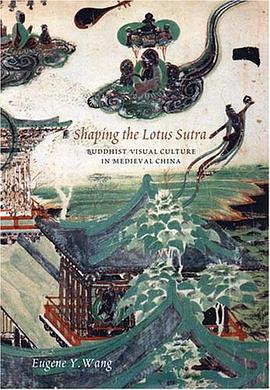
Shaping the Lotus Sutra
Douban
Eugene Y. Wang publishing house: University of Washington Press 2007 - 2
The Lotus Sutra has been the most widely read and most revered Buddhist scripture in East Asia since its translation in the third century. The miracles and parables in the "king of sutras" inspired a variety of images in China, in particular the sweeping compositions known as transformation tableaux that developed between the seventh and ninth centuries. Surviving examples in murals painted on cave walls or carved in relief on Buddhist monuments depict celestial journeys, bodily metamorphoses, cycles of rebirth, and the achievement of nirvana. Yet the cosmos revealed in these tableaux is strikingly different from that found in the text of the sutra. Shaping the Lotus Sutra explores this visual world. Challenging long-held assumptions about Buddhist art, Eugene Wang treats it as a window to an animated and spirited world. Rather than focus on individual murals as isolated compositions, Wang views the entire body of pictures adorning a cave shrine or a pagoda as a visual mapping of an imaginary topography that encompasses different temporal and spatial domains. He demonstrates that the text of the Lotus Sutra does not fully explain the pictures and that a picture, or a series of them, constitutes its own "text." In exploring how religious pictures sublimate cultural aspirations, he shows that they can serve both political and religious agendas and that different social forces can co-exist within the same visual program. These pictures inspired meditative journeys through sophisticated formal devices such as mirroring, mapping, and spatial programming - analytical categories newly identified by Wang. The book examines murals in cave shrines at Binglingsi and Dunhuang in northwestern China and relief sculptures in the grottoes of Yungang in Shanxi, on stelae from Sichuan, and on the Dragon-and-Tiger pagoda in Shandong, among other sites. By tracing formal impulses in medieval Chinese picture-making, such as topographic mapping and pictorial illusionism, the author pieces together a wide range of visual evidence and textual sources to reconstruct the medieval Chinese cognitive style and mental world. The book is ultimately a history of the Chinese imagination.
Other Criteria
Douban
Leo Steinberg publishing house: University of Chicago Press 2007
Leo Steinberg's classic "Other Criteria" comprises eighteen essays on topics ranging from "Contemporary Art and the Plight of Its Public" and the "flat-bed picture plane" to reflections on Picasso, Rauschenberg, Rodin, de Kooning, Pollock, Guston, and Jasper Johns. The last, which Francine du Plessix Gray called "a tour de force of critical method," is widely regarded as the most eye-opening analysis of Johns' work ever written. This edition includes a new preface and a handful of additional illustrations.
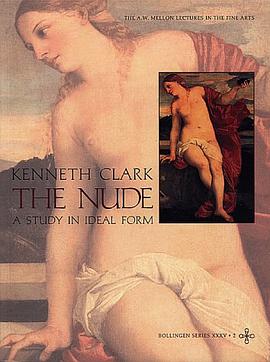
The Nude
Douban
Kenneth Clark publishing house: Princeton University Press 1972 - 10
From the art of the Greeks to that of Renoir and Moore, this work surveys the ever-changing fashions in what has constituted the ideal nude as a basis of humanist form.
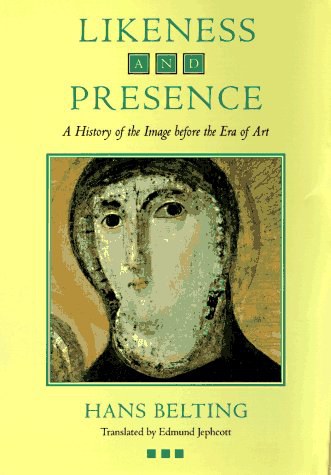
Likeness and Presence
Douban
Hans Belting translator: Edmund Jephcott publishing house: University Of Chicago Press 1997 - 1
Before the Renaissance and Reformation, holy images were treated not as "art" but as objects of veneration which possessed the tangible presence of the Holy. In this book, Hans Belting traces the long history of the sacral image and its changing role in European culture. It looks at the beliefs, superstitions, hopes, and fears that come into play as people handle and respond to sacred images, and presents a compelling interpretation of the place of the image in Western history.
黄泉下的美术
Douban
★ 8.7 7 ratings
巫鸿 translator: 施杰 译 publishing house: 生活·读书·新知三联书店 2016 - 1
"“我对“墓葬”这个题目的选择有三个基本出发点。一是墓葬文化在古代东亚,特别是古代中国有着数千年的持续发展的历史,在世界上可以说是独一无二。……二是在它的漫长发展过程中,中国的墓葬传统不但锻造出了一套独特的视觉语汇和形象思维方式,同时也发展出一套与本土宗教、伦理,特别是和中国人生死观和孝道思想息息相关的概念系统。……三是墓葬艺术还没有像书画、青铜、陶瓷或佛教美术那样在中国美术史的研究和教学中形成一个“专门领域”或“亚学科”,发展出处理和理解考古材料的一套系统的理论方法。 本书的目的不是根据年代顺序呈现出中国墓葬艺术的发展史,也不是要对目前中国版图内不同历史时期的墓葬类型以及地域性丧葬实践进行全面综述,而是描述和分析不同时代和地区的许多个案。这些案例一方面意在表现中国墓葬艺术的无比漫长和惊人丰富的内涵——这其实是中国艺术中最为漫长和持久的一个艺术传统,同时也将回答我最初所提出的问题:是什么因素界定了我们称为“中国墓葬”的艺术和建筑传统?” — 巫 鸿"