萧凤霞
踏跡尋中
Google Books Douban
蕭鳳霞 著 / 余國良 編 publishing house: 香港中文大學出版社 2022 - 7
《踏跡尋中》的寫作始於幾近半世紀對華南農村革命和社區重構的探索,最終揭示了中國的無遠弗屆和香港的跨境動力。人類學家蕭鳳霞穿越文化與物理景觀,審視老百姓在政治起伏下的日常生活,並在中國縱身躍向現代的狂潮中探尋他們的悲喜劇。 她突出共謀的概念,描繪了村民、都市人、幹部、企業家和知識分子如何背負歷史包袱匍匐前行。但與此同時,他們在這個過程中是否也使自己成為受害者? 本書將文化、歷史、權力、地方營造和身份形塑等歷史/人類學核心主題融而為一,並以批判的社會理論、田野調查和檔案文本為基礎,仔細推敲而得。蕭鳳霞尤其強調過程和適然性,認為文化和社會是由人類行為所構建,其中浸染了細緻而微妙的意蘊、道德想像和利益競逐。她挑戰社會/政治變化的線性歷 史觀,並在當前諸種實相中,理出過去的層層肌理。 --------------------------- 蕭鳳霞以歷史為經、田野探索為緯,編織出層層疊疊的華南故事,裏面有邊緣族群與女性的堅韌、革命的熾熱、傳統的應對、商人的機智、宗族的保守。貫穿其中的是細膩的歷史人類學理論分析,盡顯作者四十年來為了「在日常中尋覓意義」所下的功夫。作者說此書乃一段「知性之旅」,但細心的讀者不難看出它其實也是這位國際知名的香港學者自己的故事,是她在長年體驗香港與華南生活後對故土的感性反思。 ——梁其姿,台灣中央研究院院士、香港大學香港人文社會研究所所長 蕭鳳霞的《踏跡尋中》,高明地糅合了民族誌、社會結構和文化展演的線索,以其湛深學養展示了豐碩的學術成果,清晰闡明如何援用文化、權力和歷史,為華南提供嶄新且令人信服的理解角度。 ——斯科特(James C. Scott),耶魯大學政治科學斯特林講席、人類學教授 蕭鳳霞是有數的研究中國城鄉社會的專家。本書所涉題材廣泛,涵蓋人類學、地理學、經濟學和政治科學諸領域學者都感興趣的主題。鮮有人像她一樣深入華南社會生活的「底細」,既能用細膩筆法,又能以同理心娓娓道來。 ——華琛(James L. Watson),哈佛大學中國社會費正清講席、人類學榮休教授
Tracing China
Douban
Helen F. Siu publishing house: Hong Kong University Press 2016 - 11
Tracing China chronicles forty years of fieldwork. The journey began from exploring rural revolution and reconstitutions of community in South China; it spans decades of persistent rural-urban divide and eventually uncovers China's global reach and Hong Kong's cross-border dynamics. Siu traverses both physical and cultural landscapes, examines how political tumults transform into everyday lives, and fathoms the depths of human drama amid China's frenetic momentum toward modernity. She highlights complicity, portraying how villagers, urbanites, cadres, entrepreneurs, and intellectuals—laden with historical baggage—venture forward. The question is: Have they become victims of the circumstances created by their own actions? The essays are woven together by key themes in historical anthropology—culture, history, power, place-making, and identity formation, informed by critical social theories, and characterized by a careful scrutiny of fieldwork encounters and archival texts. Stressing process and contingency, Siu argues that culture and society are constructed through human actions with nuanced meanings, moral imagination, and contested interests. She challenges the perception that social/political changes are merely linear historical progressions. Instead, she traces layers of the past in present realities.
Agents and Victims in South China
Douban
Helen F. Siu publishing house: Yale University Press 1989 - 9
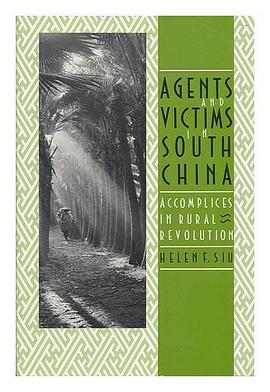
When peasants live in complex agrarian societies with distinct hierarchies of power, how much are they able to shape their world? In this socio economic, political, and anthropological history, Helen F. Siu explores this question by examining a rural community in Guangdong Province from the late nineteenth century to the present.
学步与超越
Douban
华南研究会编辑委员会 publishing house: 文化创造出版社 2004 - 3
本書收錄有關華南研究會的論文共16篇,內容涉及華南地區的文化、歷史、社會等方面的研究。
Asia Inside Out
Douban
Eric Tagliacozzo / Helen F. Siu … publishing house: Harvard University Press 2015 - 1
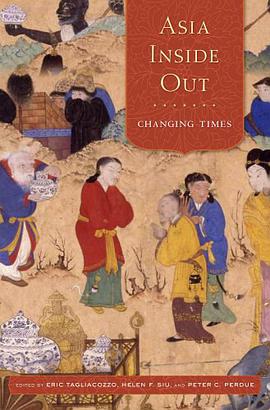
The first of three volumes surveying the historical, spatial, and human dimensions of inter-Asian connections, Asia Inside Out: Changing Times brings into focus the diverse networks and dynamic developments that have linked peoples from Japan to Yemen over the past five centuries. Each author examines an unnoticed moment—a single year or decade—that redefined Asia in some important way. Heidi Walcher explores the founding of the Safavid dynasty in the crucial battle of 1501, while Peter C. Perdue investigates New World silver’s role in Sino–Portuguese and Sino–Mongolian relations after 1557. Victor Lieberman synthesizes imperial changes in Russia, Burma, Japan, and North India in the seventeenth century, Charles Wheeler focuses on Zen Buddhism in Vietnam to 1683, and Kerry Ward looks at trade in Pondicherry, India, in 1745. Nancy Um traces coffee exports from Yemen in 1636 and 1726, and Robert Hellyer follows tea exports from Japan to global markets in 1874. Anand Yang analyzes the diary of an Indian soldier who fought in China in 1900, and Eric Tagliacozzo portrays the fragility of Dutch colonialism in 1910. Andrew Willford delineates the erosion of cosmopolitan Bangalore in the mid-twentieth century, and Naomi Hosoda relates the problems faced by Filipino workers in Dubai in the twenty-first. Moving beyond traditional demarcations such as West, East, South, and Southeast Asia, this interdisciplinary study underscores the fluidity and contingency of trans-Asian social, cultural, economic, and political interactions. It also provides an analytically nuanced and empirically rich understanding of the legacies of Asian globalization.
Read June 2, 2016
Within the field of modern South Asian history, Anand Yang's piece seems a bit underwhelming. When are we going to end all this celebratory and pretentious Pan-Asian bhai-bhai thing?
Perdue Tagliacozzo 萧凤霞
Asia Inside Out
Douban
Eric Tagliacozzo / Helen F. Siu … publishing house: Harvard University Press 2015 - 6
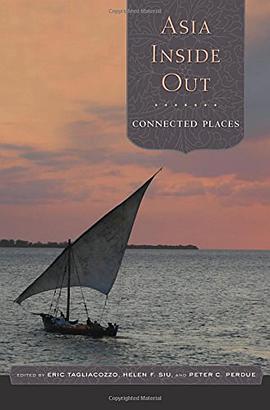
Asia Inside Out reveals the dynamic forces that have historically linked regions of the world’s largest continent, stretching from Japan and Korea to the South China Sea, Indian Ocean, and the Middle East. Connected Places, the second installment in this pioneering three-volume survey, highlights the transregional flows of goods, ideas, and people across natural and political boundaries—sea routes, delta ecologies, and mountain passes, ports and oasis towns, imperial capitals and postmodern cities. It challenges the conventional idea that defined geopolitical regions as land-based, state-centered, and possessing linear histories. Exploring themes of maritime connections, mobile landscapes, and spatial movements, the authors examine significant sites of linkage and disjuncture from the early modern period to the present. Readers discover how eighteenth-century pirates shaped the interregional networks of Vietnam’s Tonkin Gulf, how Kashmiri merchants provided intelligence of remote Himalayan territories to competing empires, and how for centuries a vibrant trade in horses and elephants fueled the Indian Ocean economy. Other topics investigated include cultural formations in the Pearl River delta, global trade in Chittagong’s transformation, gendered homemaking among mobile Samurai families, border zones in Qing China and contemporary Burma, colonial spaces linking India and Mesopotamia, transnational marriages in Oman’s immigrant populations, new cultural spaces in Korean Pop, and the unexpected adoption of the Latin script by ethnically Chinese Muslims in Central Asia. Connected Places shows the constant fluctuations over many centuries in the making of Asian territories and illustrates the confluence of factors in the historical construction of place and space.
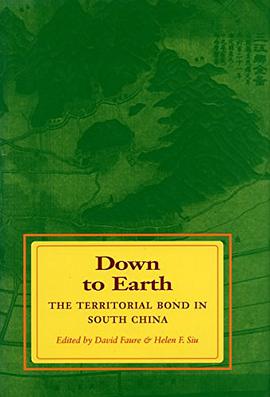
Down to Earth
Douban
David Faure / Helen F. Siu (Editors) publishing house: Stanford University Press 1995
Bringing local history to bear on major questions in Chinese social history and anthropology, this volume comprises a series of historical and ethnographic studies of the Pearl River Delta from late imperial times through the 1940's. The delta is a rich and socially complex area of south China, and the contributors - scholars from the People's Republic of China, Hong Kong, the United Kingdom, and the United States - have long-standing ties to the region. The contributors argue that local society in the Delta was integrated into the Chinese state through a series of changes that involved constant redefinition of lineages, territories, and ethnic identities. The emergence of lineages in the Ming and Qing dynasties, the deployment of deities in local alliances, and the shrewd use of ethnic labels provided terms for a discourse that reified the criteria for membership in Chinese local society. The ideology produced by these developments continued to serve as the norm for the legitimization of power in local society through the Republican period. In reconstructing the 'civilizing process' in the Delta, whereby local inhabitants, both elites and commoners, used symbolic and instrumental means to become part of Chinese culture and polity, the book confronts a central question in history and anthropology: How do we conceptualize the historical development of a state agrarian society with hierarchies of power and authority, attachment to which is both unifying and diversifying?
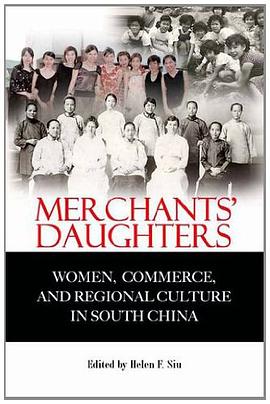
Merchants' Daughters
Douban
HELEN F. SIU publishing house: 香港大學出版社 2010 - 4
Historians and anthropologists have long been interested in South China where powerful lineages and gendered hierarchies are juxtaposed with unorthodox trading cultures, multi-ethnic colonial encounters, and market-driven consumption. The divergent paths taken by women in Hong Kong and Guangdong during thirty years of Maoist closure, and the post-reform cross-border fluidities have also gained analytical attention. This collection provides further theoretical application of a “regional construct” that appreciates process, transcends definitive powers of administrative borders, and brings out nuanced gender notions. An interdisciplinary team uses fine-grained historical and ethnographic materials to map out three crucial historical junctures in the evolution of South China, from late imperial to contemporary periods, that have significantly shaped the construction of gendered space. Stressing process and human agency, the volume uses women’s experiences to challenge dichotomous analytical perspectives on lineage patriarchy, colonial institutions, power, and social activism. For scholars of modern Hong Kong society, Merchants’ Daughters refocuses attention to cultural dynamics in the South China region of which Hong Kong is an integral part. For audiences generally interested in gender issues, this book illuminates the analytical importance of long historical periods in which layers of social, political, and economic activities intersected to constitute the complicated positioning of women.
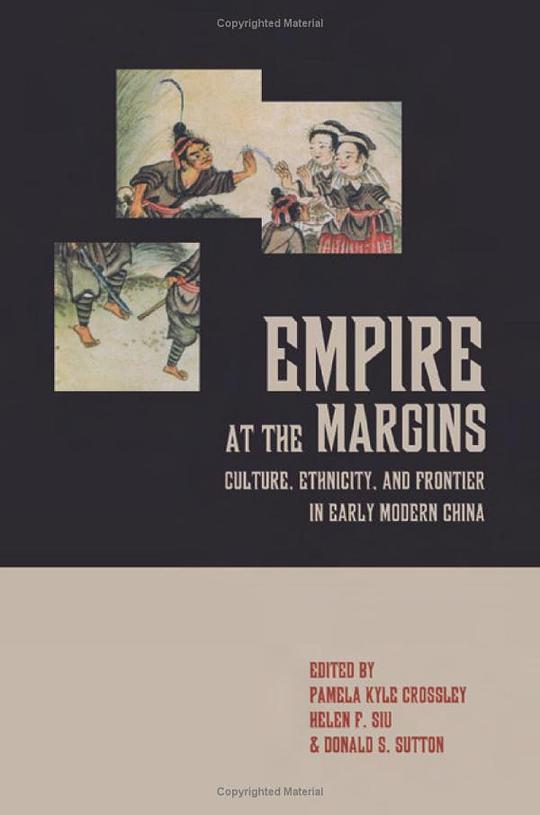
Empire at the Margins
Douban
Pamela Kyle Crossley / Helen F. Siu … publishing house: University of California Press 2006 - 1
Focusing on the Ming (1368-1644) and (especially) the Qing (1364-1912) eras, this book analyzes crucial moments in the formation of cultural, regional, and religious identities. The contributors examine the role of the state in a variety of environments on China's "peripheries," paying attention to shifts in law, trade, social stratification, and cultural dialogue. They find that local communities were critical participants in the shaping of their own identities and consciousness as well as the character and behavior of the state. At certain times the state was institutionally definitive, but it could also be symbolic and contingent. They demonstrate how the imperial discourse is many-faceted, rather than a monolithic agent of cultural assimilation.