高彦颐
The Social Life of Inkstones
Douban
Dorothy Ko publishing house: University of Washington Press 2017 - 2
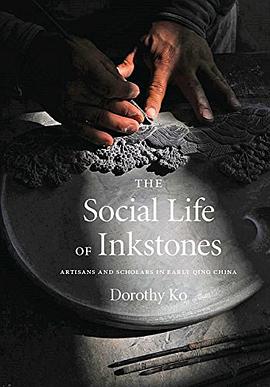
An inkstone, a piece of polished stone no bigger than an outstretched hand, is an instrument for grinding ink, a collectible object of art, a token of exchange between friends or sovereign states, and an inscriptional surface on which texts and images are carved and reproduced. As such the inkstone is entangled with the production of elite masculinity and the culture of wen (culture, literature, civility) in China, Korea, and Japan for over a millennium. Curiously, this ubiquitous object in East Asia is virtually unknown in Europe and America. The Social Life of Inkstones introduces its hidden history and cultural significance to scholars and collectors and in so doing, writes the stonecutters and artisans into history. Each of the five chapters is set in a specific place in disparate parts of the empire: the imperial workshops in the Forbidden City, the Duan quarries in Guangdong, inkstonecarving workshops in Suzhou and elsewhere in the south, and collectors’ homes in Fujian. Taken together, they trace the trajectories of the inkstone between court and society, and through the course of its entire social life. In bringing to life the people involved in making, using, collecting, and writing about the inkstone, this study shows the powerful emotional and technical investments that such a small object engendered. This first book-length study of inkstones focuses on a group of inkstone carvers and collectors, highlighting the work of Gu Erniang, a woman transitioned the artistry of inkstone-making to modernity between the 1680s and 1730s. The sophistication of these artisans and the craft practice of the scholars associated with them announced a new social order in which the age-old hierarchy of head over hand no longer predominated.
Teachers of the Inner Chambers
Douban
Dorothy Ko publishing house: Stanford University Press 1995 - 1
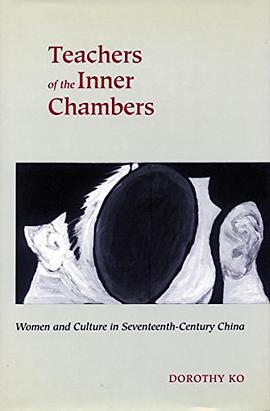
Rejecting popular image and accepted scholarship on the status of women in premodern China, this pathbreaking work argues that literate gentrywomen in seventeenth-century Jiangnan were far from oppressed or silenced. As writers, readers, editors, and teachers, these women created a rich culture and meaningful existence from within the constraints of the male-dominated Confucian system. The author reconstructs the social, emotional, and intellectual worlds of these women from the interstices between ideology, practice, and self-perception. Born out of curiosity about how premodern Chinese women lived, this book proposes a new way to conceptualize China's past. This reconception rests on the premise that by understanding how women lived, we better grasp the dynamics of gender relations and gain a more complete knowledge of the values of Chinese culture, the functioning of Chinese society, and the nature of historical change. The book examines three types of women's communities that developed in this environment: domestic, social, and public. Women from different families, age groups, and social stations were brought together by their shared love of poetry and common concerns as women. Though important at the time, most of these ties proved fragile and transitory because of women's inherently ambivalent position. The author argues that the gender system identified women both by their shared gender, or women-as-same, and by their social station, or women-as-different. This contradiction accorded women freedoms within their own limited spheres, but these spheres were fragmented and often demarcated by the class of male kin. As a result, even the most mobile and articulate of women had noinstitutional means of launching fundamental attacks on the gender system.
Cinderella's Sisters
Douban
Dorothy Ko publishing house: University of California Press 2007
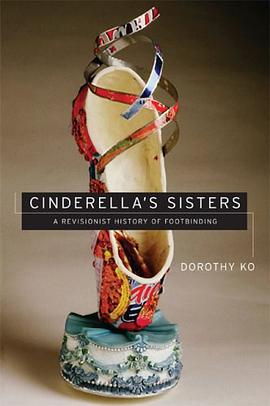
The history of footbinding is full of contradictions and unexpected turns. The practice originated in the dance culture of China's medieval court and spread to gentry families, brothels, maid's quarters, and peasant households. Conventional views of footbinding as patriarchal oppression often neglect its complex history and the incentives of the women involved. This revisionist history, elegantly written and meticulously researched, presents a fascinating new picture of the practice from its beginnings in the tenth century to its demise in the twentieth century. Neither condemning nor defending foot-binding, Dorothy Ko debunks many myths and misconceptions about its origins, development, and eventual end, exploring in the process the entanglements of male power and female desires during the practice's thousand-year history. "Cinderella's Sisters" argues that rather than stemming from sexual perversion, men's desire for bound feet was connected to larger concerns such as cultural nostalgia, regional rivalries, and claims of male privilege. Nor were women hapless victims, the author contends. Ko describes how women - those who could afford it - bound their own and their daughters' feet to signal their high status and self-respect. Femininity, like the binding of feet, was associated with bodily labor and domestic work, and properly bound feet and beautifully made shoes both required exquisite skills and technical knowledge passed from generation to generation. Throughout her narrative, Ko deftly wields methods of social history, literary criticism, material culture studies, and the history of the body and fashion to illustrate how a practice that began as embodied lyricism - as a way to live as the poets imagined - ended up being an exercise in excess and folly.