Ahmed_Shahab
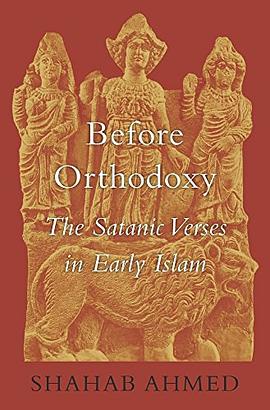
Before Orthodoxy
Douban
Shahab Ahmed publishing house: Harvard University Press 2017 - 4
One of the most controversial episodes in the life of the Prophet Muhammad concerns an incident in which he allegedly mistook words suggested by Satan as divine revelation. Known as the Satanic verses, these praises to the pagan deities contradict the Islamic belief that Allah is one and absolute. Muslims today―of all sects―deny that the incident of the Satanic verses took place. But as Shahab Ahmed explains, Muslims did not always hold this view. Before Orthodoxy wrestles with the question of how religions establish truth―especially religions such as Islam that lack a centralized authority to codify beliefs. Taking the now universally rejected incident of the Satanic verses as a case study in the formation of Islamic orthodoxy, Ahmed shows that early Muslims, circa 632 to 800 CE, held the exact opposite belief. For them, the Satanic verses were an established fact in the history of the Prophet. Ahmed offers a detailed account of the attitudes of Muslims to the Satanic verses in the first two centuries of Islam and traces the chains of transmission in the historical reports known as riwāyah. Touching directly on the nature of Muhammad’s prophetic visions, the interpretation of the Satanic verses incident is a question of profound importance in Islam, one that plays a role in defining the limits of what Muslims may legitimately say and do―issues crucial to understanding the contemporary Islamic world.
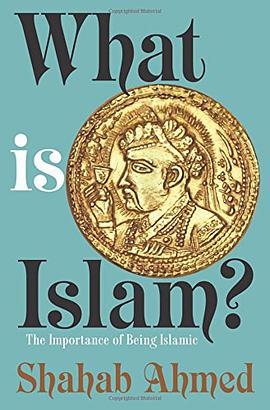
What Is Islam?
Douban
Shahab Ahmed publishing house: Princeton University Press 2015 - 11
What is Islam? How do we grasp a human and historical phenomenon characterized by such variety and contradiction? What is "Islamic" about Islamic philosophy or Islamic art? Should we speak of Islam or of islams? Should we distinguish the Islamic (the religious) from the Islamicate (the cultural)? Or should we abandon "Islamic" altogether as an analytical term? In What Is Islam?, Shahab Ahmed presents a bold new conceptualization of Islam that challenges dominant understandings grounded in the categories of "religion" and "culture" or those that privilege law and scripture. He argues that these modes of thinking obstruct us from understanding Islam, distorting it, diminishing it, and rendering it incoherent. What Is Islam? formulates a new conceptual language for analyzing Islam. It presents a new paradigm of how Muslims have historically understood divine revelation—one that enables us to understand how and why Muslims through history have embraced values such as exploration, ambiguity, aestheticization, polyvalence, and relativism, as well as practices such as figural art, music, and even wine drinking as Islamic. It also puts forward a new understanding of the historical constitution of Islamic law and its relationship to philosophical ethics and political theory. A book that is certain to provoke debate and significantly alter our understanding of Islam, What Is Islam? reveals how Muslims have historically conceived of and lived with Islam as norms and truths that are at once contradictory yet coherent.
To read Nov. 14, 2015
Shahab先师的第一本书,也是遗作。据说将是改变整个领域的著作。在今天这个日子更有其价值。2015年11月10日入。M. Shahab Ahmed (1966-2015)
Ahmed_Shahab