Alam
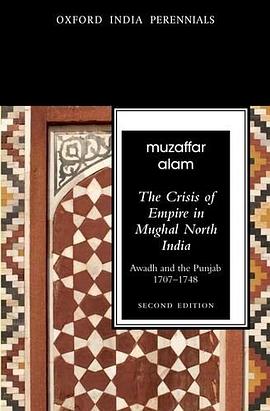
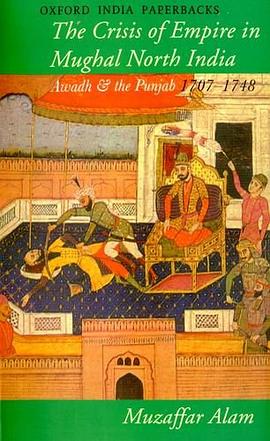
The Crisis of Empire in Mughal North India Awadh and Punjab, 1707-1748
Douban
Alam, Muzaffar publishing house: Oxford University Press 2013 - 5
The period following the death of Aurangzeb has been viewed as the beginning of the decline and decay of the Mughal empire. Examining two contrasting regions of north India-Awadh and Punjab-this pioneering work shows how the period 1707-48 saw the emergence of a new order with local and regional idioms. Muzaffar Alam focuses on the interplay of imperial collapse with regional restructuring. He contends that even as the empire declined, there emerged a new, regionally-based political order, maintained and controlled by former Mughal rulers. From agrarian uprisings to the jagirdari system, the Sikhs to the Zamindars, this book presents a bold new interpretation of an important transition in this period. This edition comes with a new introduction. This book is an important reading for students, scholars, and teachers of Mughal history and early modern India.
Read
Jan. 7, 2020
Mughal decline in early eighteenth century in the form of the emergence of the new subadari, conditioned and constrained by economic growth in the sixteenth century; tension between imperial center, regional governor, and local landed elites | 二读
Alam
The Crisis of Empire in Mughal North India
Douban
Muzaffar Alam publishing house: Oxford University Press 2001 - 1
The period following the death of Aurangzeb has usually been viewed from the perspective of the decline and subsequent decay of the Mughal empire. This study emphasizes that the period 1707-1748 saw the emergence of a new order with local and regional idioms, even though echoes from the imperial period continued to be heard.
Read
Jan. 27, 2014
Skimmed it. The definitive work on the eighteenth century Mughal "decline"/"decentralization". New introduction to second edition is especially good in its use of literary materials and discussion of newly emerging social/cultural trends (2013). | Somewhat resonates with Philip Kuhn's first book on militarism and decentralization.
Alam
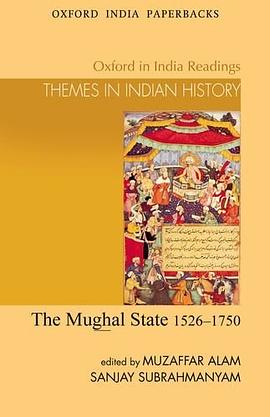
The Mughal State, 1526-1750
Douban
Muzaffar Alam / Sanjay Subrahmanyam publishing house: OUP India 2000 - 2
The Mughal state has, since the time of its existence, exercised a compelling effect on observers. A rich historiography in Indian and European languages has long existed, and in the present century debates have raged concerning its character, and the implications for the longer-term trajectory of the subcontinent. This book brings together some of the key interventions in that debate, while its detailed introduction surveys the main positions, and outlines possibilities for future research. It is the outcome of the collaboration of two scholars, one a leading specialist on Mughal studies, the other a social and economic historian of the early modern Indian Ocean world and southern India.
Read
Jan. 26, 2014
Very good historiographical overview and indispensable reference for early modern South Asia | 200105二读
Alam Subrahmanyam
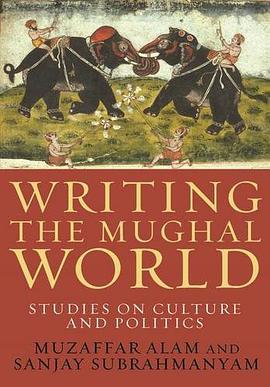
Writing the Mughal World
Douban
Muzaffar Alam / Sanjay Subrahmanyam publishing house: Columbia University Press 2011 - 8
Between the mid-sixteenth and early nineteenth century, the Mughal Empire was an Indo-Islamic dynasty that ruled as far as Bengal in the east and Kabul in the west, as high as Kashmir in the north and the Kaveri basin in the south. The Mughals constructed a sophisticated, complex system of government that facilitated an era of profound artistic and architectural achievement. They promoted the place of Persian culture in Indian society and set the groundwork for South Asia's future development. In this volume, two leading historians of early modern South Asia present nine major joint essays on the Mughal Empire, framed by an essential introductory reflection. Making creative use of materials written in Persian, Indian vernacular languages, and a variety of European languages, their chapters accomplish the most significant innovations in Mughal historiography in decades, intertwining political, cultural, and commercial themes while exploring diplomacy, state-formation, history-writing, religious debate, and political thought. Muzaffar Alam and Sanjay Subrahmanyam center on confrontations between different source materials that they then reconcile, enabling readers to participate in both the debate and resolution of competing claims. Their introduction discusses the comparative and historiographical approach of their work and its place within the literature on Mughal rule. Interdisciplinary and cutting-edge, this volume richly expands research on the Mughal state, early modern South Asia, and the comparative history of the Mughal, Ottoman, Safavid, and other early modern empires.
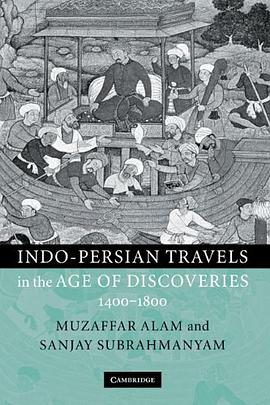
Indo-Persian Travels In The Age Of Discoveries, 1400-1800
Douban
Muzaffar Alam / Sanjay Subrahmanyam publishing house: 劍橋大學出版社 2007 - 2
Originally published in 2007, this fascinating work is based on detailed and sensitive readings of travel accounts in Persian, dealing with India, Iran and Central Asia between around 1400 and 1800. The first comprehensive treatment of this neglected genre of literature (safar nama), it links the Mughals, Safavids and Central Asia in a crucial period of transformation and cultural contact. The authors' close reading of these travel accounts help us enter the mental and moral worlds of the Muslim and non-Muslim literati who produced these valuable narratives. These accounts are presented in a comparative framework, which sets them side by side with other Asian accounts, as well as early modern European travel narratives, and opens up a rich and unsuspected vista of cultural and material history. This book can be read for a better understanding of the nature of early modern encounters, but also for the sheer pleasure of entering a new world.