Anderson_Benedict
The Fate of Rural Hell
Douban
Benedict Anderson publishing house: Seagull Books 2016 - 10
In 1975, when political scientist Benedict Anderson reached Wat Phai Rong Wua, a massive temple complex in rural Thailand conceived by Buddhist monk Luang Phor Khom, he felt he had wandered into a demented Disneyland. One of the world's most bizarre tourist attractions, Wat Phai Rong Wua was designed as a cautionary museum of sorts; its gruesome statues depict violent and torturous scenes that showcase what hell may be like. Over the next few decades, Anderson, who is best known for his work, Imagined Communities, found himself transfixed by this unusual amalgamation of objects, returning several times to see attractions like the largest metal-cast Buddha figure in the world and the Palace of a Hundred Spires. The concrete statuaries and perverse art in Luang Phor's personal museum of hell included,“side by side, an upright human skeleton in a glass cabinet and a life-size replica of Michelangelo's gigantic nude David, wearing fashionable red underpants from the top of which poked part of a swollen, un-Florentine penis,” alongside dozens of statues of evildoers being ferociously punished in their afterlife. In The Fate of Rural Hell, Anderson unravels the intrigue of this strange setting, endeavoring to discover what compels so many Thai visitors to travel to this popular spectacle and what order, if any, inspired its creation. At the same time, he notes in Wat Phai Rong Wua the unexpected effects of the gradual advance of capitalism into the far reaches of rural Asia. Both a one-of-a-kind travelogue and a penetrating look at the community that sustains it, The Fate of Rural Hell is sure to intrigue and inspire conversation as much as Wat Phai Rong Wua itself.
想象的共同体
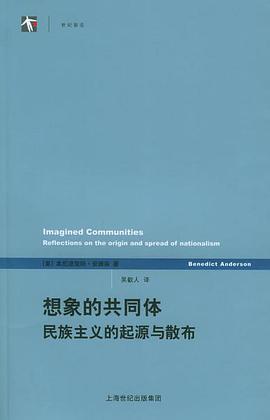
Imagined Communities: Reflections on the Origin and Spread of Nationalism Google Books Douban
★ 8.5 71 ratings
[美国] 本尼迪克特·安德森 translator: 吴叡人 publishing house: 上海人民出版社 2005 - 4
民族和民族主义是什么?其本质是什么?它们在历史上是怎样出现的,又经历了怎样的变迁?为何它们能够在今天拥有如此深刻的情感上的正当性?这些都是研究民族和民族主义问题的学者们试图要解答的问题。本书的作者本尼迪克特・安德森以“哥白尼精神“独辟蹊径,从民族情感与文化根源出发探讨了不同民族属性的、全球各地的“想象的共同体“,力图提出一个解释上述关于民族与民族主义问题的新的理论典范。安德森将民族、民族属性与民族主义视为一种“特殊的文化的人造物“,将民族定义为“一种想象的政治共同体“。 他认为这些“想象的共同体“的形成主要取决于以下因素:宗教信仰的领土化、古典王朝家族的衰微、时间观念的改变、资本主义与印刷术之间的交互作用、国家方言的发展等。通过比较史和历史社会学的方法,安德森对民族主义的起源与散布进行了论证:他否定了多数学者所认同的民族主义起源于欧洲的观点,认为18世纪末和19世纪初的南北美洲殖民地独立运动才是“第一波“的民族主义,民族主义是经由美洲而散播至欧洲,再到亚洲和非洲。安德森百科全书式的欧洲史素养与当代东南亚研究权威的背景,以及他对东西方多种语言的掌握能力,使得他的论证更具说服力。《想象的共同体》独辟蹊径的研究视角令它已经成为当代研究民族与民族主义的经典著作,其影响所及几乎横跨所有人文与社会学科,是当代文史社会科学学生必读之书,同时也是理解人类社会诸多现象时,不可或缺的指引。
比较的幽灵
The Spectre of Comparisons Douban
★ 7.7 6 ratings
[美国] 本尼迪克特·安德森 translator: 甘会斌 publishing house: 译林出版社 2012 - 4
本书分析了形成民族主义的各种力量,考察各个东南亚国家具体的民族主义表现并加以比较,最后提出为在冷战后遭受冷遇的民族主义正名,对东南亚、殖民主义和民族主义都有深刻的洞见。 “人文与社会译丛”秉承“激活思想,传承学术”之宗旨,以精良的选目,可靠的译文,赢得学术界和公众的广泛认可与好评,被认为是当今“最好的社科丛书之一”。
A Life Beyond Boundaries
Douban
★ 9.1 9 ratings
Benedict Anderson publishing house: Verso 2016 - 4
An intellectual memoir by the author of the acclaimed Imagined Communities Benedict Anderson is one of the leading historians of nationalism and Southeast Asia. His seminal book Imagined Commu-nities has changed the way we think about the reason why people live, die and kill in the name of nation-hood. Born in China, Anderson spent his childhood in California and Ireland, was educated in England and finally found a home at Cornell University, where he immersed himself in the growing field of Southeast Asian studies. After field work in Indonesia, Thailand and the Philippines, he was banned from Suharto’s Indonesia for disputing the legitimacy of the 1965 coup. In his memoir, he brings to life the intellectual formation of a life spent open to the world, resisting the easy comforts of imagined homes: the joys of learning languages; the importance of field work; the influence of the New Left upon global think-ing; and the satisfactions of teaching.
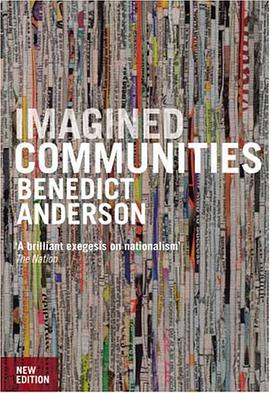
Imagined Communities
Google Books Douban Goodreads
★ 8.6 14 ratings
Benedict Anderson publishing house: Verso 2006 - 11 other title: Imagined Communities: Reflections on the Origin and Spread of Nationalism
The definitive, bestselling book on the origins and development of nationalism. Imagined Communities, Benedict Anderson's brilliant book on nationalism, forged a new field of study when it first appeared in 1983. Since then it has sold over a quarter of a million copies and is widely considered the most important book on the subject. In this greatly anticipated revised edition, Anderson updates and elaborates on the core question: what makes people live, die and kill in the name of nations? He shows how an originary nationalism born in the Americas was adopted by popular movements in Europe, by imperialist powers, and by the anti-imperialist resistances in Asia and Africa, and explores the way communities were created by the growth of the nation-state, the interaction between capitalism and printing, and the birth of vernacular languages-of-state. Anderson revisits these fundamental ideas, showing how their relevance has been tested by the events of the past two decades.