Bakhtin
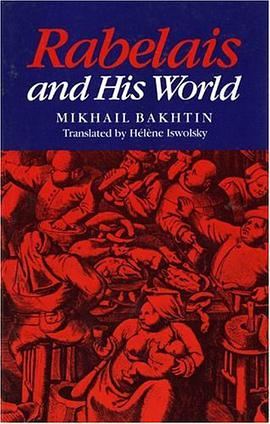
Rabelais and His World
Douban
Mikhail Bakhtin translator: Helene Iswolsky publishing house: Indiana University Press 1984 - 9
This classic work by the Russian philosopher and literary theorist Mikhail Bakhtin (1895-1975) examines popular humor and folk culture in the Middle Ages and the Renaissance. One of the essential texts of a theorist who is rapidly becoming a major reference in contemporary thought, Rabelais and His World is essential reading for anyone interested in problems of language and text and in cultural interpretation.
小说理论
Douban
巴赫金 translator: 白春仁 晓河 publishing house: 河北教育出版社 1998 - 6
关于小说尤其是长篇小说的研究,巴赫金创立了自己独特的体系。他把诗与小说严格地区分开来,讨论了小说的话语特征。同时,他更敏锐地注意到类型在小说研究中的重要地位。对话、时空体,成为他的小说理论的重要术语。
拉伯雷研究
Douban
巴赫金 translator: 李兆林 夏忠宪等 publishing house: 河北教育出版社 1998 - 6
本书是巴赫金最缺乏信心然而也是他最重要的文学批评专著。巴赫金认为,在世界文学的所有伟大作家之中,拉伯雷在俄国最不著名,最缺乏研究,对他的理解和评价也最为不够。巴赫金敏锐的注意到,在近代文学的创建者当中,拉伯雷是最民主的一个,他与民间源头的联系比其他人更紧密、更本质。在这部专著当中,巴赫金极为深刻的注意到民间文化的诙谐问题。
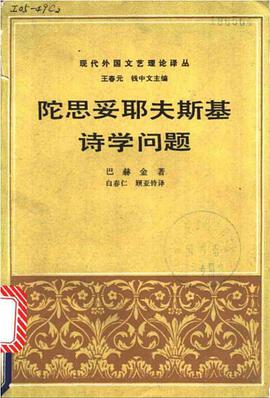
陀思妥耶夫斯基诗学问题
Douban
★ 9.4 9 ratings
巴赫金 translator: 白春仁 / 顾亚铃 publishing house: 三联书店 1988
1 陀思妥耶夫斯基的复调小说和评论著述对它的阐释 2 陀思妥耶夫斯基创作中的主人公和作者对主人公的立场 3 陀思妥耶夫斯基作品中的思想 4 陀思妥耶夫斯基作品的体裁特点和情节布局特点 5 陀思妥耶夫斯基的语言
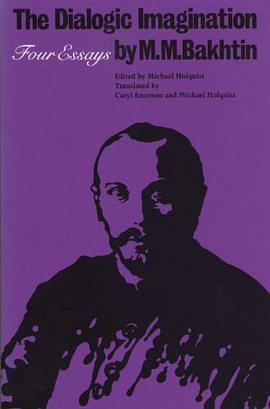
The Dialogic Imagination
Douban
M. M. Bakhtin translator: Caryl Emerson publishing house: University of Texas Press 1982 - 1
These essays reveal Mikhail Bakhtin (1895-1975)—known in the West largely through his studies of Rabelais and Dostoevsky—as a philosopher of language, a cultural historian, and a major theoretician of the novel. The Dialogic Imagination presents, in superb English translation, four selections from Voprosy literatury i estetiki (Problems of literature and esthetics), published in Moscow in 1975. The volume also contains a lengthy introduction to Bakhtin and his thought and a glossary of terminology. Bakhtin uses the category "novel" in a highly idiosyncratic way, claiming for it vastly larger territory than has been traditionally accepted. For him, the novel is not so much a genre as it is a force, "novelness," which he discusses in "From the Prehistory of Novelistic Discourse." Two essays, "Epic and Novel" and "Forms of Time and of the Chronotope in the Novel," deal with literary history in Bakhtin's own unorthodox way. In the final essay, he discusses literature and language in general, which he sees as stratified, constantly changing systems of subgenres, dialects, and fragmented "languages" in battle with one another.