Bayly_C_A
Empire and Information
Douban
C. A. Bayly publishing house: 劍橋大學出版社 1997 - 1
In a penetrating account of the evolution of British intelligence gathering in India, C. A. Bayly shows how networks of Indian spies were recruited by the British to secure military, political and social information about their subjects. He also examines the social and intellectual origins of these 'native informants', and considers how the colonial authorities interpreted and often misinterpreted the information they supplied. It was such misunderstandings which ultimately contributed to the failure of the British to anticipate the rebellions of 1857. The author argues, however, that even before this, complex systems of debate and communication were challenging the political and intellectual dominance of the European rulers.
Read
Feb. 9, 2020
Indigenous knowledge network; transition from affective information communities to institutional colonial knowledge
Bayly_C_A
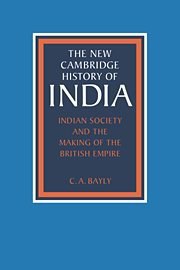
Indian Society and the Making of the British Empire
Douban
C. A. Bayly publishing house: 劍橋大學出版社 1988 - 4
New views of the "decline of the Mughals", expansion of the English East India Company's trade and urban settlements, and the role of the Indians in the politics and economics of early colonialism.
Read
Jan. 21, 2020
二读 | Emphasizing the military despotism of early Company Raj: "cash and men"; How consequent fiscal policies disrupted the commercial buoyancy of Indian society; resulting in the failure of the Company state. | Creation of "traditional society": a period of social change as well as continuity
Bayly_C_A
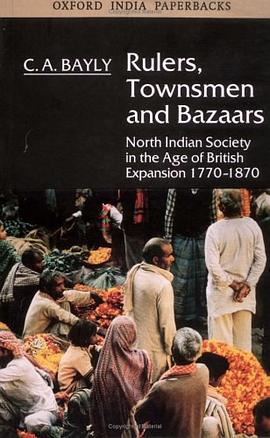
Rulers, Townsmen and Bazaars
Douban
C.A. Bayly publishing house: 劍橋大學出版社 1983
This path-breaking work on the social and economic history of colonial India traces the evolution of north Indian towns and merchant communities from the decline of Mughal dominion to the consolidation of British empire following the 1857 'mutiny'. C.A. Bayly analyses the response of the inhabitants of the Ganges Valley to the upheavals in the eighteenth century that paved the way for the incoming British. He shows how the colonial enterprise was built on an existing resilient network of towns, rural bazaars, and merchant communities; and how in turn, colonial trade and administration were moulded by indigenous forms of commerce and politics. This edition comes with a new introduction.
Read
Jan. 20, 2020
二读 | Influx of silver in 1600s --> fragmented authorities expanding / seeking cash --> merchant class consolidating --> British providing favorable commercial climate, merchants providing cashflow --> disruption of old political-economic order by conquest --> merchant families disembedded from political patronage system --> post-1857
Bayly_C_A
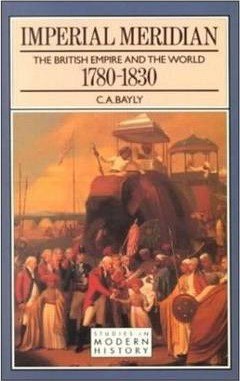
Imperial Meridian
Douban
Christopher Alan Bayly publishing house: Longman Group United Kingdom 1989 - 6
Read Oct. 12, 2019
二读 | Not "empire of free trade" or gradual advent of liberalism, "1780 to 1830 represented not simply a hiatus between the irresistible waves of liberal reform, but a series of attempts to establish overseas despotisms."
Bayly_C_A
现代世界的诞生
The Birth of the Modern World Douban
[英]C.A.贝利 translator: 于展 / 何美兰 publishing house: 商务印书馆 2013 - 7
《现代世界的诞生 1780-1914年》是近年颇受好评的一部历史学著作。2004 年由布莱克威尔出版社首次发行。它研究的时段是从中古向现代过渡的时期,或称“早期现代时期”。它从全球史的立场出发,提出这样的观点:世界日益走向全球化,导致封闭的古代世界向现代世界过渡。全书不仅涉及全球各个地区,还涉及政治社会经济等各个领域。现为重要的是,除了历史叙述和分析外,作者还就古代世界向现代世界的过渡,提出了自己的解释模式,从而使本书不同于一般历史著作,其自身更具理论意义。
Read Oct. 8, 2019
原书五分,翻译负分
Bayly_C_A
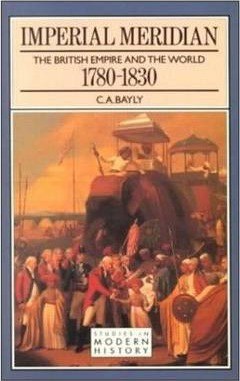
Imperial Meridian
Douban
C. A. Bayly publishing house: Longman 1989 - 6
In this impressive and ambitious survey Dr Bayly studies the rise, apogee and decline of what has come to be called `the Second British Empire' -- the great expansion of British dominion overseas (particularly in Asia and the Middle East) during the French Revolutionary and Napoleonic era that, coming between the loss of America and the subsequent partition of Africa, constitutes the central phase of British imperial history.
Read
Oct. 10, 2017
Magisterial piece on the grand scheme of how the British Empire remade itself into the Second Empire, 1780-1830 | 2013.2.27
Bayly_C_A
Rulers, Townsmen and Bazaars
Douban
C.A. Bayly publishing house: OUP India 2012 - 5
This path-breaking work on the social and economic history of colonial India traces the evolution of north Indian towns and merchant communities from the decline of Mughal dominion to the consolidation of British empire following the 1857 'mutiny'. C.A. Bayly analyses the response of the inhabitants of the Ganges Valley to the upheavals in the eighteenth century that paved the way for the incoming British. He shows how the colonial enterprise was built on an existing resilient network of towns, rural bazaars, and merchant communities; and how in turn, colonial trade and administration were moulded by indigenous forms of commerce and politics. This edition comes with a new introduction. This book is an important reading for students, scholars, and teachers of modern Indian history, economic history, and sociology.
Read
May 18, 2015
领域内具有绝对开创性地位的重要著作,需反复多次阅读。不过Bayly师祖早年的英文写作(此书在他35岁前完成)实在难读,长句连篇,比起后来的Empire and Information等不可同日而语。
Bayly_C_A
Origins of Nationality in South Asia
Douban
Bayly, C. A. publishing house: Oxford University Press 2001 - 11
This book considers the ideological and institutional antecedents of mature Indian nationalism. It argues that patriotism is a useful concept with which to understand India in the eighteenth and early nineteenth centuries. It includes essays on swadeshi, Indian resistance, and "communalism."
Read
April 13, 2014
The epilogue, "Historiographical and autobiographical note," is gold.
Bayly_C_A
Empire and Information
Douban
C. A. Bayly publishing house: 劍橋大學出版社 2000 - 3
In a penetrating account of the evolution of British intelligence gathering in India, C. A. Bayly shows how networks of Indian spies were recruited by the British to secure military, political and social information about their subjects. He also examines the social and intellectual origins of these 'native informants', and considers how the colonial authorities interpreted and often misinterpreted the information they supplied. It was such misunderstandings which ultimately contributed to the failure of the British to anticipate the rebellions of 1857. The author argues, however, that even before this, complex systems of debate and communication were challenging the political and intellectual dominance of the European rulers.
Read
Feb. 27, 2014
Truly encyclopaedic. Arguably the best work of history ever read.
Bayly_C_A
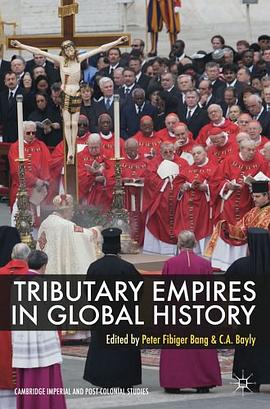
Tributary Empires in Global History
Douban
Bang, Peter Fibiger; Bayly, Christopher Alan; publishing house: Palgrave Macmillan 2011 - 9
Tributary Empires in Global History is one of a very select few to pioneer comparisons between the great historical empires of agrarian societies, such as the Roman, Mughal and Ottoman empires, and others. As such, it is an exercise in global and comparative history over time. It examines and interrogates our basic historiographical, theoretical and comparative models and conceptions about how large pre-colonial empires expanded, operated and declined. In 14 chapters, all of them explicitly comparative, a group of leading historians, sociologists and anthropologists illuminate tributary empires from diverse perspectives ranging from the character of the state and fiscal organisation, to imperial households, royal rituals, provincial societies as well as shared historiographical traditions and tropes. In doing so, the essays draw attention to the importance of these earlier forms form of imperialism to broaden our perspective on modern concerns about empire and the legacy of colonialism.
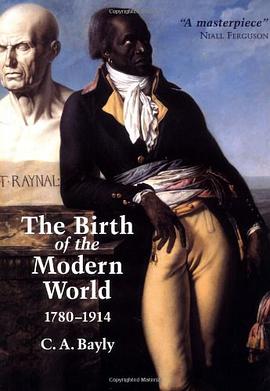
The Birth of the Modern World, 1780-1914
Douban
C. A. Bayly publishing house: Wiley-Blackwell 2003
The Birth of the Modern World is a wonderfully ambitious book that effectively demonstrates the global nature of the modern world and the need to decentre national histories and think big. It is a 'thematic history' demonstrating how 'historical trends and sequences of events, which have been treated separately in regional or national histories, can be brought together' (p. 1). Bayly's emphasis is on the interdependencies and interconnectedness of political and social changes across the world in a period well before contemporary globalisation. It is in part a culmination of his own work over a long period – using his rich and detailed knowledge of Indian and South Asian history as he did previously in Imperial Meridian – as a basis from which to reflect on national, imperial and global concerns. It is an intervention in the current debates over globalisation, for he shares the insistence of A. G. Hopkins and others that the contemporary version of this is not the first; theorists must be more careful to specify the particularities of phases of globalisation given its long history. (2) It is also an attempt to put a particular reading of connection and interdependence at the heart of the making of the modern world, thereby unseating E. J. Hobsbawm's magisterial four volumes on the long nineteenth century, The Age of Revolution, Industry and Empire, The Age of Capital and The Age of Empire with its drama of the unfolding logic of capitalism and exploitation, and providing a new account for these post-Marxist times. In the process it cocks many a snook at post-colonial theorists with their 'polemic' and their 'jargon' and the particular sets of antagonisms and dynamics that they stress – racialised difference –and is proud of its sceptical stance towards theory, keen to avoid 'pretentious words'. The strength of Bayly's analysis is that it insists on modernity as a global process. The downside from my perspective is the absence of an analysis of power. As he admits right at the end of the book an emphasis on networks and connections can (and indeed does in this instance) take away from the question of power – who wields it, over whom, and how? His account, he insists, is not one of collaboration but subordination.
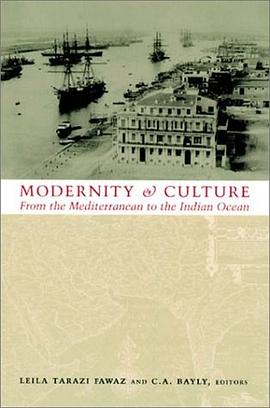
Modernity and Culture
Douban
Fawaz, Leila Tarazi / Bayly, Christopher Alan … publishing house: Columbia University Press 2001 - 5
Between the 1890s and 1920s, cities in the vast region stretching from the Mediterranean Sea to the Indian Ocean were experiencing political, social, economic, and cultural changes that had been set in motion at least since the early nineteenth century. As the age of pre-colonial empires gave way to colonial and national states, there was a sense that a particular liberalism of culture and economy had been irretrievably lost to a more intolerant age. Avoiding such dichotomies as East/West and modernity/tradition, this book provides a comparative analysis of contested versions of the concept of modernity. The book examines not only the "high" culture of scholars and the literati, but also popular music, the visual arts, and journalism. The contributors incorporate discussion of the way in which the business in both commodities and ideas was conducted in the increasingly cosmopolitan cities of the time.
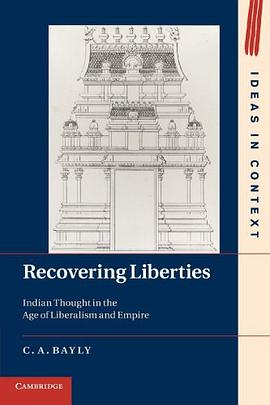
Recovering Liberties
Douban
C. A. Bayly publishing house: 劍橋大學出版社 2011 - 11
One of the world's leading historians examines the great Indian liberal tradition, stretching from Rammohan Roy in the 1820s, through Dadabhai Naoroji in the 1880s to G. K. Gokhale in the 1900s. This powerful new study shows how the ideas of constitutional, and later 'communitarian' liberals influenced, but were also rejected by their opponents and successors, including Nehru, Gandhi, Indian socialists, radical democrats and proponents of Hindu nationalism. Equally, Indian Thought in the Age of Liberalism and Empire contributes to the rapidly developing field of global intellectual history, demonstrating that the ideas we associate with major Western thinkers - Mills, Comte, Spencer and Marx - were received and transformed by Indian intellectuals in the light of their own traditions to demand justice, racial equality and political representation. In doing so, Christopher Bayly throws fresh light on the nature and limitations of European political thought and re-examines the origins of Indian democracy.