Bello
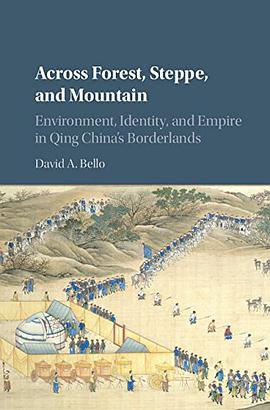
Across Forest, Steppe, and Mountain
Douban
David A. Bello publishing house: 劍橋大學出版社 2016 - 2
In this book, David Bello offers a new and radical interpretation of how China's last dynasty, the Qing (1644–1911), relied on the interrelationship between ecology and ethnicity to incorporate the country's far-flung borderlands into the dynasty's expanding empire. The dynasty tried to manage the sustainable survival and compatibility of discrete borderland ethnic regimes in Manchuria, Inner Mongolia, and Yunnan within a corporatist 'Han Chinese' imperial political order. This unprecedented imperial unification resulted in the great human and ecological diversity that exists today. Using natural science literature in conjunction with under-utilized and new sources in the Manchu language, Bello demonstrates how Qing expansion and consolidation of empire was dependent on a precise and intense manipulation of regional environmental relationships. Combines under-utilized and new sources in the Manchu language with natural science literature Complements a general professional and publishing trend in environmental history relating both to China and to global history of the early modern period Offers a new, radical interpretation of how China's last dynasty relied on the interrelationship between ecology and ethnicity to incorporate China's borderlands into its expanding empire
To read March 15, 2017
Bello
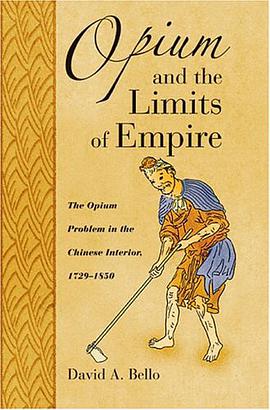
Opium and the Limits of Empire
Douban
David A. Bello publishing house: Harvard University Asia Center 2005 - 4
The British opium trade along China's seacoast has come to symbolize China's century-long descent into political and social chaos. In the standard historical narrative, opium is the primary medium through which China encountered the economic, social, and political institutions of the West. Opium, however, was not a Sino-British problem confined to southeastern China. It was, rather, an empire-wide crisis, and its spread among an ethnically diverse populace created regionally and culturally distinct problems of control for the Qing state. This book examines the crisis from the perspective of Qing prohibition efforts. The author argues that opium prohibition, and not the opium wars, was genuinely imperial in scale and is hence much more representative of the actual drug problem faced by Qing administrators. The study of prohibition also permits a more comprehensive and accurate observation of the economics and criminology of opium. The Qing drug traffic involved the domestic production, distribution, and consumption of opium. A balanced examination of the opium market and state anti-drug policy in terms of prohibition reveals the importance of the empire's landlocked western frontier regions, which were the domestic production centers, in what has previously been considered an essentially coastal problem.