Bickers
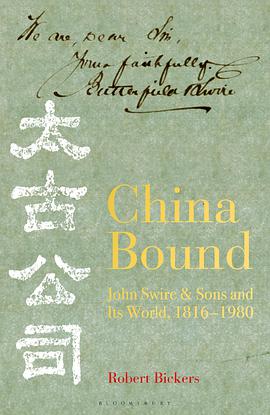
China Bound
Douban
Robert Bickers publishing house: Bloomsbury 2020 - 3
The Swire Group, started by John Swire in 1816, had its beginnings as a modest Liverpool import-export company, focused mainly on the textile trade. John Swire's sons, John Samuel (1825-1898) and William Hudson (1830-1884), took the firm overseas and it was John Samuel Swire in particular whose entrepreneurial instincts would be at the root of the firm's successes in years to come. In 1861, John Swire & Sons Limited began to trade with China. In 1866, in partnership with R.S. Butterfield, the firm of Butterfield & Swire was established in Shanghai. Four years later, a branch of Butterfield & Swire was opened in Hong Kong. In 1953, four years after the establishment of the People's Republic of China, Butterfield & Swire closed all of its China offices. In 1974, Butterfield & Swire in Hong Kong was renamed John Swire & Sons (H.K.) Ltd. Today, Swire is a highly diversified group of companies – covering shipping, airlines (including Cathay Pacific), luxury hotels and agribusiness – and continues to operate out of Hong Kong, with a formal group HQ in London. This new book provides a detailed and intimate history of the company, researched and written by Robert Bickers, a Professor of History at the University of Bristol.
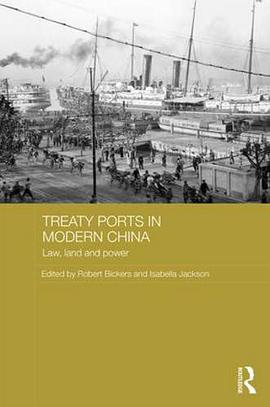
Treaty Ports in Modern China
Douban
Robert Bickers (ed.) / Isabella Jackson (ed.) publishing house: Routledge 2016 - 3
This book presents a wide range of new research on the Chinese treaty ports – the key strategic places on China’s coast where in the late nineteenth and twentieth centuries various foreign powers controlled, through "unequal treaties", whole cities or parts of cities, outside the jurisdiction of the Chinese authorities. Topics covered include land and how it was acquired, the flow of people, good and information, specific individuals and families who typify life in the treaty ports, and technical advances, exploration, and innovation in government.
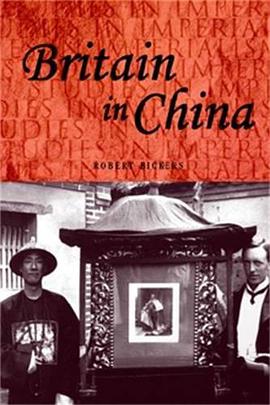
Britain in China
Douban
Robert Bickers publishing house: Manchester University Press 1999 - 7
This is a study of Britain's presence in China both at its peak, and during its inter-war dissolution in the face of assertive Chinese nationalism and declining British diplomatic support. Using archival materials from China and records in Britain and the United States, the author paints a portrait of the traders, missionaries, businessmen, diplomats and settlers who constituted "Britain-in-China", challenging our understanding of British imperialism there. Bickers argues that the British presence in China was dominated by urban settlers whose primary allegiance lay not with any grand imperial design, but with their own communities and precarious livelihoods. This brought them into conflict not only with the Chinese population, but with the British imperial government. The book also analyzes the formation and maintenance of settler identities, and then investigates how the British state and its allies brought an end to the reign of freelance, settler imperialism on the China coast. At the same time, other British sectors, missionary and business, renegotiated their own relationship with their Chinese markets and the Chinese state and distanced themselves from the settler British.
The Scramble for China
Douban
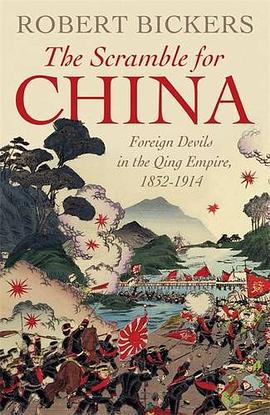
Robert Bickers publishing house: Allen Lane 2011 - 2
In the early 19th century China remained almost untouched by Britain and other European powers - ferocious laws forbade all trade with the West outside one tiny area of Canton. Anyone teaching a European to speak Chinese was executed. But as new technology began to unbalance the relationship, foreigners gathered like wolves around the weakening Qing Empire. Would the Chinese suffer the fate of much of the rest of the world, carved into pieces by the Europeans? Or could they adapt rapidly enough to maintain their independence? Humiliated by military disaster, racked by rebellions that cost millions of lives and ultimately invaded during the Boxer Rebellion by thousands of foreign soldiers, it looked as though the colonial Scramble for Africa was about to be followed by the Scramble for China. This extraordinary new book tells this epic story both from the European (mainly British) point of view and the Chinese. The degradation of China in this period is crucially important to understanding China today, whose government and people are steeped in stories of this terrible time and never wish to appear weak again. "The Scramble for China" is both highly original and brilliantly written - it reimagines these encounters between two equally arrogant and scornful civilizations, whether from the point of view of a Chinese governor or a British soldier. It is an epic of squalor, romance, brutality and exoticism, and it changed the world.
Empire Made Me
Douban
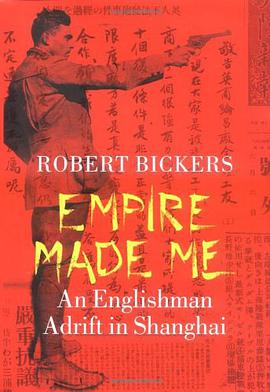
Robert Bickers publishing house: Columbia University Press 2004 - 1
Richard Maurice Tinkler was an ordinary man in an extraordinary time and place. This riveting "biography of a nobody" offers a rare glimpse of imperialism and the making of modern China seen from the perspective of a working-class Englishman enforcing the order of everyday life on the streets of Shanghai. Culled from Tinkler's many personal letters, Empire Made Me meticulously documents his astonishingly revealing life in the service of the British Empire between 1919 and 1939, one of hundreds of young men who joined the Shanghai Municipal Police. Responsible for maintaining order in Shanghai's International Settlement, the SMP expanded and enforced British dominion in China's most important political, commercial, and cultural center. Tinkler would have remained just another anonymous and forgotten colonial policeman were it not for his unexpected death, at the hands of Japanese marines and an incompetent local doctor, in June 1939. His suspicious death created a noisy diplomatic incident that was picked up by journalists and splashed across the front pages of Britain's newspapers. Many of Tinkler's personal letters survived, and they describe his personal life in unusually vivid detail, including his relationships, his knowing masculinity, his travels, and his bitter meditations on his lowly position in a powerful but waning empire. Robert Bickers absorbing biography uses Tinkler's letters as well as extensive archival research to tell the story of this man's everyday life and violent decline in a colonial world -- a story that offers an uncommonly candid history of twentieth-century imperialism.
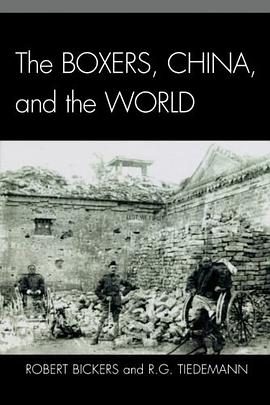
The Boxers, China, and the World
Douban
Robert Bickers / R. G. Tiedemann (Editors) publishing house: Rowman & Littlefield Publishers 2007 - 7
In 1900, China chose to take on imperialism by fighting a war with the world on the parched north China plain. This multidisciplinary volume explores the causes behind what is now known as the Boxer War, examining its particular cruelties and its impact on China, foreign imperialism in China, and on the foreign imagination. This war introduced the world to the "Boxers," the seemingly fanatical, violent xenophobes who, believing themselves invulnerable to foreign bullets, died in their thousands in front of foreign guns. But 1900 also saw the imperialism of the 1890s checked and the Qing rulers of China move to embark on a series of shattering reforms. The Boxers have often been represented as a force from China's past, resisting an enforced modernity. Here, expert contributors argue that this rebellion was instead a wholly modern resistance to globalizing power, representing new trends in modern China and in international relations. The allied invasion of north China in late summer 1900 was the first multinational intervention in the name of "civilization," with the issues and attendant problems that have become all too familiar in the early twenty-first century. Indeed, understanding the Boxer rising and the Boxer war remains a pressing contemporary issue. This volume will appeal to readers interested in modern Chinese, East Asian, and European history as well as the history of imperialism, colonialism, warfare, missionary work, and Christianity.