Brook
纵乐的困惑
The Confusions of Pleasure: Commerce and Culture in Ming China Douban
★ 8.3 27 ratings
【加】卜正民 translator: 方骏 / 王秀丽 … publishing house: 广西师范大学出版社 2016 - 10
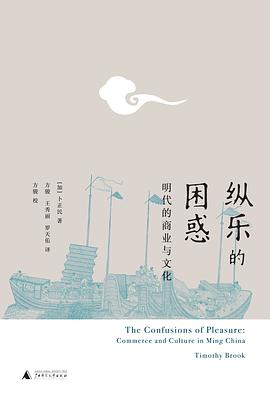
《纵乐的困惑》是著名汉学家卜正民的代表作,也是海外汉学的经典之作,曾获得2000年的列文森奖。 明中晚期的中国经历了一次经济变革,商业的蓬勃发展,促使社会、文化发生一系列的变化。明初朱元璋为小国寡民之乡一手打造的通讯网络,成了商业世界赖以成长的奠基石。人们追逐着时尚,享 受物质的愉悦。富商巨贾把手中真金白银,换作上流阶级的通行证。在明末这个光怪陆离的世界里,金钱似乎成了唯一的筹码,旧有的社会身份乃至道德的界线,都模糊得让人困惑。 卜正民凭借他那高超的叙事技巧,把官员、游人、外交使者、砖瓦匠、商人、纺织工人、妓女等各种人物及其故事串联成一幅幅生动的社会世相,同时保有学术写作的严谨与深刻,对明代文化、社会的洞见仍令人有所启发。 【编辑推荐】 ★ 美国汉学最高奖项列文森奖获奖作品,著名汉学家卜正民的经典之作——史景迁、司徒琳、宋汉理等海外学者极力推荐,作者为中文版撰写全新序言。 ★ 史家妙笔,随书附数十幅插图,生动再现明代三百年的文化变迁——既有大时代的宏观视角,也有小人物的人生遭遇,集生动叙事与严谨分析于一体,是了解明代社会文化的必读书。 ★ 重估明代商业的历史角色,商品经济该为明朝的灭亡“埋单”吗?——阶级界线模糊,物质欲望膨胀,在晚明清初的士大夫看来,社会的种种道德堕落是商业发展造成的恶果。三百多年后再回望,我们或许会得出不一样的答案。 卜正民把明王朝那个捉摸不定的迷人世界,放入一个概念清晰的时间框架里,即使你不具备任何专业知识,也能畅读其中。本书记录了各色各样的明代人物与他们各色各样的问题,还有那个世界里的要物:砖与桥,市场、寺院与邮政,女性与时尚,印刷业,激情与征兆。本书把明代生活的全貌——这么一个活力澎湃的复杂体——展现出来,在英语世界里当属首见。 ——史景迁 卜正民利用了各种各样的一手和二手材料,特别是他所熟悉的明清地方志、商人手册、路程指南,还从古籍里挑选出丰富的插图(大部分是明清时期),穿插在自己的平铺直叙中,把我们带入书中的世界,让我们确切体会到当时的日常劳作、旅游、消费,也让我们看到,在中华文明遭逢重大变化之际,那些财富新贵怎样惺惺作态,而上流阶层又处于怎样的焦虑状态中。 ——司徒琳
维梅尔的帽子
Vermeer's Hat: The Seventeenth Century and the Dawn of the Global World Douban
★ 7.7 12 ratings
[加拿大] 卜正民 translator: 刘彬 publishing house: 文汇出版社 2010 - 8
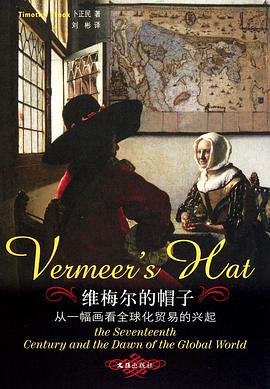
《维梅尔的帽子:从一幅画看全球化贸易的兴起》内容简介:在一幅绘画中,一名荷兰军官倾身向前,正对着一名面带笑容的女子。在另一幅画中,一名女子站在窗口,掂量着几枚银币。在第三幅画中,水果从瓷碗中滚出,滑落在一条土耳其地毯上。维梅尔的绘画作品向来以美丽与神秘征服世人:这些描绘精巧的动人时刻背后隐藏着何等奇妙的故事?正如卜正民在《维梅尔的帽子》中向我们展示的那样,尽管这些图画的含义似乎十分私密,但它们实际上为世人打开了通往一个迅速扩张的世界的大门。 军官戴的时髦帽子是用海狸毛皮制成的,当时的欧洲探险家从土著美洲人那里用武器换取海狸毛皮。贩卖海狸毛皮的收益则为水手寻找前往中国的新航线之旅提供了资金支持。在中国,欧洲人用秘鲁银矿出产的银子,购买了数以千计的瓷器,瓷器成了这段时期荷兰画作中最亲切的常客。 卜正民追溯了迅速成长的全球贸易网络,正是全球化经济的发展,让海狸毛皮、土耳其地毯和中国瓷碗同时出现在台夫特(Delft)的客厅里。一位法国客人曾写道,荷兰码头“货品的丰富程度令人难以想象”。《维梅尔的帽子》恰恰展示了荷兰码头的库存何等丰富,以及人们攫取全球财富的迫切贪念如何完成了对整个世界的改造,改造世界的彻底程度超出任何人的想象。《维梅尔的帽子:从一幅画看全球化贸易的兴起》提供的丰富内容,让我们对维梅尔的绘画作品及其所描绘的年代有了全新的理解。
Read
June 12, 2017
烟草一章较有趣
Brook
Opium Regimes
Douban
Timothy Brook / Bob Tadashi Wakabayashi (Editors) publishing house: University of California Press 2000 - 8
Geographical Sources of Ming-Qing History
Douban
Timothy Brook publishing house: Center for Chinese Studies, University of Michigan Press 1988 - 1
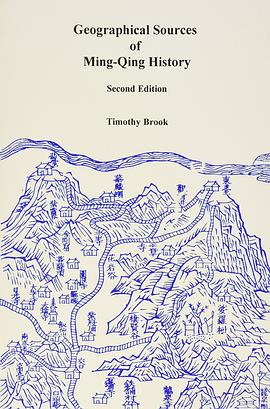
First published in 1988 in response to the growing need for documentation concerning local history in the late imperial period, Geographical Sources provides bibliographical data regarding two distinct genres: route books, and topographical and institutional gazetteers. In its second edition, this essential research tool has been completely revised and expanded with close to one hundred new entries, which provide complete coverage of these important sources for research in Chinese social, cultural, and religious history. The separate introductions to the two genres introduce the student to the history and uses of these materials. In addition to providing bibliographic data and noting variant editions, each entry provides locations where a work or its later editions can be found, whether in North America, Europe, China, or Japan.
Mr. Selden's Map of China
Douban
Timothy Brook publishing house: Bloomsbury Press 2013 - 10
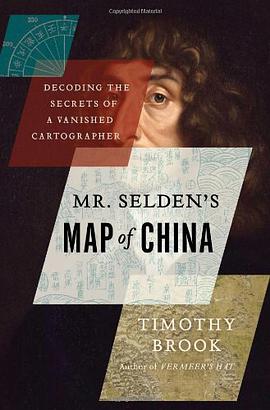
Timothy Brook’s award-winning Vermeer’s Hat unfolded the early history of globalization, using Vermeer’s paintings to show how objects like beaver hats and porcelain bowls began to circulate around the world. Now he plumbs the mystery of a single artifact that offers new insights into global connections centuries old. In 2009, an extraordinary map of China was discovered in Oxford’s Bodleian Library—where it had first been deposited 350 years before, then stowed and forgotten for nearly a century. Neither historians of China nor cartography experts had ever seen anything like it. It was so odd that experts would have declared it a fake—yet records confirmed it had been delivered to Oxford in 1659. The “Selden Map,” as it is known, was a puzzle that needing solving. Brook, a historian of China, set out to explore the riddle. His investigation will lead readers around this elegant, enigmatic work of art, and from the heart of China, via the Southern Ocean, to the court of King James II. In the story of Selden’s map, he reveals for us the surprising links between an English scholar and merchants half a world away, and offers novel insights into the power and meaning that a single map can hold. Brook delivers the same anecdote-rich narrative, intriguing characters, and unexpected historical connections that made Vermeer’s Hat an instant classic.
Collaboration
Douban
Timothy Brook publishing house: Harvard University Press 2007 - 3
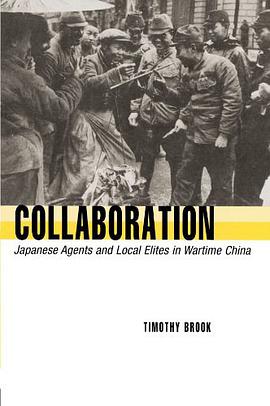
Studies of collaboration have changed how the history of World War II in Europe is written, but for China and Japan this aspect of wartime conduct has remained largely unacknowledged. In a bold new work, Timothy Brook breaks the silence surrounding the sensitive topic of wartime collaboration between the Chinese and their Japanese occupiers. Japan's attack on Shanghai in August 1937 led to the occupation of the Yangtze Delta. In spite of the legendary violence of the assault, Chinese elites throughout the delta came forward to work with the conquerors. Using archives on both sides of the conflict, Brook reconstructs the process of collaboration from Shanghai to Nanking. Collaboration proved to be politically unstable and morally awkward for both sides, provoking tensions that undercut the authority of the occupation state and undermined Japan's long-term prospects for occupying China. This groundbreaking study mirrors the more familiar stories of European collaboration with the Nazis, showing how the Chinese were deeply troubled by their unavoidable cooperation with the occupiers. The comparison provides a point of entry into the difficult but necessary discussion about this long-ignored aspect of the war in the Pacific.
The Confusions of Pleasure
Douban
Timothy Brook publishing house: University of California Press 1999 - 9
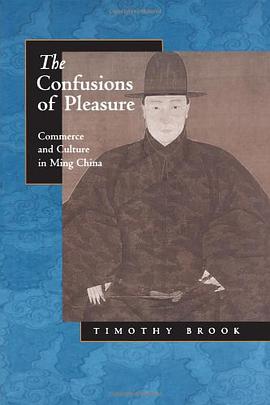
The Ming dynasty was the last great Chinese dynasty before the Manchu conquest in 1644. During that time, China, not Europe, was the center of the world: the European voyages of exploration were searching not just for new lands but also for new trade routes to the Far East. In this book, Timothy Brook eloquently narrates the changing landscape of life over the three centuries of the Ming (1368-1644), when China was transformed from a closely administered agrarian realm into a place of commercial profits and intense competition for status. The Confusions of Pleasure marks a significant departure from the conventional ways in which Chinese history has been written. Rather than recounting the Ming dynasty in a series of political events and philosophical achievements, it narrates this longue durée in terms of the habits and strains of everyday life. Peppered with stories of real people and their negotiations of a rapidly changing world, this book provides a new way of seeing the Ming dynasty that not only contributes to the scholarly understanding of the period but also provides an entertaining and accessible introduction to Chinese history for anyone.