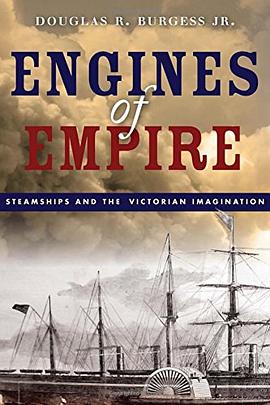
Engines of Empire
Douban
Douglas Burgess
publishing house:
Stanford University Press
2016
- 5
In 1859, the S.S. Great Eastern departed from England on her maiden voyage. She was a remarkable wonder of the nineteenth century: an iron city longer than Trafalgar Square, taller than Big Ben's tower, heavier than Westminster Cathedral. Her paddles were the size of Ferris wheels; her decks could hold four thousand passengers bound for America, or ten thousand troops bound for the Raj. Yet she ended her days as a floating carnival before being unceremoniously dismantled in 1889.
Steamships like the Great Eastern occupied a singular place in the Victorian mind. Crossing oceans, ferrying tourists and troops alike, they became emblems of nationalism, modernity, and humankind's triumph over the cruel elements. Throughout the nineteenth century, the spectacle of a ship's launch was one of the most recognizable symbols of British social and technological progress. Yet this celebration of the power of the empire masked overconfidence and an almost religious veneration of technology. Equating steam with civilization had catastrophic consequences for subjugated peoples around the world.
Engines of Empire tells the story of the complex relationship between Victorians and their wondrous steamships, following famous travelers like Mark Twain, Charles Dickens, and Jules Verne as well as ordinary spectators, tourists, and imperial administrators as they crossed oceans bound for the colonies. Rich with anecdotes and wry humor, it is a fascinating glimpse into a world where an empire felt powerful and anything seemed possible―if there was an engine behind it.
