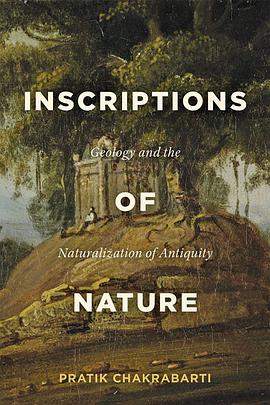
Inscriptions of Nature
Douban
Pratik Chakrabarti
publishing house:
Johns Hopkins University Press
2020
- 10
In the nineteenth century, teams of men began digging the earth like never before. Sometimes this digging—often for sewage, transport, or minerals—revealed human remains. Other times, archaeological excavation of ancient cities unearthed prehistoric fossils, while excavations for irrigation canals revealed buried cities. Concurrently, geologists, ethnologists, archaeologists, and missionaries were also digging into ancient texts and genealogies and delving into the lives and bodies of indigenous populations, their myths, legends, and pasts. One pursuit was intertwined with another in this encounter with the earth and its inhabitants—past, present, and future.
In Inscriptions of Nature, Pratik Chakrabarti argues that, in both the real and the metaphorical digging of the earth, the deep history of nature, landscape, and people became indelibly inscribed in the study and imagination of antiquity. The first book to situate deep history as an expression of political, economic, and cultural power, this volume shows that it is complicit in the European and colonial appropriation of global nature, commodities, temporalities, and myths. The book also provides a new interpretation of the relationship between nature and history. Arguing that the deep history of the earth became pervasive within historical imaginations of monuments, communities, and territories in the nineteenth century, Chakrabarti studies these processes in the Indian subcontinent, from the banks of the Yamuna and Ganga rivers to the Himalayas to the deep ravines and forests of central India. He also examines associated themes of Hindu antiquarianism, sacred geographies, and tribal aboriginality.
Based on extensive archival research, the book provides insights into state formation, mining of natural resources, and the creation of national topographies. Driven by the geological imagination of India as well as its landscape, people, past, and destiny, Inscriptions of Nature reveals how human evolution, myths, aboriginality, and colonial state formation fundamentally defined Indian antiquity.