Chang_Gordon
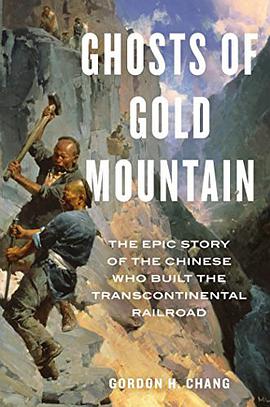
Ghosts of Gold Mountain
Douban
Gordon H. Chang publishing house: Houghton Mifflin Harcourt 2019 - 5
A groundbreaking, breathtaking history of the Chinese workers who built the Transcontinental Railroad, helping to forge modern America only to disappear into the shadows of history until now. From across the sea, they came by the thousands, escaping war and poverty in southern China to seek their fortunes in America. Converging on the enormous western worksite of the Transcontinental Railroad, the migrants spent years dynamiting tunnels through the snow-packed cliffs of the Sierra Nevada and laying tracks across the burning Utah desert. Their sweat and blood fueled the ascent of an interlinked, industrial United States. But those of them who survived this perilous effort would suffer a different kind of death—a historical one, as they were pushed first to the margins of American life and then to the fringes of public memory. In this groundbreaking account, award-winning scholar Gordon H. Chang draws on unprecedented research to recover the Chinese railroad workers’ stories and celebrate their role in remaking America. An invaluable correction of a great historical injustice, The Ghosts of Gold Mountain returns these “silent spikes” to their rightful place in our national saga.
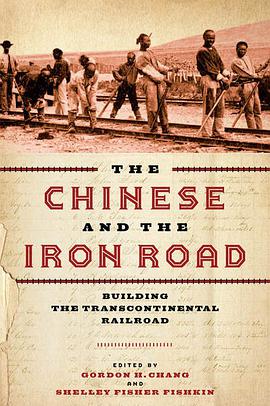
The Chinese and the Iron Road
Douban
Gordon H. Chang / Shelley Fisher Fishkin … publishing house: Stanford University Press 2019 - 4
The completion of the transcontinental railroad in May 1869 is usually told as a story of national triumph and a key moment for American Manifest Destiny. The railroad made it possible to cross the country in a matter of days instead of months, paved the way for new settlers to come out West, and helped speed America's entry onto the world stage as a modern nation that spanned a full continent. It also created vast wealth for its four owners, including the fortune with which Leland Stanford would found Stanford University some two decades later. But while the transcontinental has often been celebrated in national memory, little attention has been paid to the Chinese workers who made up 90% of the workforce on the Western portion of the line. The railroad could not have been built without Chinese labor, but the lives of Chinese railroad workers themselves have been little understood and largely invisible. This landmark volume shines new light on the Chinese railroad workers and their place in cultural memory. The Chinese and the Iron Road illuminates more fully than ever before the interconnected economies of China and the US, how immigration across the Pacific changed both nations, the dynamics of the racism the workers encountered, the conditions under which they labored, and their role in shaping both the history of the railroad and the development of the American West.