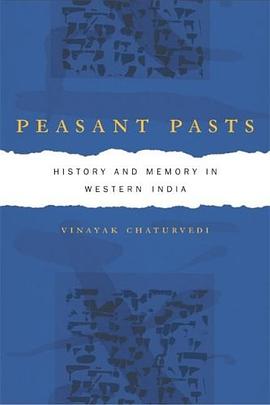
Chaturvedi
Peasant Pasts
Douban
Chaturvedi, Vinayak publishing house: Univ of California Pr 2007 - 6
"Peasant Pasts" is an innovative, interdisciplinary approach to writing histories of peasant politics, nationalism, and colonialism. Vinayak Chaturvedi's analysis provides an important intervention in the social and cultural history of India by examining the nature of peasant discourses and practices during the nineteenth and twentieth centuries. Through rigorous archival study and fieldwork, Chaturvedi shows that peasants in Gujarat were active in the production and circulation of political ideas, establishing critiques of the state and society while promoting complex understandings of political community. By turning to the heartland of M.K. Gandhi's support, Chaturvedi shows that the vast majority of peasants were opposed to nationalism in the early decades of the twentieth century. He argues that nationalists in Gujarat established power through the use of coercion and violence, as they imagined a nation in which they could dominate social relations. Chaturvedi suggests that this littletold story is necessary to understand not only anticolonial nationalism but the direction of postcolonial nationalism as well.
Peasant Pasts
Douban
Vinayak Chaturvedi publishing house: University of California Press 2007 - 6
"Peasant Pasts" is an innovative, interdisciplinary approach to writing histories of peasant politics, nationalism, and colonialism. Vinayak Chaturvedi's analysis provides an important intervention in the social and cultural history of India by examining the nature of peasant discourses and practices during the nineteenth and twentieth centuries. Through rigorous archival study and fieldwork, Chaturvedi shows that peasants in Gujarat were active in the production and circulation of political ideas, establishing critiques of the state and society while promoting complex understandings of political community. By turning to the heartland of M.K. Gandhi's support, Chaturvedi shows that the vast majority of peasants were opposed to nationalism in the early decades of the twentieth century. He argues that nationalists in Gujarat established power through the use of coercion and violence, as they imagined a nation in which they could dominate social relations. Chaturvedi suggests that this littletold story is necessary to understand not only anticolonial nationalism but the direction of postcolonial nationalism as well.
Read
Dec. 5, 2017
Lower-class Dharala peasants advancing anti-colonial activities against agrarian social relations (Patidar domination) before Gandhian nationalism based on local ideas of good governance; Writing history from fragmented sources rather than writing fragmented history | Cf. Rawat; Ginzburg; Chatterjee
Chaturvedi
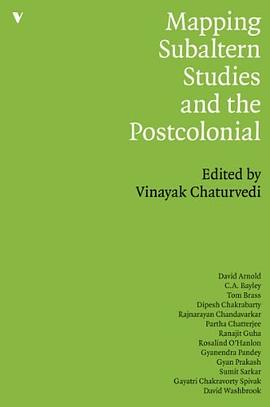
Mapping Subaltern Studies and the Postcolonial
Douban
Chaturvedi, Vinayak 编 2012 - 11
Inspired by Antonio Gramsci's writings on the history of subaltern classes, the authors in Mapping Subaltern Studies and the Postcolonial sought to contest the elite histories of Indian nationalists by adopting the paradigm of "history from below." Later on, the project shifted from its social history origins by drawing upon an eclectic group of thinkers that included Edward Said, Roland Barthes, Michel Foucault and Jacques Derrida. This book provides a comprehensive balance sheet of the project and its developments, including Ranajit Guha's original subaltern studies manifesto, Partha Chatterjee, Dipesh Chakrabarty and Gayatri Spivak.