Cohen_Paul
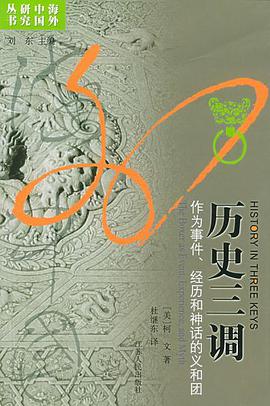
历史三调
History in Three Keys: The Boxers as Event, Experience, and Myth Google Books Douban
★ 9.3 18 ratings
柯文 translator: 杜继东 publishing house: 江苏人民出版社 2005
历史是什么?到底应该如何看待历史?人们经历的历史、历史学家笔下的历史和神话化的历史三者之间存在什么样的互动关系?本书以义和团运动为例,对上述问题进行了如此探讨和解释:第一部分是历史学家笔下的义和团运动的史实,以叙事为主;第二部分考察直接参与义和团运动的中外各类人物当时的想法、感受和行为,指出他们对正在发生之事的看法与后来重塑历史的历史学家的看法大为不同;第三部分评述在20世纪初中国产生的关于义和团的种种神话。作者认为,就上述三条认识历史的不同途径而言,后两条途径对普通读者具有更大的说服力和影响力。作为时间的义和团,代表的是对过去的一种特殊的解读;作为神话的义和团,代表的是以过去为载体对现在进行的一种特殊的解读,对现在仍发生深刻的影响。
在传统与现代性之间
Douban
[美] 柯文 translator: 雷颐 / 罗检秋 publishing house: 江苏人民出版社 2006
《在传统与现代性之间:王韬与晚清改革》通过对王韬的透视,展现、剖析了晚清思潮、政局与社会的变迁,提出了近代中国的“沿海”与“内地”的问题。
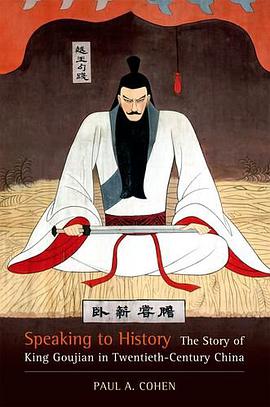
Speaking to History
Douban
Paul A. Cohen publishing house: University of California Press 2008 - 11
The ancient story of King Goujian, a psychologically complex fifth-century BCE monarch, spoke powerfully to the Chinese during China's turbulent twentieth century. Yet most Americans—even students and specialists of this era—have never heard of Goujian. In Speaking to History, Paul A. Cohen opens this previously missing (to the West) chapter of China's recent history. He connects the story to each of the major traumas of the last century, tracing its versatility as a source of inspiration and hope and elegantly exploring, on a more general level, why such stories often remain sealed up within a culture, unknown to outsiders. Labeling this phenomenon "insider cultural knowledge," Cohen investigates the relationship between past story and present reality. He inquires why at certain moments in their collective lives peoples are especially drawn to narratives from the distant past that resonate strongly with their current circumstances, and why the Chinese have returned over and over to a story from twenty-five centuries ago. In this imaginative stitching of story to history, Cohen reveals how the shared narratives of a community help to define its culture and illuminate its history.
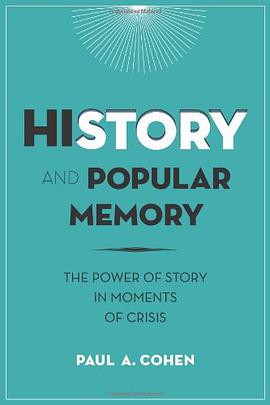
History and Popular Memory
Douban
Paul A Cohen publishing house: Columbia University Press 2014 - 4
When people experience a traumatic event, such as war or the threat of annihilation, they often turn to history for stories that promise a positive outcome to their suffering. During World War II, the French took comfort in the story of Joan of Arc and her heroic efforts to rid France of foreign occupation. To bring the Joan narrative more into line with current circumstances, popular retellings modified the original story so that what people believed took place in the past was often quite different from what actually occurred. Paul A. Cohen believes this interplay between story and history is a worldwide phenomenon found in countries of radically different cultural, religious, and social character. He focuses on Serbia, Israel, the Soviet Union, China, Great Britain, and France, all of which experienced severe crises in the twentieth century and, in response, appropriated age-old historical narratives that resonated with what was happening in the present to serve a unifying, restorative purpose. A central theme in the book is the distinction between popular memory and history. Although vitally important to historians, this distinction is routinely blurred in people's minds, and the historian's truth often cannot compete with the power of a compelling story from the past, even when it has been seriously distorted by myth or political manipulation. Cohen concludes by suggesting that the patterns of interaction he probes, given their near universality, may well be rooted in certain human propensities that transcend cultural difference.
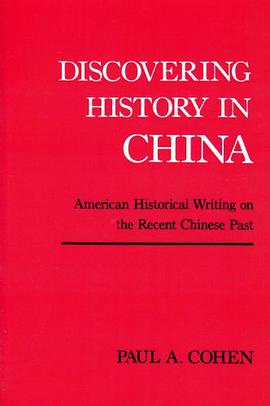
Discovering History in China
Douban
Paul A. Cohen publishing house: Columbia University Press 1997 - 4
Since its first publication, Paul A. Cohen's Discovering History in China has occupied a singular place in American China scholarship. Translated into three East Asian languages, the volume has become essential to the study of China from the early nineteenth century to today. Cohen critiques the work of leading postwar scholars and is especially adamant about not reading China through the lens of Western history. To this end, he uncovers the strong ethnocentric bias pervading the three major conceptual frameworks of American scholarship of the 1950s and 1960s: the impact-response, modernization, and imperialism approaches. In place of these, Cohen favors a "China-centered" approach in which historians understand Chinese history on its own terms, paying close attention to Chinese historical trajectories and Chinese perceptions of their problems, rather than a set of expectations derived from Western history. In an important new introduction, Cohen reflects on his fifty-year career as a historian of China and discusses major recent trends in the field. Although some of these developments challenge a narrowly conceived China-centered approach, insofar as they enable more balanced comparisons between China and the West and recast the Chinese and their history in more human, less exotic terms, they powerfully affirm the central thrust of Cohen's work.