Comaroff
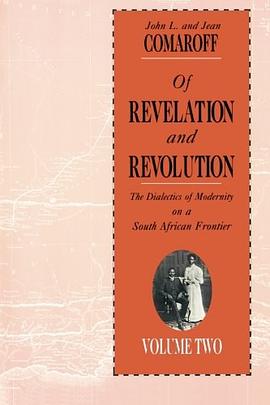
Of Revelation and Revolution, Volume 2
Douban
John L. Comaroff publishing house: University of Chicago Press 1997 - 11
In the second of a proposed three-volume study, Jean and John Comaroff continue their exploration of colonial evangelism and modernity in South Africa. Moving beyond the opening moments of the encounter between the British Nonconformist missions and the Southern Tswana peoples, this volume explores the complex transactions - both epic and ordinary - among the people along this colonial frontier. The authors trace many of the major themes of 20th-century South African history back to these formative encounters. The relationship between the British evangelists and the Southern Tswana engendered complex exchanges of goods, signs, and cultural markers that shaped not only African existence but also bourgeois modernity "back home" in England. The book demonstrates how the colonial attempt to "civilize" Africa set in motion a dialectical process that refashioned the everyday lives of all those drawn into its purview, creating hybrid cultural forms and potent global forces which persist in the postcolonial age.
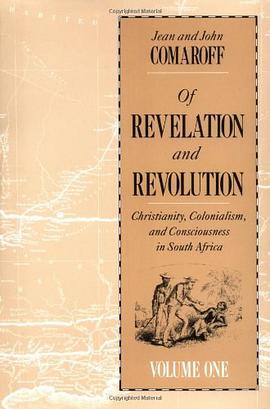
Of Revelation and Revolution, Volume 1
Douban
Jean Comaroff / John L. Comaroff publishing house: University Of Chicago Press 1991 - 7
"Defining their enterprise as more in the direction of poetics than of prosaics, the Comaroffs free themselves to analyze a vivid series of images and events as objects of analysis. These they mine for clues to the 19th-century contents of the British imagination and of Tswana minds. They are themselves imagining the imagination of others, and they do the job with characteristic aplomb...The first volume creates an appetite for the second." Sally Falk Moore, "American Anthropologist"
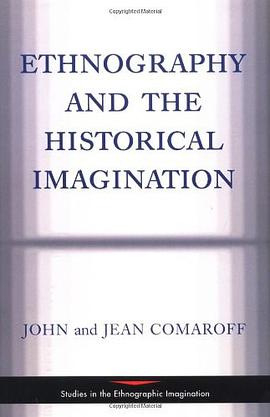
Ethnography And The Historical Imagination
Douban
John & Jean Comaroff publishing house: Westview Press 1992 - 7
Over the years John and Jean Comaroff have broadened the study of culture and society with their reflections on power and meaning. In their work on Africa and colonialism they have explored some of the fundamental questions of social science, delving into the nature of history and human agency, culture and consciousness, ritual and representation. How are human differences constructed and institutionalized, transformed and (sometimes) effaced, empowered and (sometimes) resisted? How do local cultures articulate with global forms? How is the power of some people over others built, sustained, eroded, and negated? How does the social imagination take shape in novel yet collectively meaningful ways?Addressing these questions, the essays in this volumeseveral never before publishedwork toward an imaginative sociology,” demonstrating the techniques by which social science may capture the contexts that human beings construct and inhabit. In the introduction, the authors offer their most complete statement to date on the nature of historical anthropology. Standing apart from the traditional disciplines of social history and modernist social science, their work is dedicated to discovering how human worlds are made and signified, forgotten and remade.