Daston
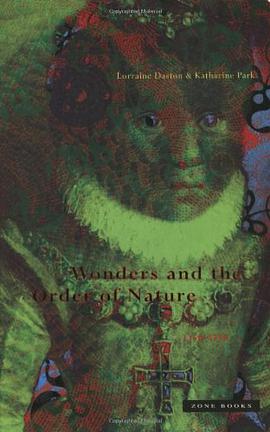
Wonders and the Order of Nature, 1150-1750
Douban
Lorraine Daston / Katharine Park publishing house: Zone Books 2001 - 10
Winner of the History of Science Society's Pfizer Prize"This book is about setting the limits of the natural and the limits of the known, wonders and wonder, from the High Middle Ages through the Enlightenment. A history of wonders as objects of natural inquiry is simultaneously an intellectual history of the orders of nature. A history of wonder as a passion of natural inquiry is simultaneously a history of the evolving collective sensibility of naturalists. Pursued in tandem, these interwoven histories show how the two sides of knowledge, objective order and subjective sensibility, were obverse and reverse of the same coin rather than opposed to one another."-- From the IntroductionWonders and the Order of Nature is about the ways in which European naturalists from the High Middle Ages through the Enlightenment used wonder and wonders, the passion and its objects, to envision themselves and the natural world. Monsters, gems that shone in the dark, petrifying springs, celestial apparitions--these were the marvels that adorned romances, puzzled philosophers, lured collectors, and frightened the devout. Drawing on the histories of art, science, philosophy, and literature, Lorraine Daston and Katharine Park explore and explain how wonder and wonders fortified princely power, rewove the texture of scientific experience, and shaped the sensibility of intellectuals. This is a history of the passions of inquiry, of how wonder sometimes inflamed, sometimes dampened curiosity about nature's best-kept secrets. Refracted through the prism of wonders, the order of nature splinters into a spectrum of orders, a tour of possible worlds.
Objectivity
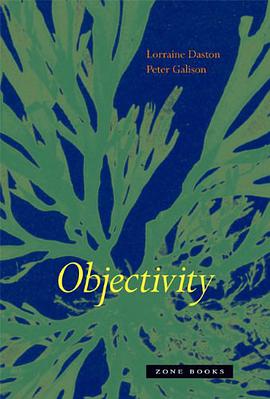
Objectivity Douban Goodreads
Lorraine Daston / Peter Galison publishing house: Zone Books 2007 - 10
Objectivity has a history, and it is full of surprises. In Objectivity, Lorraine Daston and Peter Galison chart the emergence of objectivity in the mid-nineteenth-century sciences—and show how the concept differs from its alternatives, truth-to-nature and trained judgment. This is a story of lofty epistemic ideals fused with workaday practices in the making of scientific images. From the eighteenth through the early twenty-first centuries, the images that reveal the deepest commitments of the empirical sciences—from anatomy to crystallography—are those featured in scientific atlases, the compendia that teach practitioners what is worth looking at and how to look at it. Galison and Daston use atlas images to uncover a hidden history of scientific objectivity and its rivals. Whether an atlas maker idealizes an image to capture the essentials in the name of truth-to-nature or refuses to erase even the most incidental detail in the name of objectivity or highlights patterns in the name of trained judgment is a decision enforced by an ethos as well as by an epistemology. As Daston and Galison argue, atlases shape the subjects as well as the objects of science. To pursue objectivity—or truth-to-nature or trained judgment—is simultaneously to cultivate a distinctive scientific self wherein knowing and knower converge. Moreover, the very point at which they visibly converge is in the very act of seeing not as a separate individual but as a member of a particular scientific community. Embedded in the atlas image, therefore, are the traces of consequential choices about knowledge, persona, and collective sight. Objectivity is a book addressed to anyone interested in the elusive and crucial notion of objectivity—and in what it means to peer into the world scientifically.