Davis_Mike
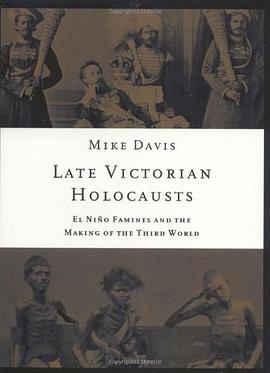
Late Victorian Holocausts
Douban
Mike Davis publishing house: Verso 2002 - 7
While this book will not have the impact of Davis's City of Quartz--a scathing indictment of L.A.'s environmental ravagement, economic disparity and racial divides--in a perfect world, it would. Its subject is nothing less than the creation of what we now call "The Third World," through a complex series of seemingly disparate natural and market-related events beginning in the 1870s. Davis dives into the data and journalism of the period with a vengeance, showing that the seemingly unprecedented droughts across northern Africa, India and China in the 1870s and 1890s are consistent with what we now know to be El Ni¤o's effects, and that it was political and market forces (which are never impersonal, Davis insists), and not a lack of potential stores and transportation, that kept grain from the more than 50 million people who starved to death.
Read Dec. 22, 2019
World climate system, late Victorian world economy, New Imperialism; ecological poverty, household poverty, state decapacitation - making of the third world | 171031
Davis_Mike
水晶之城
Douban
[美]迈克·戴维斯(Mike Davis) translator: 林鹤 publishing house: 上海人民出版社 2010 - 1
这是关于洛杉矶兴起成为世界级大都市的历史。在这座城市经济繁荣的表象之下,有着非常复杂的权力关系,从海外的日本资本到本地的黑帮,从洛杉矶的警察郜门到街头无家可归的人,作者叙述了这鹰城市中形形色色的角色,以及被“极权”控制的公共空间。土生土长的作者,富含感情地评论了这座美国人既爱又恨的城市消失的过去、失败的梦想和无法变成现实的远景。
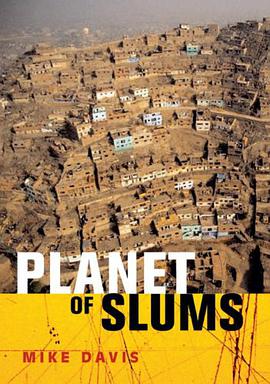
Planet of Slums
Douban Goodreads
Mike Davis publishing house: Verso 2006 - 3
Celebrated urban theorist lifts the lid on the effects of a global explosion of disenfranchised slum-dwellers. According to the United Nations, more than one billion people now live in the slums of the cities of the South. In this brilliant and ambitious book, Mike Davis explores the future of a radically unequal and explosively unstable urban world. From the sprawling barricadas of Lima to the garbage hills of Manila, urbanization has been disconnected from industrialization, even economic growth. Davis portrays a vast humanity warehoused in shantytowns and exiled from the formal world economy. He argues that the rise of this informal urban proletariat is a wholly original development unforeseen by either classical Marxism or neoliberal theory. Are the great slums, as a terrified Victorian middle class once imagined, volcanoes waiting to erupt? Davis provides the first global overview of the diverse religious, ethnic, and political movements competing for the souls of the new urban poor. He surveys Hindu fundamentalism in Bombay, the Islamist resistance in Casablanca and Cairo, street gangs in Cape Town and San Salvador, Pentecostalism in Kinshasa and Rio de Janeiro, and revolutionary populism in Caracas and La Paz.Planet of Slums ends with a provocative meditation on the "war on terrorism" as an incipient world war between the American empire and the slum poor.