Doniger
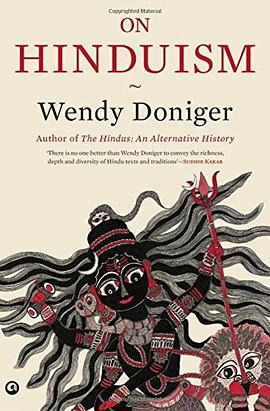
On Hinduism
Douban
Wendy Doniger publishing house: Aleph 2014 - 3
For more than a decade, Doniger’s scholarship has been under attack by conservative Hindu groups who feel that her work misrepresents and insults their religion; last month, her eight-hundred-page book “The Hindus: An Alternative History” was pulled from bookstores in India. Her latest book, “On Hinduism,” which is in its second printing in India, is a collection of essays and lectures addressing contemporary and historic debates surrounding the religion, from the ethical implications of Hindu cosmologies to gender inversions in the Kama Sutra. Dinanath Batra, the man who filed the suit against “The Hindus,” has said that he intends to take aim at “On Hinduism” next.
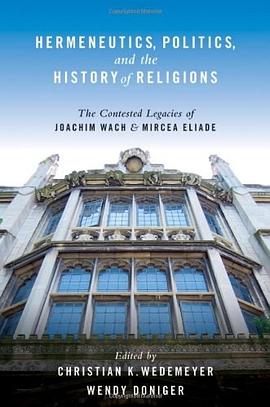
Hermeneutics, Politics, and the History of Religions
Douban
Wedemeyer, Christian; Doniger, Wendy; publishing house: Oxford University Press, USA 2010 - 3
This volume comprises papers presented at a conference marking the 50th anniversary of Joachim Wach's death, and the centennial of Mircea Eliade's birth. Its purpose is to reconsider both the problematic, separate legacies of these two major twentieth-century historians of religions, and the bearing of these two legacies upon each other. Shortly after Wach's death in 1955, Eliade succeeded him as the premiere historian of religions at the University of Chicago. As a result, the two have been associated with each other in many people's minds as the successive leaders of the so-called "Chicago School" in the history of religions. In fact, as this volume makes clear, there never was a monolithic Chicago School. Although Wach reportedly referred to Eliade as the most astute historian of religions of the day; the two never met, and their approaches to the study of religions differed significantly. Several dominant issues run through the essays collected here: the relationship between the two men's writings and their lives, and in Eliade's case, the relationship between his political commitments and his writings in fiction, history of religions, and autobiography. Both men's contributions to the field continue to provoke controversy and debate, and this volume sheds new light on these controversies and what they reveal about these two 'scholars' legacies.
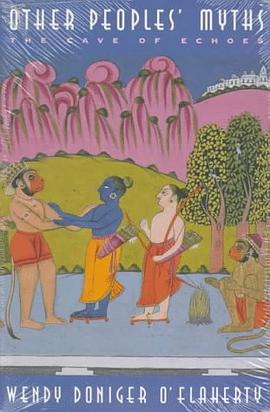
Other People's Myths
Douban
O'Flaherty, Wendy Doniger 1995 - 11
Other People's Myths celebrates the universal art of storytelling, and the rich diversity of stories that people live by. Drawing on Biblical parables, Greek myths, Hindu epics, and the modern mythologies of Woody Allen and soap operas, Wendy Doniger O'Flaherty encourages us to feel anew the force of myth and tradition in our lives, and in the lives of other cultures. She shows how the stories of mythology--whether of Greek gods, Chinese sages, or Polish rabbis--enable all cultures to define themselves. She raises critical questions about the way we interpret mythical stories, especially the way different cultures make use of central texts and traditions. And she offers a sophisticated way of looking at the roles myths play in all cultures.
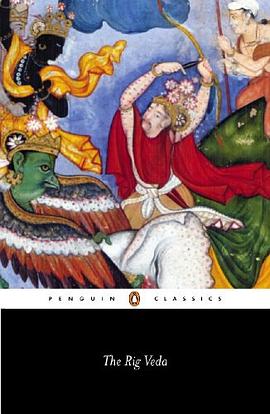
The Rig Veda
Douban
Anonymous translator: Wendy Doniger publishing house: Penguin Classics 2005 - 9
The earliest of the four Hindu religious scriptures known as the Vedas, and the first extensive composition to survive in any Indo-European language, The Rig Veda (c. 1200–900 bc) is a collection of more than 1,000 individual Sanskrit hymns. A work of intricate beauty, it provides unique insight into early Indian mythology and culture. Fraught with paradox, the hymns are meant "to puzzle, to surprise, to trouble the mind," writes translator Wendy Doniger, who has selected 108 hymns for this volume. Chosen for their eloquence and wisdom, they focus on the enduring themes of creation, sacrifice, death, women, and the gods. Doniger’s The Rig Veda provides a fascinating introduction to a timeless masterpiece of Hindu ritual and spirituality.
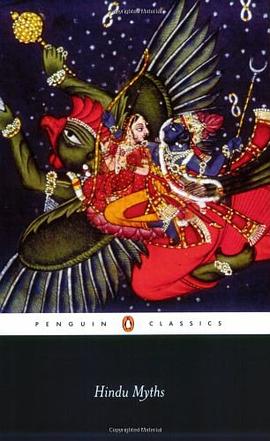
Hindu Myths
Douban
Anonymous translator: Wendy Doniger publishing house: Penguin Classics 2004 - 9
Recorded in sacred Sanskrit texts, including the "Rig Veda" and the "Mahabharata", Hindu Myths are thought to date back as far as the tenth century BCE. Here in these seventy-five seminal myths are the many incarnations of Vishnu, who saves mankind from destruction, and the mischievous child Krishna, alongside stories of the minor gods, demons, rivers and animals including boars, buffalo, serpents and monkeys. Immensely varied and bursting with colour and life, they demonstrate the Hindu belief in the limitless possibilities of the world - from the teeming miracles of creation to the origins of the incarnation of Death who eventually touches them all.
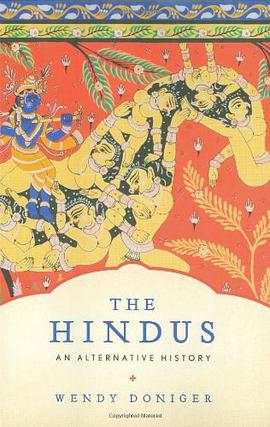
The Hindus
Douban Goodreads
Wendy Doniger publishing house: Penguin Press 2009 - 3 other title: The Hindus: An Alternative History
From one of the world's foremost scholars on Hinduism, a vivid reinterpretation of its history An engrossing and definitive narrative account of history and myth that offers a new way of understanding one of the world's oldest major religions, The Hindus elucidates the relationship between recorded history and imaginary worlds. Hinduism does not lend itself easily to a strictly chronological account: many of its central texts cannot be reliably dated even within a century; its central tenets—karma, dharma, to name just two—arise at particular moments in Indian history and differ in each era, between genders, and caste to caste; and what is shared among Hindus is overwhelmingly outnumbered by the things that are unique to one group or another. Yet the greatness of Hinduism—its vitality, its earthiness, its vividness—lies precisely in many of those idiosyncratic qualities that continue to inspire debate today. Wendy Doniger is one of the foremost scholars of Hinduism in the world. With her inimitable insight and expertise Doniger illuminates those moments within the tradition that resist forces that would standardize or establish a canon. Without reversing or misrepresenting the historical hierarchies, she reveals how Sanskrit and vernacular sources are rich in knowledge of and compassion toward women and lower castes; how they debate tensions surrounding religion, violence, and tolerance; and how animals are the key to important shifts in attitudes toward different social classes. The Hindus brings a fascinating multiplicity of actors and stories to the stage to show how brilliant and creative thinkers—many of them far removed from Brahmin authors of Sanskrit texts—have kept Hinduism alive in ways that other scholars have not fully explored. In this unique and authoritative account, debates about Hindu traditions become platforms from which to consider the ironies, and overlooked epiphanies, of history.
To read March 25, 2010
2010.4.21@Powell's 57th
Doniger