Esherick
Remaking the Chinese City
Douban
Joseph Esherick (Editor) publishing house: University of Hawaii Press 1999
At the end of the 20th century the attention of some historians focused to a remarkable extent on the experience of Chinese cities in the early decades of the century. This work brings together research by a number of key contributors to this scholarly literature and offers a broadly informed, collective assessment of the late-Qing and Republican elite project fundamentally to remake cities.
1943:中国在十字路口
China At The Crossroads Douban
★ 7.4 7 ratings
周锡瑞 / 李皓天 主编 translator: 陈骁 publishing house: 社会科学文献出版社 2016 - 1
当今美国中国近代史研究领域中最有成就的学者之一、美国中国学研究的两个最高奖——费正清奖和列文森奖获得者 “国家记忆•致敬历史记录者”年度历史图书、《中华读书报》年度十大好书、《北京晨报》度致敬图书、“中国书业年度评选”十大好书作者 周锡瑞先生作品 《1943:中国在十字路口》 国共两党的政权更迭,是否早在1943年的政治和社会里已见端倪? 编辑推荐: 1943年的中国与世界,是个什么样子? 为什么蒋介石把新疆回归中央称为民国建立以来的“最大成就”? 康生被称为“延安的铁菩萨”,他在整风运动中是如何抓特务的? 1942-1943年的河南大饥荒,救国或饿死人民? 1943年的重庆,通货膨胀、限制物价与政权合法性是如何影响人民生活的? 王明道在沦陷区的独立教会是如何走光明之路的? 通过分析1943年一系列的事件、趋势和矛盾,我们能否更好地理解中国政治和社会的深层次变化? 内容提要: 1943 年,不平等条约被废除;蒋介石写作并发表了《中国之命运》并且与罗斯福和丘吉尔在开罗会议上会晤;蒋夫人宋美龄在美国国会发表了历史性的演说;新疆脱离了苏联长达十年的控制回归中央;河南遭遇了灾难性的饥荒;中共正在经历延安整风中最后也是极左的“抢救运动”。 一旦把关注点集中在特定的一年,就能发现这一年发生的很多事件,都对后来的历史发展起了重要作用…… 通过研究上述和其他事件,从不同的角度来观察这一年,作者试图在本书中对一些特定时刻进行史实重建,在作者看来,这是超越以中美关系为核心的狭隘的抗战研究的最好办法,由此得以理解那些决定中国命运的广泛的社会、政治、经济、军事和外交发展事务。
叶
Douban
★ 7.0 10 ratings
[美国] 周锡瑞 translator: 史金金 / 孟繁之 … publishing house: 山西人民出版社 2014 - 7
(当今美国中国近代史研究领域中最有成就的学者之一、美国中国学研究的两个最高奖——费正清奖和列文森奖获得者周锡瑞代表作) (著名汉学家史景迁 柯文 罗威廉 裴宜理联合推荐) (著名历史学家、教育家章开沅倾情作序并推荐) (从晚清到民国、再到共和国,时代洪流中的家族命运沉浮) 《叶》主要讲述了中国百年历史中一个家庭的变迁,从晚清到“文革”结束,把整个国家史诗般的记述活灵活现地展示了出来。叶家人的生活显示了决定现代中国的重大事件的人性化的一面:19世纪大规模的破坏性叛乱,共和国时期的经济发展和社会转型,二战时期日本的侵略,以及文化大革命中的浩劫。 安庆叶家的缘起,最早可以追溯到元朝末年的钱塘教谕叶盛二,这就决定其后代多数走的是“学而优而仕”的传统道路。第四世叶华高中进士,此乃安庆叶氏成为显赫世家的起点。早期的文字记载很少,作者主要是借助于后世的追忆与传说,着重介绍了谱牒的纂辑与祠堂的修建,从总体上描述了古老宗法社会的根基。 安庆叶家比较完整的历史,似乎是从1802 年县衙以西叶家老宅一个婴儿的诞生开始,他的名字是坤厚。他和他的儿子伯英在道、咸年间的国内战乱中,如同曾国藩、李鸿章一样组织地方团练,为扶持风雨飘摇的大清王朝立下汗马功劳。虽然未能擢升为封疆大吏,但毕竟已从道台攀登到省一级政府中的藩臬要职。父子二人都在大清河的水利工程中有所建树,并且顺应同光新政的潮流在政府部门工作中有所革新。他们不仅为安徽叶家奠定了更为辉煌而又坚实的基础,而且还成为以后北迁天津的后世子孙心目中的创业先驱。
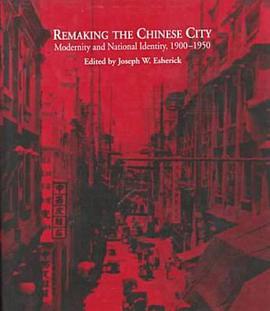
Remaking the Chinese City
Douban
Joseph Esherick (Editor) publishing house: University of Hawaii Press 2001 - 11
In China today skyscrapers tower over ancient temples, freeways deliver lines of cars and tour buses to imperial palaces, cinema houses compete with old theaters featuring Peking Opera. The disparity evidenced in the contemporary Chinese cityscape can be traced to the early decades of the twentieth century, when government elites sought to transform cities into a new world that would be at once modern and distinctly Chinese. Remaking the Chinese City aims to capture the full diversity of recent Chinese urbanism by examining the modernist transformations of China's cities in the first half of the twentieth century. Collecting in one place some of the most interesting and exciting new work on Chinese urban history, this volume presents thirteen essays discussing ten Chinese cities: the commercial and industrial center of Shanghai; the old capital, Beijing; the southern coastal city of Canton; the interior's Chengdu; the tourist city of Hangzhou; the utopian "New Capital" built in Manchuria during the Japanese occupation; the treaty port of Tianjin; the Nationalists' capital in Nanjing; and temporary wartime capitals of Wuhan and Chongqing. Unlike past treatments of early twentieth-century China, which characterize the period as one of failure and decay, the contributors to this volume describe an exciting world in constant and fundamental change. During this time, the Chinese city was remade to accommodate parks and police, paved roads and public spaces. Rickshaws, trolleys, and buses allowed the growth of new downtowns. Department stores, theaters, newspapers, and modern advertising nourished a new urban identity. Sanitary regulations and traffic laws were enforced, and modern media and transport permitted unprecedented freedoms. Yet despite their fondness for things Western and modern, early urban planners envisioned cities that would lead the Chinese nation and preserve Chinese tradition. The very desire for modernity led to the construction of a visible and accessible national past and the imagining of a distinctive national future. In their investigation of the national capitals of the period, the essays show how cities were reshaped to represent and serve the nation. To promote tourism, traditions were invented and recycled for the pleasure and edification of new middle-class and foreign consumers of culture. Abundantly illustrated with maps and photographs, Remaking the Chinese City presents the best and most current scholarship on modern Chinese cities. Its thoroughness and detailed scholarship will appeal to the specialist, while its clarity and scope will engage the general reader.
Ancestral Leaves
Douban
Joseph W. Esherick publishing house: University of California Press 2011 - 2
Ancestral Leaves follows one family through six hundred years of Chinese history and brings to life the epic narrative of the nation, from the fourteenth century through the Cultural Revolution. The lives of the Ye family—“Ye” means “leaf” in Chinese—reveal the human side of the large-scale events that shaped modern China: the vast and destructive rebellions of the nineteenth century, the economic growth and social transformation of the republican era, the Japanese invasion during World War II, and the Cultural Revolution under the Chinese Communists. Joseph W. Esherick draws from rare manuscripts and archival and oral history sources to provide an uncommonly personal and intimate glimpse into Chinese family history, illuminating the changing patterns of everyday life during rebellion, war, and revolution.
The Origins of the Boxer Uprising
Douban Goodreads
Joseph W. Esherick publishing house: University of California Press 1988 - 8
In the summer of 1900, bands of peasant youths from the villages of north China streamed into Beijing to besiege the foreign legations, attracting the attention of the entire world. Joseph Esherick reconstructs the early history of the Boxers, challenging the traditional view that they grew from earlier anti-dynastic sects, and stressing instead the impact of social ecology and popular culture.