Green_Nile
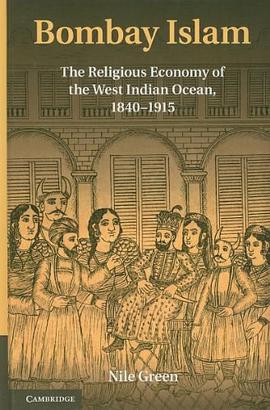
Bombay Islam
Douban
Nile Green publishing house: 劍橋大學出版社 2011 - 3
As a thriving port city, nineteenth-century Bombay attracted migrants from across India and beyond. Nile Green's Bombay Islam traces the ties between industrialization, imperialism and the production of religion to show how Muslim migration fueled demand for a wide range of religious suppliers, as Christian missionaries competed with Muslim religious entrepreneurs for a stake in the new market. Enabled by a colonial policy of non-intervention in religious affairs, and powered by steam travel and vernacular printing, Bombay's Islamic productions were exported as far as South Africa and Iran. Connecting histories of religion, labour and globalization, the book examines the role of ordinary people - mill hands and merchants - in shaping the demand that drove the market. By drawing on hagiographies, travelogues, doctrinal works, and poems in Persian, Urdu and Arabic, Bombay Islam unravels a vernacular modernity that saw people from across the Indian Ocean drawn into Bombay's industrial economy of enchantment.
Read
May 18, 2020
20151022 | Religious economy: colonial industrial modernity creating religious marketplace in Bombay for a variety of consumers; industrial modernity did not lead to total disenchantment or hegemonic reformist/uniform Islam, diversification rather than standardization; a class perspective on "economy of enchantment"
Green_Nile
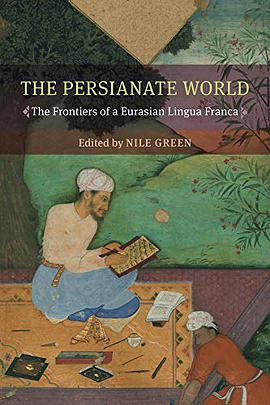
The Persianate World
Douban
Nile Green (ed.) publishing house: University of California Press 2019 - 4
At publication date, a free ebook version of this title will be available through Luminos, University of California Press's Open Access publishing program. Visit www.luminosoa.org to learn more. Persian is one of the great lingua francas of world history. Yet despite its recognition as a shared language across the Islamic world and beyond, its scope, impact, and mechanisms remain underexplored. A world historical inquiry into pre-modern cosmopolitanism, The Persianate World traces the reach and limits of Persian as a Eurasian language in a comprehensive survey of its geographical, literary, and social frontiers. From Siberia to Southeast Asia, and between London and Beijing, this book shows how Persian gained, maintained, and finally surrendered its status to imperial and vernacular competitors. Fourteen essays trace Persian's interactions with Bengali, Chinese, Turkic, Punjabi, and other languages to identify the forces that extended "Persographia," the domain of written Persian. Spanning the ages expansion and contraction, The Persianate World offers a critical survey of both the supports and constraints of one of history's key languages of global exchange.
Making Space
Douban
Green, Nile 2012 - 5
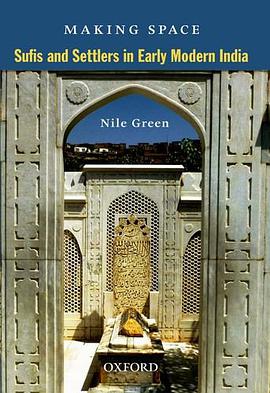
This volume provides a comprehensive view of the social transformation in early modern India between 1500 and 1750 by studying various Sufi movements. It covers a wide range of topics from Sufism and polity in the Afghan frontier to north Indian context and further to Deccan and the southernmost points of influence of the Mughals. Weaving together investigations of architecture with texts, migration of people, and the ethnographies and local histories, the author investigates community formation and inter-community contact. He reveals the tensions between mobility and locality through the ways Sufi Islam responded to demands of settlement by preserving the migrant bodies of blessed men and the shrines, texts and rituals that surrounded them. The book explores how Afghan, Mughal and Hindustani Muslims constructed new homelands while remembering distant places of origin. Central to this process were migrant Sufis and the hagiographical texts and architectural territories through which they preserved memory over time and anchored it to new spaces of settlement. The book offers bold new insights into Indian, Islamic and comparative early modern history. This book will be an important reading for scholars, researchers, and students of early modern Indian history, Islamic studies, and religion particularly those interested in Sufism.
The Love of Strangers
Douban
Nile Green publishing house: Princeton University Press 2015 - 11
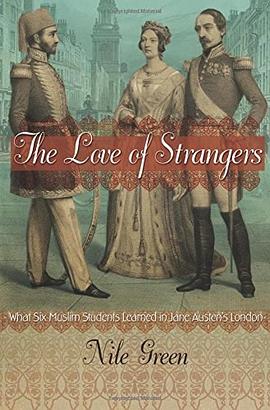
In July 1815, six Iranian students arrived in London under the escort of their chaperone, Captain Joseph D'Arcy. Their mission was to master the modern sciences behind the rapid rise of Europe. Over the next four years, they lived both the low life and high life of Regency London, from being down and out after their abandonment by D'Arcy to charming their way into society and landing on the gossip pages. The Love of Strangers tells the story of their search for love and learning in Jane Austen's England. Drawing on the Persian diary of the student Mirza Salih and the letters of his companions, Nile Green vividly describes how these adaptable Muslim migrants learned to enjoy the opera and take the waters at Bath. But there was more than frivolity to their student years in London. Burdened with acquiring the technology to defend Iran against Russia, they talked their way into the observatories, hospitals, and steam-powered factories that placed England at the forefront of the scientific revolution. All the while, Salih dreamed of becoming the first Muslim to study at Oxford. The Love of Strangers chronicles the frustration and fellowship of six young men abroad to open a unique window onto the transformative encounter between an Evangelical England and an Islamic Iran at the dawn of the modern age. This is that rarest of books about the Middle East and the West: a story of friendships.
Islam and the Army in Colonial India
Douban
Nile Green publishing house: 劍橋大學出版社 2009 - 5
This book was first published in 2009. Set in Hyderabad in the mid-nineteenth and early twentieth centuries, this book, a study of the cultural world of the Muslim soldiers of colonial India, focuses on the soldiers' relationships with the faqir holy men who protected them and the British officers they served. Drawing on Urdu as well as European sources, the book uses the biographies of Muslim holy men and their military followers to recreate the extraordinary encounter between a barracks culture of miracle stories, carnivals, drug-use and madness with a colonial culture of mutiny memoirs, Evangelicalism, magistrates and the asylum. It explores the ways in which the colonial army helped promote this sepoy religion while at the same time attempting to control and suppress certain aspects of it. The book brings to light the existence of a distinct 'barracks Islam' and shows its importance to the cultural no less than the military history of colonial India.