Guha_Ramachandra
这片开裂的土地
The Fissures Land:An Ecological History of India Douban
马德哈夫•加吉尔 / 拉马钱德拉·古哈 translator: 滕海键 publishing house: 中国环境科学出版社 2012 - 10
《这片开裂的土地:印度生态史》分为三大部分,总共八章内容。在第一部分中,作者针对马克思主义生产方式范畴的局限,引入了“资源利用模式”这一概念。作者抓住人类社会与生物资源的关系,以生态学视角,依次阐述了四种资源利用模式,提出了生态史的一般理论,为后面的研究提供了分析框架。在第二部分中,作者对前殖民时期印度社会多元文化与多样化生态如何组合在一起给予新的解释,这是一种文化,生态学分析。在第三部分中,作者依据大量原始资料,对由英国引入并在印度独立后继续存在的新的资源利用模式进行了社会,生态学分析。
The Unquiet Woods
Douban
Ramachandra Guha publishing house: University of California Press 2000 - 1
Expanded Edition This new, expanded edition of The Unquiet Woods, Ramachandra Guha's pathbreaking study of peasant movements against commercial forestry, offers a new epilogue that brings the story of Himalayan social protest up-to-date, reflecting the Chipko movement's continuing influence in the wider world. A new appendix charts the progress of environmental history in India. The bibliography and index have been revised and updated.
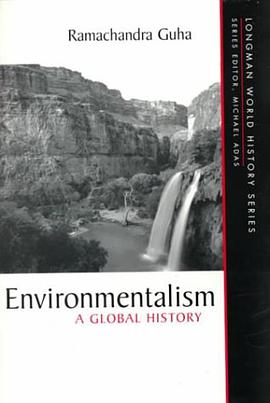
Environmentalism: A Global History
Douban Goodreads
Ramachandra Guha publishing house: Pearson 1999 - 10 other title: Environmentalism
A new entry in the Longman World History Series, A Global History is perfect for professors who want to assign short topical paperbacks which explore global issues and movements in their world history classes. This volume will fit into the second half of World History courses which typically cover the period from 1500 to the present century. A Global History is the first genuinely global history of environmentalism. Written by one of the foremost thinkers on ecological issues relating to South Africa, Guha has become one of the more provocative and perceptive commentators on environmentalism in its cross-cultural and global dimensions. Students will find this new text to be a lively and engaging study of ideas and debates that are central to our lives in the twentieth-first century.
India After Gandhi
Douban Goodreads
Ramachandra Guha publishing house: Ecco 2007 - 8
Born against a background of privation and civil war, divided along lines of caste, class, language and religion, independent India emerged, somehow, as a united and democratic country. This remarkable book tells the full story—the pain and the struggle, the humiliations and the glories—of the world's largest and least likely democracy. </p> Ramachandra Guha writes compellingly of the myriad protests and conflicts that have peppered the history of free India. But he writes also of the factors and processes that have kept the country together (and kept it democratic), defying numerous prophets of doom who believed that its poverty and heterogeneity would force India to break up or come under autocratic rule. Once the Western world looked upon India with a mixture of pity and contempt; now it looks upon India with fear and admiration. </p> Moving between history and biography, this story of modern India is peopled with extraordinary characters. Guha gives fresh insights on the lives and public careers of those long-serving prime ministers Jawaharlal Nehru and Indira Gandhi. There are vivid sketches of the major "provincial" leaders whose province was as large as a European country: the Kashmiri rebel turned ruler Sheikh Abdullah; the Tamil film actor turned politician M. G. Rama-chandran; the Naga secessionist leader Angami Zapu Phizo; the socialist activist Jayaprakash Narayan. But the book also writes with feeling and sensitivity about lesser known (though not necessarily less important) Indians—peasants, tribals, women, workers and musicians. </p> Massively researched and elegantly written, India After Gandhi is at once a magisterial account of India's rebirth and the work of a major scholar at the height of his powers. </p>