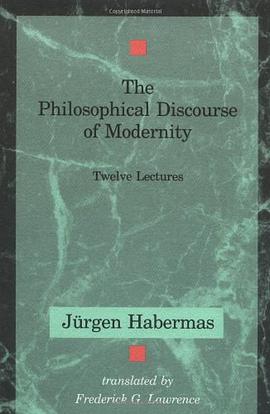
The Philosophical Discourse of Modernity is a tour de force that has theimmediacy and accessibility of the lecture form and the excitement of an encounteracross, national cultural boundaries. Habermas takes up the challenge posed by theradical critique of reason in contemporary French poststructuralism.Tracing theodyssey of the philosophical discourse of modernity, Habermas's strategy is toreturn to those historical "crossroads" at which Hegel and the Young Hegelians, Nietzsche and Heidegger made the fateful decisions that led to this outcome. His aimis to identify and clearly mark out a road indicated but not taken: the determinatenegation of subject-centered reason through the concept of communicativerationality. As The Theory of Communicative Action served to place this conceptwithin the history of social theory, these lectures locate it within the history ofphilosophy. Habermas examines the odyssey of the philosophical discourse ofmodernity from Hegel through the present and tests his own ideas about theappropriate form of a postmodern discourse through dialogs with a broad range ofpast and present critics and theorists.The lectures on Georges Bataille, MichelFoucault, Jacques Derrida, and Cornelius Castoriadis are of particular note sincethey are the first fruits of the recent cross-fertilization between French andGerman thought. Habermas's dialogue with Foucault - begun in person as the first ofthese lectures were delivered in Paris in 1983 culminates here in two appreciativeyet intensely argumentative lectures. His discussion of the literary-theoreticalreception of Derrida in America - launched at Cornell in 1984 - issues here in along excursus on the genre distinction between philosophy and literature. Thelectures were reworked for the final time in seminars at Boston College and firstpublished in Germany in the fall of 1985.J?rgen Habermas is Professor of Philosophyat the University of Frankfurt. The Philosophical Discourse of Modernity is includedin the series Studies in Contemporary German Social Thought, edited by ThomasMcCarthy.