Levi-Strauss
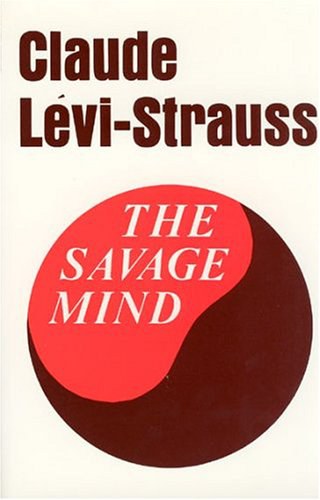
The Savage Mind
Douban
Claude Lévi-Strauss publishing house: University of Chicago Press 1968 - 9
"Every word, like a sacred object, has its place. No "precis" is possible. This extraordinary book must be read."--Edmund Carpenter, "New York Times Book Review " "No outline is possible; I can only say that reading this book is a most exciting intellectual exercise in which dialectic, wit, and imagination combine to stimulate and provoke at every page."--Edmund Leach, "Man " "Levi-Strauss's books are tough: very scholarly, very dense, very rapid in argument. But once you have mastered him, human history can never be the same, nor indeed can one's view of contemporary society. And his latest book, "The Savage Mind," is his most comprehensive and certainly his most profound. Everyone interested in the history of ideas "must" read it; everyone interested in human institutions "should "read it."--J. H. Plumb, "Saturday Review" "A constantly stimulating, informative and suggestive intellectual challenge."--Geoffrey Gorer, "The Observer," London
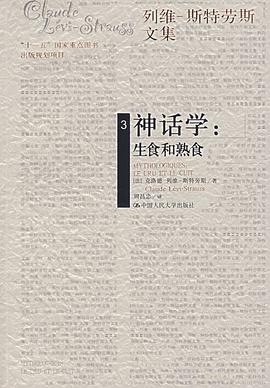
神话学
Douban
[法国] 克洛德·列维-斯特劳斯 translator: 周昌忠 publishing house: 中国人民大学出版社 2007 - 1
本书是法国著名的结构人类学家斯特劳斯四卷本《神话学》中的第一卷。在本书中,斯特劳斯试图以生的与煮熟的、新鲜的与腐败的、湿的与干的等对立的烹饪及感官特质建立一套严谨的逻辑架构。“生/熟”这个对立组是一再出现的主题:前者属于自然的范畴,后者属于文化的范畴。这两个范畴的差异及变换以火的发现为指涉的焦点。他还发现了下列层次上各对立组的对应关系:在食物层上是“生的/熟的”,在社会层次上是“自然/文化”,在宗教层次上是“世俗/神圣”,在声音层次上是“静默/音响”。
忧郁的热带
Tristes Tropiques Google Books Douban Goodreads
★ 9.1 62 ratings
[法国] 克洛德·列维-斯特劳斯 translator: 王志明 publishing house: 生活·读书·新知三联书店 2005 - 6 other title: 忧郁的热带
作者在青壮年时期,曾亲访亚马逊河流域与巴西高地森林。在丛林深处找到还原于最基本形态的人类社会。 《忧郁的热带》即记载了他在卡都卫欧、波洛洛、南比克瓦拉等几个最原始部落里情趣盎然,寓意深远的思考历程与生活体验。本书最早出版于1955年,是一部对促进人类自我了解具有罕见贡献 的人类学、文学、人类思想杰作。
嫉妒的制陶女
單行本有09年1月2印本 Douban
(法)克洛德·列维-斯特劳斯 translator: 刘汉全 publishing house: 中国人民大学出版社 2006 - 1
本书是《列维-斯特劳斯文集》系列之一,列维-斯特劳斯是当代法国著名的结构主义大师和文化人类学家,结构主义人类学创始人,曾被誉为20世纪法国最伟大的思想家之一,他把人类一切的亲属关系归纳为三种结构和两种交换形式,认为社会人类学应主要研究深层结构的转换规则。14卷的《列维·斯特劳斯文集》全方位译介了这位法国结构主义人类学家的一生力作,展现其学术体系的全貌。 《嫉妒的制陶女》可以说是《神话学》一脉相承的续篇。列维-斯特劳斯在书中给我们讲述了印第安人各个族群关于陶器、夜鹰、树懒的各种各样的神话传说。在分析和研究这些神话中,他概括了印第安神话的三大主题:食欲、嫉妒或夫妇不和、爆裂,提出并证明了不定型理论、鸣禽理论、貘的理论、林栖动物理论、莱因瓶理论,指明了神话的动物元素和动物的象征性,指出了神话思维的本质:符号的多样性和任意性,还指出神话世界的三层空间:天、地、地下。他通过所有这些分析和比较,通过他所创立的典型式的应用,找出了各种神话因素对应或对立的关系,使得似乎是斑驳的、杂乱无章的、毫无联系的神话变得有条有理、秩序井然、可以理解。
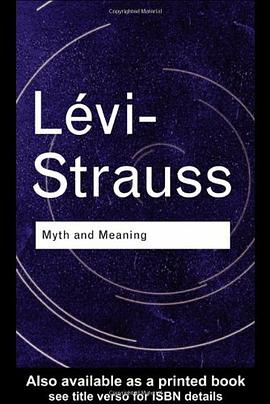
Myth and Meaning
Douban
Claude Lévi-Strauss publishing house: Routledge 2001 - 5
在线阅读本书 In addresses written for a wide general audience, one of the twentieth century's most prominent thinkers, Claude Levi-Strauss, here offers the insights of a lifetime on the crucial questions of human existence. Responding to questions as varied as 'Can there be meaning in chaos?', 'What can science learn from myth?' and 'What is structuralism?', Levi-Strauss presents, in clear, precise language, essential guidance for those who want to learn more about the potential of the human mind.