Ludden
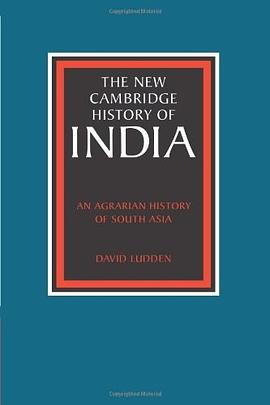
An Agrarian History of South Asia
Douban
Ludden, David publishing house: Cambridge Univ Pr 1999 - 10
Originally published in 1999, David Ludden's book offers a comprehensive historical framework for understanding the regional diversity of agrarian South Asia. Adopting a long-term view of history, it treats South Asia not as a single civilization territory, but rather as a patchwork of agrarian regions, each with their own social, cultural and political histories. The discussion begins during the first millennium, when farming communities displaced pastoral and tribal groups, and goes on to consider the development of territoriality from the sixteenth to the nineteenth centuries. Subsequent chapters consider the emergence of agrarian capitalism in village societies under the British, and demonstrate how economic development in contemporary South Asia continues to reflect the influence of agrarian localism. As a comparative synthesis of the literature on agrarian regimes in South Asia, the book promises to be a valuable resource for students of agrarian and regional history as well as of comparative world history.
Read March 3, 2020
An alternative agriculture: Agrarian territorial expansion continuing into regionalization, urbanization, centralized states, frontier closure; colonial era a rupture in continuity, private property tying with the individual and land commodified
Ludden
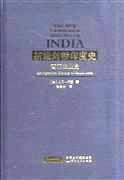
新编剑桥印度史(第四卷第四分册)
The New Cambridge History of India: An Agrarian History of South Asia Douban
[美] 大卫·卢登 translator: 资谷生 / 雍维雁 … 2015 - 4
《南亚农业史》一书是《新编剑桥印度史》丛书中译本中的一部。由DAVID LUDDEN 著,资谷生、雍维雁、欧阳鹏译。作为南亚农业制度的综合性比较文献,该书对研习农业史、区域历史的学生和研究比较世界历史的学生来说都是相当宝贵的文献资料。再次携手剑桥大学出版社出版新编剑桥印度史丛书中译版,它是我社响应国家建设中国面向西南开放重要桥头堡战略的一项重要学术文化工程。
An Agrarian History of South Asia
Douban
Ludden, David 2011 - 2
Originally published in 1999, David Ludden's book offers a comprehensive historical framework for understanding the regional diversity of agrarian South Asia. Adopting a long-term view of history, it treats South Asia not as a single civilization territory, but rather as a patchwork of agrarian regions, each with their own social, cultural and political histories. The discussion begins during the first millennium, when farming communities displaced pastoral and tribal groups, and goes on to consider the development of territoriality from the sixteenth to the nineteenth centuries. Subsequent chapters consider the emergence of agrarian capitalism in village societies under the British, and demonstrate how economic development in contemporary South Asia continues to reflect the influence of agrarian localism. As a comparative synthesis of the literature on agrarian regimes in South Asia, the book promises to be a valuable resource for students of agrarian and regional history as well as of comparative world history.