Merleau-Ponty
眼與心
L'Œil et l'Esprit Douban
梅洛龐蒂(Maurice Merleau-Ponty) translator: 龔卓軍 publishing house: 典藏藝術家庭 2007 - 11
《眼與心》(L’(Eil et l’Esprit)是梅洛龐蒂生前完成的最後書寫。 在普羅旺斯鄉下離艾克斯(Aix)不遠的托洛內(Tholonet)住了兩三個月,他沉浸在這個具有濃厚深居氣息的地方,特別是日日得以樂享塞尚(Paul Cezanne)之眼曾經投注的景色,在此,他重新探問視覺,重新探問繪畫。他再一次尋求發端之語詞,譬如,那些能夠命名人類身體造化奇蹟的語詞、命名身體那無以解釋的生氣活力的語詞、命名身體那即刻能與他者、世界與自身建立連結的語詞,同時,也找尋那些命名此一奇蹟的脆弱性的語詞。 全文共5大節: 第一節的主題是科學與藝術。 第二節討論的是可見性的條件。 第三節可以說是對笛卡兒視覺哲學肢解了視覺作用的批判。 第四節集中在現代繪畫史對於深度、色彩、形、線條、輪廓、運動的多重探索。 簡短的第五節,回到了藝術所特有的喑啞歷史性力量。
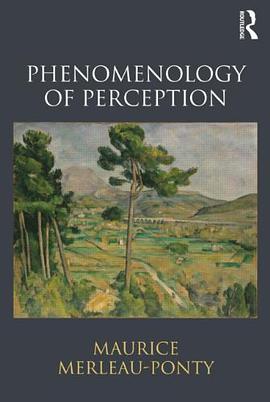
Phenomenology of Perception
Phénoménologie de la Perception Douban
Maurice Merleau-Ponty translator: Donald A. Landes publishing house: Routledge 2012 - 1
First published in 1945, Maurice Merleau-Ponty’s monumental Phénoménologie de la perception signalled the arrival of a major new philosophical and intellectual voice in post-war Europe. Breaking with the prevailing picture of existentialism and phenomenology at the time, it has become one of the landmark works of twentieth-century thought. This new translation, the first for over fifty years, makes this classic work of philosophy available to a new generation of readers. Phenomenology of Perception stands in the great phenomenological tradition of Husserl, Heidegger, and Sartre. Yet Merleau-Ponty’s contribution is decisive, as he brings this tradition and other philosophical predecessors, particularly Descartes and Kant, to confront a neglected dimension of our experience: the lived body and the phenomenal world. Charting a bold course between the reductionism of science on the one hand and "intellectualism" on the other, Merleau-Ponty argues that we should regard the body not as a mere biological or physical unit, but as the body which structures one’s situation and experience within the world.
The Visible and the Invisible
Douban Goodreads
Maurice Merleau-Ponty translator: Alphonso Lingis publishing house: Northwestern University Press 1968 - 1
The Visible and the Invisible contains the unfinished manuscript and working notes of the book Merleau-Ponty was writing when he died. The text is devoted to a critical examination of Kantian, Husserlian, Bergsonian, and Sartrean method, followed by the extraordinary "The Intertwining–The Chiasm," that reveals the central pattern of Merleau-Ponty's own thought. The working notes for the book provide the reader with a truly exciting insight into the mind of the philosopher at work as he refines and develops new pivotal concepts.
To read May 12, 2010
Readings in Phenomenology, Professor Gavin Flood, OCHS
Merleau-Ponty