Metcalf_Thomas
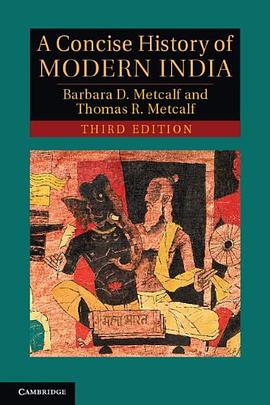
A Concise History of Modern India
DoubanA Concise History of Modern India by Barbara D. Metcalf and Thomas R. Metcalf, has become a classic in the field since it was first published in 2001. As a fresh interpretation of Indian history from the Mughals to the present, it has informed students across the world. In the third edition of the book, a final chapter charts the dramatic developments of the last twenty years, from 1990 through the Congress electoral victory of 2009, to the rise of the Indian high-tech industry in a country still troubled by poverty and political unrest. The narrative focuses on the fundamentally political theme of the imaginative and institutional structures that have successively sustained and transformed India, first under British colonial rule and then, after 1947, as an independent country. Woven into the larger political narrative is an account of India's social and economic development and its rich cultural life.
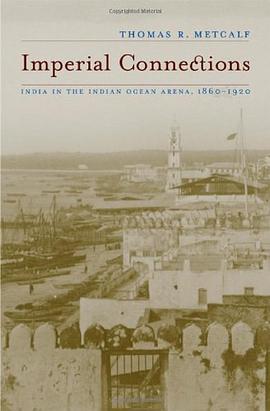
Imperial Connections
Douban
Thomas R. Metcalf
publishing house:
University of California Press
2007
- 4
An innovative remapping of empire, "Imperial Connections" offers a broad-ranging view of the workings of the British Empire in the period when the India of the Raj stood at the center of a newly globalized system of trade, investment, and migration. Thomas R. Metcalf argues that India itself became a nexus of imperial power that made possible British conquest, control, and governance across a wide arc of territory stretching from Africa to eastern Asia. His book, offering a new perspective on how imperialism operates, emphasizes transcolonial interactions and webs of influence that advanced the interests of colonial India and Britain alike. Metcalf examines such topics as law codes and administrative forms as they were shaped by Indian precedents; the Indian Army's role in securing Malaya, Africa, and Mesopotamia for the empire; the employment of Indians, especially Sikhs, in colonial policing; and the transformation of East Africa into what was almost a province of India through the construction of the Uganda railway. He concludes with a look at the decline of this Indian Ocean system after 1920 and considers how far India's participation in it opened opportunities for Indians to be a colonizing as well as a colonized people.