Mullaney
The Chinese Deathscape
Douban
Thomas S. Mullaney publishing house: Stanford University Press 2019 - 6
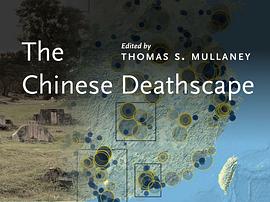
https://chinesedeathscape.supdigital.org/ In the past decade alone, ten million corpses have been exhumed and reburied across the Chinese landscape. The campaign has transformed China's graveyards into sites of acute personal, social, political, and economic contestation. In this digital volume, three historians of China, Jeffrey Snyder-Reinke, Christian Henriot, and Thomas S. Mullaney, chart out the history of China's rapidly shifting deathscape. Each essay grapples with a different dimension of grave relocation and burial reform in China over the past three centuries: from the phenomenon of "baby towers" in the Lower Yangzi region of late imperial China, to the histories of death in the city of Shanghai, and finally into the history of grave relocation during the contemporary period, examined by Mullaney, when both its scale and tempo increased dramatically. Rounding off these historical analyses, a colophon by platform developers David McClure and Glen Worthey speak to new reading methodologies emerging from a format in which text and map move in concert to advance historical argumentation
The Chinese Typewriter
Douban
★ 9.3 6 ratings
Thomas S. Mullaney publishing house: The MIT Press 2017 - 8
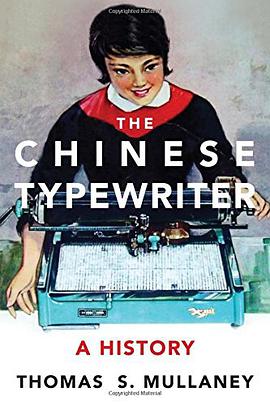
Chinese writing is character based, the one major world script that is neither alphabetic nor syllabic. Through the years, the Chinese written language encountered presumed alphabetic universalism in the form of Morse Code, Braille, stenography, Linotype, punch cards, word processing, and other systems developed with the Latin alphabet in mind. This book is about those encounters -- in particular thousands of Chinese characters versus the typewriter and its QWERTY keyboard. Thomas Mullaney describes a fascinating series of experiments, prototypes, failures, and successes in the century-long quest for a workable Chinese typewriter. The earliest Chinese typewriters, Mullaney tells us, were figments of popular imagination, sensational accounts of twelve-foot keyboards with 5,000 keys. One of the first Chinese typewriters actually constructed was invented by a Christian missionary, who organized characters by common usage (but promoted the less-common characters for "Jesus" to the common usage level). Later came typewriters manufactured for use in Chinese offices, and typewriting schools that turned out trained "typewriter girls" and "typewriter boys." Still later was the "Double Pigeon" typewriter produced by the Shanghai Calculator and Typewriter Factory, the typewriter of choice under Mao. Clerks and secretaries in this era experimented with alternative ways of organizing characters on their tray beds, inventing an arrangement method that was the first instance of "predictive text." Today, after more than a century of resistance against the alphabetic, not only have Chinese characters prevailed, they form the linguistic substrate of the vibrant world of Chinese information technology. The Chinese Typewriter, not just an "object history" but grappling with broad questions of technological change and global communication, shows how this happened.
Coming to Terms with the Nation
Douban
★ 8.8 5 ratings
Thomas Mullaney publishing house: University of California Press 2010 - 11
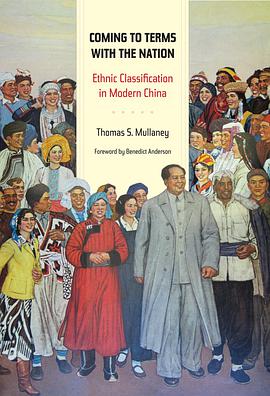
China is a vast nation comprised of hundreds of distinct ethnic communities, each with its own language, history, and culture. Today the government of China recognizes just 56 ethnic nationalities, or minzu, as groups entitled to representation. This controversial new book recounts the history of the most sweeping attempt to sort and categorize the nation's enormous population: the 1954 Ethnic Classification project (minzu shibie). Thomas S. Mullaney draws on recently declassified material and extensive oral histories to describe how the communist government, in power less than a decade, launched this process in ethnically diverse Yunnan. Mullaney shows how the government drew on Republican-era scholarship for conceptual and methodological inspiration as it developed a strategy for identifying minzu and how non-Party-member Chinese ethnologists produced a "scientific" survey that would become the basis for a policy on nationalities.
Coming to Terms with the Nation
Douban
Thomas Mullaney publishing house: University of California Press 2011
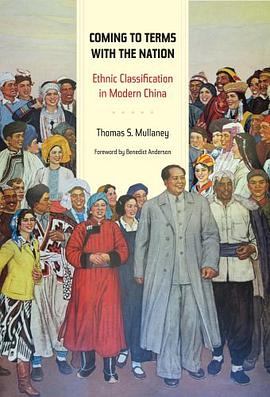
China is a vast nation comprised of hundreds of distinct ethnic communities, each with its own language, history, and culture. Today the government of China recognizes just 56 ethnic nationalities, or minzu, as groups entitled to representation. This controversial new book recounts the history of the most sweeping attempt to sort and categorize the nation's enormous population: the 1954 Ethnic Classification project (minzu shibie). Thomas S. Mullaney draws on recently declassified material and extensive oral histories to describe how the communist government, in power less than a decade, launched this process in ethnically diverse Yunnan. Mullaney shows how the government drew on Republican-era scholarship for conceptual and methodological inspiration as it developed a strategy for identifying minzu and how non-Party-member Chinese ethnologists produced a "scientific" survey that would become the basis for a policy on nationalities.