Perdue
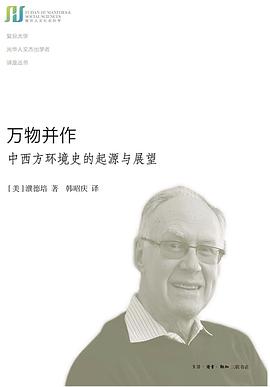
万物并作
Douban
[美] 濮德培 (Peter C. Perdue) translator: 韩昭庆 publishing house: 生活·读书·新知三联书店 2018 - 8
《万物并作》是著名新清史学者濮德培于2012年夏天为复旦大学历史地理研究中心所作的四场报告的基础上编撰而成。本书十分简明扼要而条分缕析地了讲述环境史的源流和中国环境史的发展,并通过丰富的例子来讨论环境史的研究方法,具有很强的操作性。书中不时闪现一些真知灼见和贯穿始终的史学理念,给人以无限的启迪和想象。《万物并作》是一部优秀的环境史入门著作,也是了解新史学的必读书。 本书首先考察肇始于古代,直至20世纪发展成为一个专门研究领域的西方环境史的历程。环境史源自两个学派:法国年鉴学派和美国边疆史研究学派。前者关注长时段的研究以及自然界对人类社会产生的制约,后者强调近代资本主义对自然界的不断改造。第二章相应地介绍中国环境史自帝国时期以来到近代的逐渐兴起。第三章考量分析人地关系的发展过程中使用的不同尺度,以及他们如何通过地方、区域以及全球的范围的观念来彼此相联。第四章梳理了把环境史与科学研究联系起来进行研究的诸多创见。 本书分为四章,第一章《西方环境史的起源》将西方环境史的传统追溯到年鉴学派和美国的边疆史研究先驱。第二章《中国环境史的兴起》则按照历史事件顺序,叙述了从传统的历史地理中脱胎出来的中国环境史,重点讲述了“禹贡派”和欧文·拉铁摩尔的影响,以及从近代以来中国人对自然看法的转变。 第三章《环境史的研究尺度》中讲述了毛皮和茶叶这种地方性的货物如何被纳入到全球经济的故事。论述了环境史的视角应该考察在不同地理尺度范围内发生的历史变迁,将地区和更大范围的历史进程结合起来。第四章《环境与自然科学》则讲述了适合环境史研究者的自然科学理论,其中包括进化论和生态史,并用黄河治理作为例子详述如何应用这些科学理论。
Asia Inside Out
Douban
Eric Tagliacozzo / Helen F. Siu … publishing house: Harvard University Press 2015 - 1
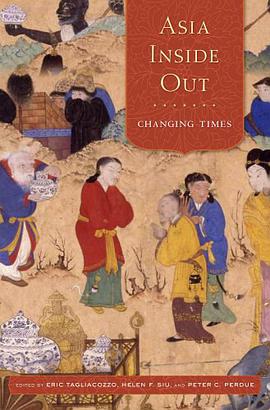
The first of three volumes surveying the historical, spatial, and human dimensions of inter-Asian connections, Asia Inside Out: Changing Times brings into focus the diverse networks and dynamic developments that have linked peoples from Japan to Yemen over the past five centuries. Each author examines an unnoticed moment—a single year or decade—that redefined Asia in some important way. Heidi Walcher explores the founding of the Safavid dynasty in the crucial battle of 1501, while Peter C. Perdue investigates New World silver’s role in Sino–Portuguese and Sino–Mongolian relations after 1557. Victor Lieberman synthesizes imperial changes in Russia, Burma, Japan, and North India in the seventeenth century, Charles Wheeler focuses on Zen Buddhism in Vietnam to 1683, and Kerry Ward looks at trade in Pondicherry, India, in 1745. Nancy Um traces coffee exports from Yemen in 1636 and 1726, and Robert Hellyer follows tea exports from Japan to global markets in 1874. Anand Yang analyzes the diary of an Indian soldier who fought in China in 1900, and Eric Tagliacozzo portrays the fragility of Dutch colonialism in 1910. Andrew Willford delineates the erosion of cosmopolitan Bangalore in the mid-twentieth century, and Naomi Hosoda relates the problems faced by Filipino workers in Dubai in the twenty-first. Moving beyond traditional demarcations such as West, East, South, and Southeast Asia, this interdisciplinary study underscores the fluidity and contingency of trans-Asian social, cultural, economic, and political interactions. It also provides an analytically nuanced and empirically rich understanding of the legacies of Asian globalization.
Read June 2, 2016
Within the field of modern South Asian history, Anand Yang's piece seems a bit underwhelming. When are we going to end all this celebratory and pretentious Pan-Asian bhai-bhai thing?
Perdue Tagliacozzo 萧凤霞
Asia Inside Out
Douban
Eric Tagliacozzo / Helen F. Siu … publishing house: Harvard University Press 2015 - 6
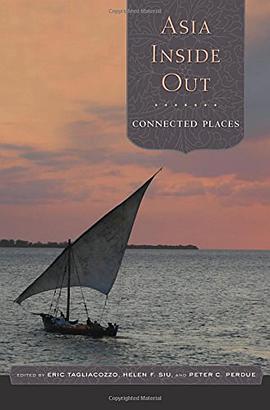
Asia Inside Out reveals the dynamic forces that have historically linked regions of the world’s largest continent, stretching from Japan and Korea to the South China Sea, Indian Ocean, and the Middle East. Connected Places, the second installment in this pioneering three-volume survey, highlights the transregional flows of goods, ideas, and people across natural and political boundaries—sea routes, delta ecologies, and mountain passes, ports and oasis towns, imperial capitals and postmodern cities. It challenges the conventional idea that defined geopolitical regions as land-based, state-centered, and possessing linear histories. Exploring themes of maritime connections, mobile landscapes, and spatial movements, the authors examine significant sites of linkage and disjuncture from the early modern period to the present. Readers discover how eighteenth-century pirates shaped the interregional networks of Vietnam’s Tonkin Gulf, how Kashmiri merchants provided intelligence of remote Himalayan territories to competing empires, and how for centuries a vibrant trade in horses and elephants fueled the Indian Ocean economy. Other topics investigated include cultural formations in the Pearl River delta, global trade in Chittagong’s transformation, gendered homemaking among mobile Samurai families, border zones in Qing China and contemporary Burma, colonial spaces linking India and Mesopotamia, transnational marriages in Oman’s immigrant populations, new cultural spaces in Korean Pop, and the unexpected adoption of the Latin script by ethnically Chinese Muslims in Central Asia. Connected Places shows the constant fluctuations over many centuries in the making of Asian territories and illustrates the confluence of factors in the historical construction of place and space.
Shared Histories of Modernity
Douban
Huricihan Islamoglu / Peter C. Perdue (Editors) publishing house: Routledge India 2009 - 3
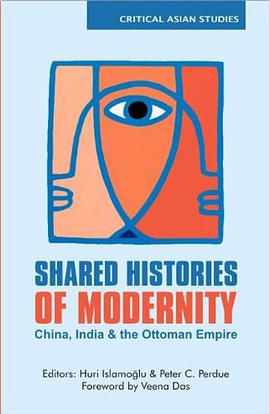
While pre-modernity is often considered to be the 'time' of non-European regions and modernity is seen as belonging to the West, this book seeks to transcend the temporal bifurcation of that world history into 'pre-modern' and 'modern', as well as question its geographical split into two irreconcilable trajectories: the European and the non-European. The book examines shared experiences of modern transformation or modernity in three regions -- China, India and the Ottoman Empire -- which conventional historiography identifies as non-European, and therefore, by implication, outside of modernity or only tangentially linked to it as its victim. In other words, this work looks at modernity without reference to any 'idealised' criteria of what qualifies as 'modern' or not, studying the negotiation and legacies of the early modern period for the modern nation state. It focuses on the experience of modernity of non-European regions for they play a crucial role in the new phase of transformational patterns may have deeper roots than are generally assumed. Rejecting European characterisations of 'eastern' states as Oriental despotisms, the volume conceives of the early modern state as a negotiated enterprise, one that questions the assumption that state centralisation must be a key metric of success in modernisation. Among other topics, the book highlights: state formations in the three empires; legislation pertaining to taxation, property, police reform, the autonomy of legal sphere, the interaction of different types of law, law's role in governance, administrative practice, negotiated settlements and courts as sites of negotiation, the blurred boundaries between formal law and informal mediation; the ability of 18th century Qing and Ottoman imperial governments to accommodate diverse local particularities within an overreaching structure; and the pattern of regional development pointing to the accommodative institutional capacity of the Mughal empire. Tracing the complex histories of state or imperial formations through legal, administrative, and economic developments, the book argues that modernity as such no longer stands for experience of 'alienation' from specific historical trajectories, a characterisation which often haunted the 'modern' histories of the British empire in India, Ottoman reform state or the Communist Chinese state. Bringing together historians of the Qing, the Mughal and the Ottoman empires, this volume, principally, explores categories of historical explanation that span the European and non-European, pre-modern and modern experiences.
China Marches West
Douban Goodreads
Peter C. Perdue publishing house: Belknap Press of Harvard University Press 2005 - 4
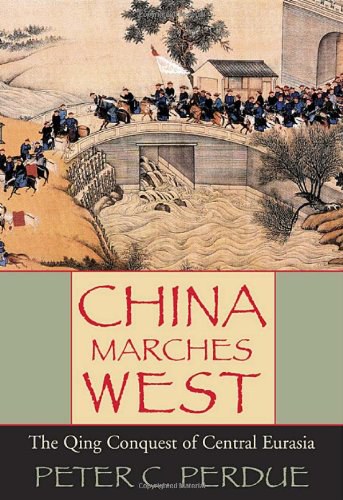
From about 1600 to 1800, the Qing empire of China expanded to unprecedented size. Through astute diplomacy, economic investment, and a series of ambitious military campaigns into the heart of Central Eurasia, the Manchu rulers defeated the Zunghar Mongols, and brought all of modern Xinjiang and Mongolia under their control, while gaining dominant influence in Tibet. The China we know is a product of these vast conquests.<br /><br /><br /><br />Peter C. Perdue chronicles this little-known story of China's expansion into the northwestern frontier. Unlike previous Chinese dynasties, the Qing achieved lasting domination over the eastern half of the Eurasian continent. Rulers used forcible repression when faced with resistance, but also aimed to win over subject peoples by peaceful means. They invested heavily in the economic and administrative development of the frontier, promoted trade networks, and adapted ceremonies to the distinct regional cultures.<br /><br /><br /><br />Perdue thus illuminates how China came to rule Central Eurasia and how it justifies that control, what holds the Chinese nation together, and how its relations with the Islamic world and Mongolia developed. He offers valuable comparisons to other colonial empires and discusses the legacy left by China's frontier expansion. The Beijing government today faces unrest on its frontiers from peoples who reject its autocratic rule. At the same time, China has launched an ambitious development program in its interior that in many ways echoes the old Qing policies.<br /><br /><br /><br />China Marches West is a tour de force that will fundamentally alter the way we understand Central Eurasia.
To read Sept. 5, 2011
2012.3.16@Brattle
Perdue