Pomeranz
大分流
The Great Divergence Douban
彭慕蘭(KENNETH POMERANZ) translator: 邱澎生 publishing house: 巨流圖書 2004
《大分流》為一個歷史學的古典提問帶來了新的洞識:儘管歐洲與東亞高度發展地區都有著令人驚異的相似,何以持續的工業成長是先由西北歐開始呢?彭慕蘭(Kenneth Pomeranz)指出,在劇金不遠的1750年,世界上這兩個部分在平均於命、消費、生產與代理市場、家計的策略、以及或許是最令人訝異的生態環境,都有著相同的發展。彭慕蘭(Kenneth Pomeranz)主張,歐洲十九世紀時從舊大陸分流出來,很大的程度要歸功於幸運第擁有煤礦蘊藏(可以取代木材的使用)以及漢美洲的貿易。煤礦蘊藏與新大陸的結合,使得歐洲能依著資源密集與節省勞動力的道路而成長。 與此同時,亞洲則走到了死胡同。雖然1750年之後,東亞內地在人口與製造業都有著驚人的發展,但這卻阻礙了這些邊緣的地區將重要資源出口到織造業中心的長江三角洲。結果,東亞經濟核心地區的成長根本地停頓,同時還在成長的則沿著勞力密集與資源節約的方式來進行;若歐洲沒有取得那些來自於地下和海外的資源,它可能也會被迫以這種方式成長。
大分流
The Great Divergence Douban
★ 7.4 10 ratings
[美国] 彭慕兰 translator: 史建云 publishing house: 江苏人民出版社 2004 - 3
这本“加州学派”的力作,尽管在国外学界频频获奖,但之所以在国内引起这样的轰动,是因为这本书以中国与欧洲双向交互比较的方法,再次触动了国人最敏感的老话题――我们这个长期以来在全球范围内一直保持领先的古老文明,到了近代究竟为什么突然“样样落后”地衰落了?
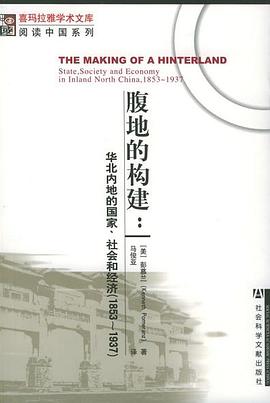
腹地的构建
The Making of a Hinterland Douban
[美国] 彭慕兰 translator: 马俊亚 publishing house: 社会科学文献出版社 2005 - 8
这部对中国现代史上某些重大问题进行全新评价的著作,探索了清末民初华北内地的社会、经济和生态变迁。彭慕兰采用了大量的新资料,认为一些地区的发展造成了其他地区系统的不发展。他阐述了当地的金融、农作、交通、税收情况和农民的反抗斗争,并分析了不同阶级、地区和性别的因果关系。 彭慕兰认为,腹地是被创造的,而不是被发现的,在很大程度上是由当地群体与外部力量的方略所造成的。
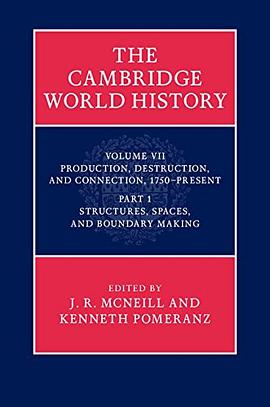
The Cambridge World History
Douban
J. R. McNeill (Editor), Kenneth Pomeranz (Editor) publishing house: 劍橋大學出版社 2015 - 6
Since 1750, the world has become ever more connected, with processes of production and destruction no longer limited by land- or water-based modes of transport and communication. Volume 7 of the Cambridge World History series, divided into two books, offers a variety of angles of vision on the increasingly interconnected history of humankind. The first book examines structures, spaces, and processes within which and through which the modern world was created, including the environment, energy, technology, population, disease, law, industrialization, imperialism, decolonization, nationalism, and socialism, along with key world regions.
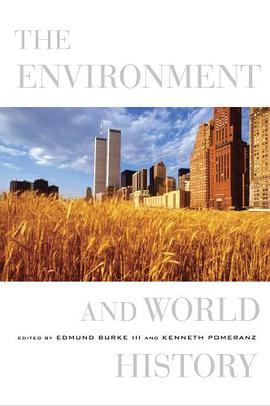
The Environment and World History
Douban
Burke, Edmund, III (EDT)/ Pomeranz, Kenneth (EDT) publishing house: University of California Press 2009 - 4
Since around 1500 C.E., humans have shaped the global environment in ways that were previously unimaginable. Bringing together leading environmental historians and world historians, this book offers an overview of global environmental history throughout this remarkable 500-year period. In eleven essays, the contributors examine the connections between environmental change and other major topics of early modern and modern world history: population growth, commercialization, imperialism, industrialization, the fossil fuel revolution, and more. Rather than attributing environmental change largely to European science, technology, and capitalism, the essays illuminate a series of culturally distinctive, yet often parallel developments arising in many parts of the world, leading to intensified exploitation of land and water. The wide range of regional studies - including some in Russia, China, the Middle East, India, Southeast Asia, Latin America, Southern Africa, and Western Europe - together with the book's broader thematic essays makes "The Environment and World History" ideal for courses that seek to incorporate the environment and environmental change more fully into a truly integrative understanding of world history. The contributors include Michael Adas, William Beinart, Edmund Burke-III, Mark Cioc, Kenneth Pomeranz, Mahesh Rangarajan, John F. Richards, Lise Sedrez, and Douglas R. Weiner.
The Making of a Hinterland
Douban Goodreads
Kenneth Pomeranz publishing house: University of California Press 1993 - 8 other title: The Making of a Hinterland: State, Society, and Economy in Inland North China, 1853-1937
This wholly original reassessment of critical issues in modern Chinese history traces social, economic, and ecological change in inland North China during the late Qing dynasty and the Republic. Using many new sources, Kenneth Pomeranz argues that the development of certain regions entailed the systematic underdevelopment of other regions. He maps changes in local finance, farming, transportation, taxation, and popular protest, and analyzes the consequences for different classes, sub-regions, and genders.Pomeranz attributes these diverse developments to several causes: the growing but incomplete integration of North China into the world economy, the state's abandonment of many hinterland areas and traditional functions, and the effect of local social structures on these processes. He shows that hinterlands were made, not merely found, and were powerfully shaped by the strategies of local groups as well as outside forces. This wholly original reassessment of critical issues in modern Chinese history traces social, economic, and ecological change in inland North China during the late Qing dynasty and the Republic. Using many new sources, Kenneth Pomeranz argues that the development of certain regions entailed the systematic underdevelopment of other regions. He maps changes in local finance, farming, transportation, taxation, and popular protest, and analyzes the consequences for different classes, sub-regions, and genders.Pomeranz attributes these diverse developments to several causes: the growing but incomplete integration of North China into the world economy, the state's abandonment of many hinterland areas and traditional functions, and the effect of local social structures on these processes. He shows that hinterlands were made, not merely found, and were powerfully shaped by the strategies of local groups as well as outside forces.
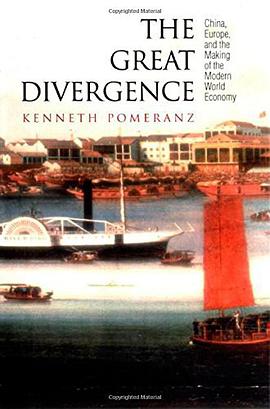
The Great Divergence
Douban Goodreads
Kenneth Pomeranz publishing house: Princeton University Press 2001 - 12
The Great Divergence brings new insight to one of the classic questions of history: Why did sustained industrial growth begin in Northwest Europe, despite surprising similarities between advanced areas of Europe and East Asia? As Ken Pomeranz shows, as recently as 1750, parallels between these two parts of the world were very high in life expectancy, consumption, product and factor markets, and the strategies of households. Perhaps most surprisingly, Pomeranz demonstrates that the Chinese and Japanese cores were no worse off ecologically than Western Europe. Core areas throughout the eighteenth-century Old World faced comparable local shortages of land-intensive products, shortages that were only partly resolved by trade. Pomeranz argues that Europe's nineteenth-century divergence from the Old World owes much to the fortunate location of coal, which substituted for timber. This made Europe's failure to use its land intensively much less of a problem, while allowing growth in energy-intensive industries. Another crucial difference that he notes has to do with trade. Fortuitous global conjunctures made the Americas a greater source of needed primary products for Europe than any Asian periphery. This allowed Northwest Europe to grow dramatically in population, specialize further in manufactures, and remove labor from the land, using increased imports rather than maximizing yields. Together, coal and the New World allowed Europe to grow along resource-intensive, labor-saving paths. Meanwhile, Asia hit a cul-de-sac. Although the East Asian hinterlands boomed after 1750, both in population and in manufacturing, this growth prevented these peripheral regions from exporting vital resources to the cloth-producing Yangzi Delta. As a result, growth in the core of East Asia's economy essentially stopped, and what growth did exist was forced along labor-intensive, resource-saving paths--paths Europe could have been forced down, too, had it not been for favorable resource stocks from underground and overseas.