Porter_Andrew
European Imperialism, 1860-1914
Douban
Porter, Andrew publishing house: Palgrave Macmillan 1996 - 8
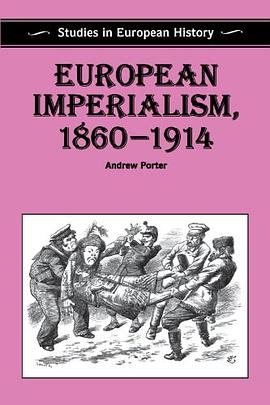
This study surveys the growth of European intervention outside Europe between 1860 and 1914. It treats its subject, 'imperialism', as a process of increasing contact, influence and control, rather than as the nature and consequences of colonial rule. The problems of defining 'imperialism' are considered alongside various analytical approaches to the term. In examining the controversial historiographical literature surrounding this subject, the book criticises particular explanations, and introduces readers to some of the new directions in research and inquiry currently being explored by historians.
The Oxford History of the British Empire
Douban
Porter, Andrew 编 publishing house: Oxford University Press 2001 - 9
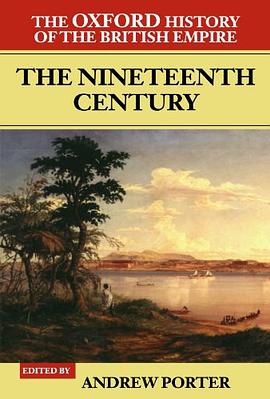
Volume III of The Oxford History of the British Empire covers the long nineteenth century, from the achievement of American independence in the 1780s to the eve of world war in 1914. This was the period of Britain's greatest expansion as both empire-builder and dominant world power. The volume is divided into two parts. The first contains thematic chapters, some focusing on Britain, others on areas at the imperial periphery, exploring those fundamental dynamics of British expansion which made imperial influence and rule possible. They also examine the economic, cultural, and institutional frameworks which gave shape to Britain's overseas empire. Part 2 is devoted to the principal areas of imperial activity overseas, including both white settler and tropical colonies. Chapters examine how British interests and imperial rule shaped individual regions' nineteenth-century political and social-economic history. Themes dealt with include the economics of empire, imperial institutions, defence, technology, imperial and colonial cultures, science and exploration. Attention is given not only to the formal empire, from Australasia and the West Indies to India and the African colonies, but also to China and Latin America, often regarded as central components of a British 'informal empire'. Series Blurb The Oxford History of the British Empire is a major new assessment of the Empire in the light of recent scholarship and the progressive opening of historical records. From the founding of colonies in North America and the West Indies in the seventeenth century to the reversion of Hong Kong to China at the end of the twentieth, British imperialism was a catalyst for far-reaching change. The Oxford History of the British Empire as a comprehensive study allows us to understand the end of Empire in relation to its beginnings, the meaning of British imperialism for the ruled as well as the rulers, and the significance of the British Empire as a theme in world history
Religion Versus Empire?
Douban
Andrew Porter publishing house: Manchester University Press 2004 - 8
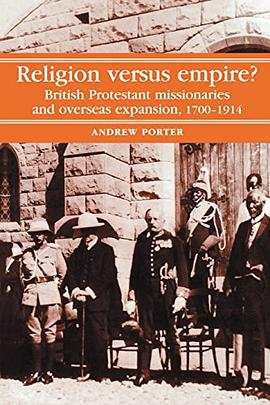
This is the only book that addresses the relations between religion, Protestant missions, and empire building, linking together all three fields of study by taking as its starting point the early eighteenth century Anglican initiatives in colonial North America and the Caribbean. It considers how the early societies of the 1790s built on this inheritance, and extended their own interests to the Pacific, India, the Far East and Africa. Fluctuations in the vigour and commitment of the missions, changing missionary theologies, and the emergence of alternative missionary strategies, are all examined for their impact on imperial expansion. Other themes include the international character of the missionary movement, Christianity's encounter with Islam, and major figures such as David Livingstone, the state and politics, and humanitarianism, all of which are viewed in a fresh light. This monumental study shows that the missionary movement had a far more complex and ambiguous relationship with the Empire than has previously been thought, and will be widely welcomed by students and scholars of imperial history and the history of religion.