Rowe_William_T
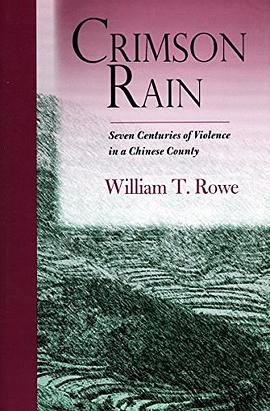
Crimson Rain
Douban Goodreads
William T. Rowe publishing house: Stanford University Press 2006 - 10
This brilliantly crafted narrative explores the roots of violence in Chinese rural society over the past seven hundred years, based on the study of a single highland county, Macheng, Hubei province, in the Great Divide Mountains separating the Yangzi valley from the North China Plain. Between the expulsion of the Mongols in the mid-fourteenth century and the invasion of the Japanese in 1938, Macheng experienced repeated, often self-inflicted waves of mass “extermination” of segments of its population. This book argues that, beyond its strategic military centrality and ingrained social tensions, cultural factors such as popular religion, folklore, collective memory, and local historical production played key roles in the continued proclivity of the county's population for massive carnage. In the process, the history of Macheng also provides a case study in the way events and trends of national significance in the history of China have been experienced at the local level.
Hankow
Douban
William Rowe publishing house: Stanford University Press 1984 - 9
This is the first volume of a two-volume social history of the commercial hub of central China in the nineteenth century. The emphasis here is on the dynamism of late imperial commerce, the relation of the metropolis to the hinterland, and the corporate institutions of the city, notably its guilds. The second volume, Hankow: Conflict and Community in a Chinese City, 1796-1895, focuses on the people of Hankow.
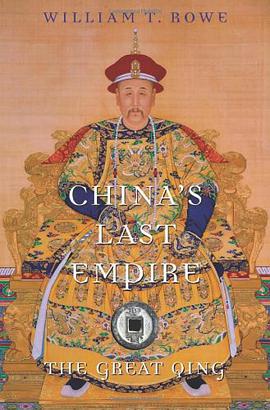
China's Last Empire
Douban
William T. Rowe publishing house: Belknap Press 2009 - 10
In a brisk revisionist history, William Rowe challenges the standard narrative of Qing China as a decadent, inward-looking state that failed to keep pace with the modern West. The Great Qing was the second major Chinese empire ruled by foreigners. Three strong Manchu emperors worked diligently to secure an alliance with the conquered Ming gentry, though many of their social edicts—especially the requirement that ethnic Han men wear queues—were fiercely resisted. As advocates of a “universal” empire, Qing rulers also achieved an enormous expansion of the Chinese realm over the course of three centuries, including the conquest and incorporation of Turkic and Tibetan peoples in the west, vast migration into the southwest, and the colonization of Taiwan. Despite this geographic range and the accompanying social and economic complexity, the Qing ideal of “small government” worked well when outside threats were minimal. But the nineteenth-century Opium Wars forced China to become a player in a predatory international contest involving Western powers, while the devastating uprisings of the Taiping and Boxer rebellions signaled an urgent need for internal reform. Comprehensive state-mandated changes during the early twentieth century were not enough to hold back the nationalist tide of 1911, but they provided a new foundation for the Republican and Communist states that would follow. This original, thought-provoking history of China’s last empire is a must-read for understanding the challenges facing China today.