Said
格格不入
Out of Place: A Memoir Google Books Douban Eggplant.place
★ 8.9 9 ratings
[美国] 爱德华·W·萨义德 translator: 彭淮栋 publishing house: 生活·读书·新知三联书店 2004
作为一个离乡亡国多年之人,面对随时可能的死亡,萨义德恳切回顾自己的人生,寻根溯源,追忆他要求严格、给他“维多利亚式”教育的父亲,和令他终生仰慕、给他鼓励但又暖昧矛盾的母亲,以及成长的环境和所受的教育。他以今日之我探索、书写昔日之我,与内在自我重建关系,与已逝的父母修好,并试图以个人的方式为民族争回历史:他把自己分作两半的阿拉伯经历和美国经历统合为一,以不协和的身份为被压迫的、沉默的巴勒斯坦代言呐喊。 本书也是一个关于背井去乡和流离飘泊的故事。但萨义德发现,由此导致的身份的割裂、多重与流动实乃幸事一桩。他曾言:在哪里都不要有太多“家”的感觉。“格格不入”最终成了他的主动选择。
To read Feb. 19, 2021
Said
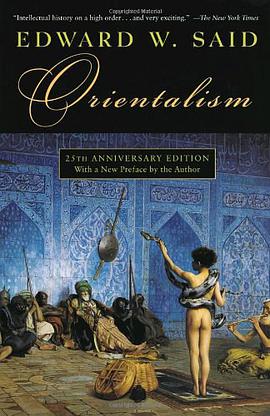
Orientalism
Douban
★ 9.3 6 ratings
Edward W. Said publishing house: Vintage 1979 - 10
Said is best known for describing and critiquing "Orientalism"; what he perceived as a constellation of false assumptions underlying Western attitudes toward the East. In Orientalism (1978), Said decried the "subtle and persistent Eurocentric prejudice against Arabo-Islamic peoples and their culture". [1] He argued that a long tradition of false and romanticized images of Asia and the Middle East in Western culture had served as an implicit justification for Europe's and America's colonial and imperial ambitions. Critiquing Said, Christopher Hitchens, who writes for Vanity Fair, wrote that he denied any possibility "that direct Western engagement in the region is legitimate" and that Said's analysis cast "every instance of European curiosity about the East [as] part of a grand design to exploit and remake what Westerners saw as a passive, rich, but ultimately contemptible 'Oriental' sphere". [2] The British historian Bernard Lewis is another important critic who took issue with Said's work. The two authors exchanged a famous polemic in the pages of the New York Review of Books following the publication of Orientalism. Lewis' article, "The question of orientalism" was followed in the next issue by "Orientalism: an exchange".
To read
Jan. 17, 2013
2009年1月23日入
Said