Sartori
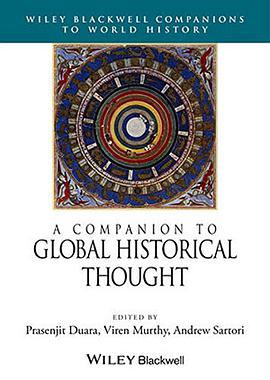
A Companion to Global Historical Thought
Douban
Prasenjit Duara / Viren Murthy … publishing house: Wiley-Blackwell 2014 - 3
A Companion to Global Historical Thought provides an overview of the development of historical thinking from the earliest times to the present, directly addressing issues of historiography in a globalized context. Questions concerning the global dissemination of historical writing and the relationship between historiography and other ways of representing the past have become important not only in the academic study of history, but also in public arenas in many countries. With contributions from leading international scholars, the book considers the problem of "the global" – in the multiplicity of traditions of narrating the past; in the global dissemination of modern historical writing; and of "the global" as a concept animating historical imaginations. It explores the different intellectual approaches that have shaped the discipline of history, and the challenges posed by modernity and globalization, while illustrating the shifts in thinking about time and the emergence of historical thought. Complementing the Companion to Western Historical Thought, this book places non-Western perspectives on historiography at the center of discussion, helping scholars and students alike make sense of the discipline at the start of the twenty-first century.
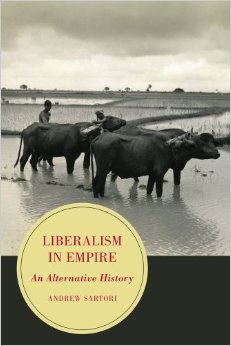
Liberalism in Empire
Douban
Andrew Stephen Sartori publishing house: University of California Press 2014 - 7
While the need for a history of liberalism that goes beyond its conventional European limits is well recognized, the agrarian backwaters of the British Empire might seem an unlikely place to start. Yet specifically liberal preoccupations with property and freedom evolved as central to agrarian policy and politics in colonial Bengal. Liberalism in Empire explores the generative crisis in understanding property’s role in the constitution of a liberal polity, which intersected in Bengal with a new politics of peasant independence based on practices of commodity exchange. Thus the conditions for a new kind of vernacular liberalism were created. Andrew Sartori’s examination shows the workings of a section of liberal policy makers and agrarian leaders who insisted that norms governing agrarian social relations be premised on the property-constituting powers of labor, which opened a new conceptual space for appeals to both political economy and the normative significance of property. It is conventional to see liberalism as traveling through the space of empire with the extension of colonial institutions and intellectual networks. Sartori’s focus on the Lockeanism of agrarian discourses of property, however, allows readers to grasp how liberalism could serve as a normative framework for both a triumphant colonial capitalism and a critique of capitalism from the standpoint of peasant property. From the Inside Flap "Few books have the potential to transform a single debate; fewer show, as Andrew Sartori does here, that transforming it demands a profound reconceptualization of much more. To understand the relationship of liberalism and empire is to reconsider the meaning of liberalism anywhere and everywhere, and to locate liberal theory not solely in Western books but also in the density of global life. Sartori's masterpiece of critical history is an instant classic." —Samuel Moyn, Harvard University "This is a wonderfully challenging and original history. The combination of theoretical ambition and historical rigor will ensure that this text will be a catalyst for academic debate for years to come." —Robert Travers, author of Ideology and Empire in Eighteenth Century India: The British in Bengal, 1757-93
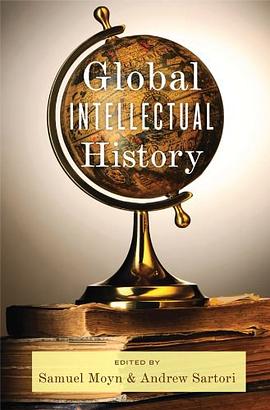
Global Intellectual History
Douban
Samuel Moyn / Andrew Sartori publishing house: Columbia University Press 2013 - 6
Where do ideas fit into historical accounts that take an expansive, global view of human movements and events? Teaching scholars of intellectual history to incorporate transnational perspectives into their work, while also recommending how to confront the challenges and controversies that may arise, this original resource explains the concepts, concerns, practice, and promise of "global intellectual history," featuring essays by leading scholars on various approaches that are taking shape across the discipline. The contributors to Global Intellectual History explore the different ways in which one can think about the production, dissemination, and circulation of "global" ideas and ask whether global intellectual history can indeed produce legitimate narratives. They discuss how intellectuals and ideas fit within current conceptions of global frames and processes of globalization and proto-globalization, and they distinguish between ideas of the global and those of the transnational, identifying what each contributes to intellectual history. A crucial guide, this collection sets conceptual coordinates for readers eager to map an emerging area of study.
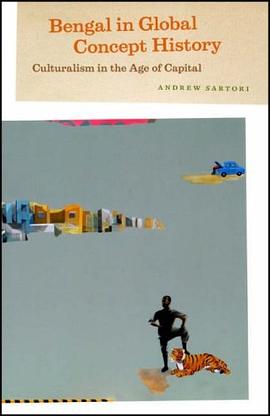
Bengal in Global Concept History
Douban
Andrew Sartori publishing house: University of Chicago Press 2008 - 9
Today people all over the globe invoke the concept of culture to make sense of their world, their social interactions, and themselves. But how did the culture concept become so ubiquitous? In this ambitious study, Andrew Sartori closely examines the history of political and intellectual life in nineteenth- and twentieth-century Bengal to show how the concept can take on a life of its own in different contexts.Sartori weaves the narrative of Bengal's embrace of culturalism into a worldwide history of the concept, from its origins in eighteenth-century Germany, through its adoption in England in the early 1800s, to its appearance in distinct local guises across the non-Western world. The impetus for the concept's dissemination was capitalism, Sartori argues, as its spread across the globe initiated the need to celebrate the local and the communal. Therefore, Sartori concludes, the use of the culture concept in non-Western sites was driven not by slavish imitation of colonizing powers, but by the same problems that repeatedly followed the advance of modern capitalism. This remarkable interdisciplinary study will be of significant interest to historians and anthropologists, as well as scholars of South Asia and colonialism.