Scott_James
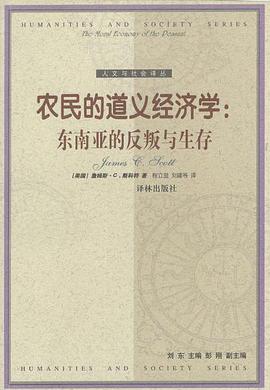
农民的道义经济学
The Moral Economy of the Peasant Douban
[美国] 詹姆斯·C·斯科特 translator: 程立显 / 刘建 等 publishing house: 译林出版社 2001 - 7
《农民的道义经济学:东南亚的反叛与生存》是美国著名学者、耶鲁大学教授詹姆斯·C. 斯科特于1976 年出版的有关农民问题的一部著作,它集中体现了斯科特理论阐释与个案分析相结合的实证主义研究特色。 作者在书中指出,在“安全第一”的生存伦理下,农民追求的不是收入的最大化,而是较低的风险分配与较高的生存保障。随后,作者从东南亚的缅甸和越南农业社会的历史发展轨迹,特别是农民的反叛和起义入手,探究了市场资本主义的兴起对传统农业社会的巨大冲击。作者据此认为,贫困本身并不是农民反叛的原因,农业商品化和官僚国家的发展所催生的租佃和税收制度,侵犯了农民生存的伦理道德和社会公正感,才迫使农民奋起反抗。 这是一部真正从农民的角度出发,更为现实地考察农民生存和反叛问题的力作,它对研究亚洲乃至世界其它国家的农民问题,都有着极为现实的借鉴意义。
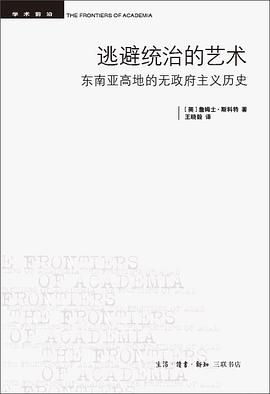
逃避统治的艺术
The Art of Not Being Governed Google Books Douban Goodreads
★ 8.7 33 ratings
詹姆士·斯科特 translator: 王晓毅 publishing house: 生活·读书·新知三联书店 2016 - 1 other title: 逃避统治的艺术:东南亚高地的无政府主义历史
作者通过东南亚山地的历史指出,国家总是试图将山地的居民集中到平地,从事水稻种植,而山民则通过各种方式来逃避国家的控制。传统的观点将山地的居民看做是落后和野蛮的,国家政权延伸到这些地区被看做是推动了这些地方的进步。但是斯科特通过对这个地区历史的研究发现,看起来似乎是落后的山地少数民族可能并不落后,他们居住在山上,选择了不同于谷地的生活和生产方式是因为他们希望借此逃避国家的统治。 作者指出,他讨论的对手是法国学者布罗代尔,因为在布罗代尔那里,文明与国家经常是被混在一起的,而作者则强调,在国家统治范围之外,有着同样的文明。 作者詹姆士•斯科特是美国人类学界研究农民问题的领军人物,其《农民的道义经济》一书出版以后,在学界引起了广泛的反响;其《弱者的武器》和《国家的视角》都对学术研究和政策制定产生了巨大的影响。作者现在是耶鲁大学的政治学和人类学斯特林讲座教授,美国艺术与科学院(American Academy of Arts and Sciences)院士,其主持的“农业研究”是一个跨国的高水平博士后研修项目,至今已经延续了近20年。 【推荐】 这部著作可能是迄今为止詹姆士·斯科特最重要的著作。它具有深入的洞察力、创造性和同情心。很少有学者具有更敏锐的能力可以洞察那些没有历史、居于在完全不同的地点,并采用完全不同的实践和形式的人群的能动性。事实上,这已经使他非常接近于无政府主义的理想,也就是人们不仅可以逃避国家 ,而且可以避免国家形式本身。 —杜赞奇 (Prasenjit Duara) 这是一个出色的研究,富有人文和文化的洞察力,这部著作将改变读者对人类历史,以及对他们自身的思考方式。这是我所阅读过的社会历史和政治理论中最具吸引力和激动人心的著作。 —罗伯特·郝夫纳 (Robert Hefner)
To read March 10, 2016
The Art of Not Being Governed出中文版了!不知道翻译怎么样呀
Scott_James
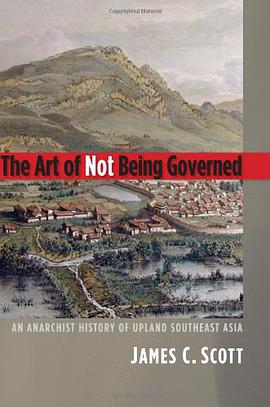
The Art of Not Being Governed
Douban Goodreads Skybridge
James C. Scott publishing house: Yale University Press 2009 - 9 other title: The Art of Not Being Governed: An Anarchist History of Upland Southeast Asia
For two thousand years the disparate groups that now reside in Zomia (a mountainous region the size of Europe that consists of portions of seven Asian countries) have fled the projects of the organized state societies that surround them?slavery, conscription, taxes, corvée labor, epidemics, and warfare. This book, essentially an ?anarchist history,? is the first-ever examination of the huge literature on state-making whose author evaluates why people would deliberately and reactively remain stateless. Among the strategies employed by the people of Zomia to remain stateless are physical dispersion in rugged terrain; agricultural practices that enhance mobility; pliable ethnic identities; devotion to prophetic, millenarian leaders; and maintenance of a largely oral culture that allows them to reinvent their histories and genealogies as they move between and around states. In accessible language, James Scott, recognized worldwide as an eminent authority in Southeast Asian, peasant, and agrarian studies, tells the story of the peoples of Zomia and their unlikely odyssey in search of self-determination. He redefines our views on Asian politics, history, demographics, and even our fundamental ideas about what constitutes civilization, and challenges us with a radically different approach to history that presents events from the perspective of stateless peoples and redefines state-making as a form of ?internal colonialism.? This new perspective requires a radical reevaluation of the civilizational narratives of the lowland states. Scott?s work on Zomia represents a new way to think of area studies that will be applicable to other runaway, fugitive, and marooned communities, be they Gypsies, Cossacks, tribes fleeing slave raiders, Marsh Arabs, or San-Bushmen.
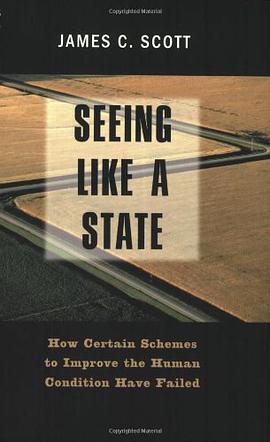
Seeing Like a State
Douban Goodreads Skybridge
James C. Scott publishing house: Yale University Press 1999 - 2 other title: Seeing Like a State: How Certain Schemes to Improve the Human Condition Have Failed
Compulsory ujamaa villages in Tanzania, collectivization in Russia, Le Corbusier's urban planning theory realized in Brasilia, the Great Leap Forward in China, agricultural "modernization" in the Tropics -- the twentieth century has been racked by grand utopian schemes that have inadvertently brought death and disruption to millions. Why do well-intentioned plans for improving the human condition go tragically awry? In this wide-ranging and original book, James C. Scott analyzes failed cases of large-scale authoritarian plans in a variety of fields. Centrally managed social plans misfire, Scott argues, when they impose schematic visions that do violence to complex interdependencies that are not -- and cannot -- be fully understood. Further, the success of designs for social organization depends upon the recognition that local, practical knowledge is as important as formal, epistemic knowledge. The author builds a persuasive case against "development theory" and imperialistic state planning that disregards the values, desires, and objections of its subjects. He identifies and discusses four conditions common to all planning disasters: administrative ordering of nature and society by the state; a "high-modernist ideology" that places confidence in the ability of science to improve every aspect of human life; a willingness to use authoritarian state power to effect large-scale interventions; and a prostrate civil society that cannot effectively resist such plans. "A broad-ranging, theoretically important, and empirically grounded treatment of the modern state and its propensity to simplify and make legible a society which by nature is complex and opaque. For anyone interested inlearning about this fundamental tension of modernity and about the destruction wrought in the twentieth century as a consequence of the dominant development ideology of the simplifying state, this is a must-read". -- Daniel Jonah Goldhagen, author of Hitler's Willing Executioners
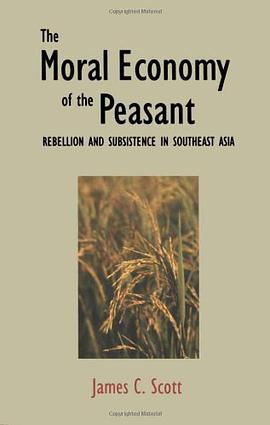
The Moral Economy of the Peasant
Douban
James C. Scott publishing house: Yale University Press 1976
This original and compelling book demonstrates that the fear of food shortages explains many otherwise puzzling technical, social, and moral arrangements in peasant society. Using lower Burma and Vietnam as examples, Scott shows how the transformations of the colonial era systematically violated the peasants' "Moral Economy" and created a situation of potential rebellion.