Slezkine
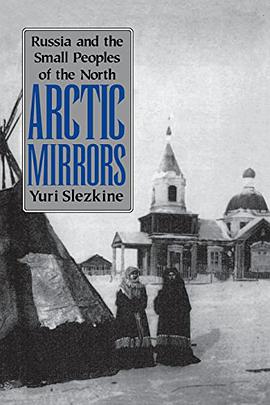
Arctic Mirrors
Douban
Yuri Slezkine publishing house: Cornell University Press 1996 - 10
For over five hundred years the Russians wondered what kind of people their Arctic and sub-Arctic subjects were. "They have mouths between their shoulders and eyes in their chests," reported a fifteenth-century tale. "They rove around, live of their own free will, and beat the Russian people," complained a seventeenth-century Cossack. "Their actions are exceedingly rude. They do not take off their hats and do not bow to each other," huffed an eighteenth-century scholar. They are "children of nature" and "guardians of ecological balance," rhapsodized early nineteenth-century and late twentieth-century romantics. Even the Bolsheviks, who categorized the circumpolar foragers as "authentic proletarians," were repeatedly puzzled by the "peoples from the late Neolithic period who, by virtue of their extreme backwardness, cannot keep up either economically or culturally with the furious speed of the emerging socialist society." Whether described as brutes, aliens, or endangered indigenous populations, the so-called small peoples of the north have consistently remained a point of contrast for speculations on Russian identity and a convenient testing ground for policies and images that grew out of these speculations. In Arctic Mirrors, a vividly rendered history of circumpolar peoples in the Russian empire and the Russian mind, Yuri Slezkine offers the first in-depth interpretation of this relationship. No other book in any language links the history of a colonized non-Russian people to the full sweep of Russian intellectual and cultural history. Enhancing his account with vintage prints and photographs, Slezkine reenacts the procession of Russian fur traders, missionaries, tsarist bureaucrats, radical intellectuals, professional ethnographers, and commissars who struggled to reform and conceptualize this most "alien" of their subject populations. Slezkine reconstructs from a vast range of sources the successive official policies and prevailing attitudes toward the northern peoples, interweaving the resonant narratives of Russian and indigenous contemporaries with the extravagant images of popular Russian fiction. As he examines the many ironies and ambivalences involved in successive Russian attempts to overcome northern—and hence their own—otherness, Slezkine explores the wider issues of ethnic identity, cultural change, nationalist rhetoric, and not-so European colonialism.
The House of Government
Douban
Yuri Slezkine publishing house: Princeton University Press 2017 - 8
On the 100th anniversary of the Russian Revolution, the epic story of an enormous apartment building where Communist true believers lived before their destruction The House of Government is unlike any other book about the Russian Revolution and the Soviet experiment. Written in the tradition of Tolstoy's War and Peace, Grossman's Life and Fate, and Solzhenitsyn's The Gulag Archipelago, Yuri Slezkine's gripping narrative tells the true story of the residents of an enormous Moscow apartment building where top Communist officials and their families lived before they were destroyed in Stalin's purges. A vivid account of the personal and public lives of Bolshevik true believers, the book begins with their conversion to Communism and ends with their children's loss of faith and the fall of the Soviet Union. Completed in 1931, the House of Government, later known as the House on the Embankment, was located across the Moscow River from the Kremlin. The largest residential building in Europe, it combined 550 furnished apartments with public spaces that included everything from a movie theater and a library to a tennis court and a shooting range. Slezkine tells the chilling story of how the building's residents lived in their apartments and ruled the Soviet state until some eight hundred of them were evicted from the House and led, one by one, to prison or their deaths. Drawing on letters, diaries, and interviews, and featuring hundreds of rare photographs, The House of Government weaves together biography, literary criticism, architectural history, and fascinating new theories of revolutions, millennial prophecies, and reigns of terror. The result is an unforgettable human saga of a building that, like the Soviet Union itself, became a haunted house, forever disturbed by the ghosts of the disappeared.
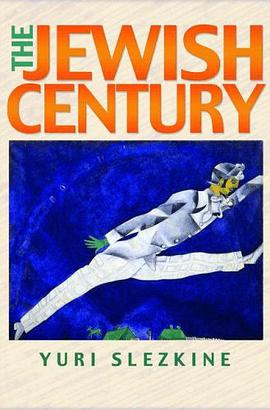
The Jewish Century
Douban
Yuri Slezkine publishing house: Princeton University Press 2006 - 8
This masterwork of interpretative history begins with a bold declaration: The Modern Age is the Jewish Age--and we are all, to varying degrees, Jews. The assertion is, of course, metaphorical. But it underscores Yuri Slezkine's provocative thesis. Not only have Jews adapted better than many other groups to living in the modern world, they have become the premiere symbol and standard of modern life everywhere. Slezkine argues that the Jews were, in effect, among the world's first free agents. They traditionally belonged to a social and anthropological category known as "service nomads," an outsider group specializing in the delivery of goods and services. Their role, Slezkine argues, was part of a broader division of human labor between what he calls Mercurians-entrepreneurial minorities--and Apollonians--food-producing majorities. Since the dawning of the Modern Age, Mercurians have taken center stage. In fact, Slezkine argues, modernity is all about Apollonians becoming Mercurians--urban, mobile, literate, articulate, intellectually intricate, physically fastidious, and occupationally flexible. Since no group has been more adept at Mercurianism than the Jews, he contends, these exemplary ancients are now model moderns. The book concentrates on the drama of the Russian Jews, including migrs and their offspring in America, Palestine, and the Soviet Union. But Slezkine has as much to say about the many faces of modernity--nationalism, socialism, capitalism, and liberalism--as he does about Jewry. Marxism and Freudianism, for example, sprang largely from the Jewish predicament, Slezkine notes, and both Soviet Bolshevism and American liberalism were affected in fundamental ways by the Jewish exodus from the Pale of Settlement. Rich in its insight, sweeping in its chronology, and fearless in its analysis, this sure-to-be-controversial work is an important contribution not only to Jewish and Russian history but to the history of Europe and America as well.