Srinivas
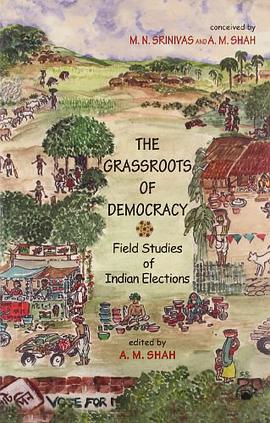
Grassroots of Democracy
Douban
A.M. Shah (conceived by M.N. Srinivas and A.M. Shah) (Ed.) publishing house: Orient Blackswan 2010 - 11
Originally conceived by India’s most influential modern anthropologist M.N.Srinivas and his eminent colleague A.M.Shah, this book contains nineteen essays based on field studies of two national elections in India’s rural, tribal and urban communities, within ten Indian states. It includes an Introduction by A.M. Shah and an Epilogue by the psephologist and political scientist Yogendra Yadav. The studies which comprise the bulk of this book were conducted by sixteen sociologists at the Delhi School of Economics under the direction of M.N. Srinivas and A.M.Shah. Demonstrating the importance of fieldwork for studying elections (as compared to the questionnaire and interview method), this book provides an entirely novel perspective on the study of elections-very different from the one usually projected through the interpretation of statistics. This sociologist’s micro-view contrasts with the more standard macro-view provided by political scientists, journalists and psephologists. Among the many reasons for the importance of this book as a departure from standard electoral studies is the thoroughgoing manner in which it questions the general assumption of the rational individual as the sole arbiter of his/her voting behaviour. It analyses in detail the role of an array of social factors in electoral processes and also delineates the continuity between local, regional and national politics. In so doing, it reveals how Indian democracy actually operates at the grassroots. This important new work will interest sociologists, anthropologists, political scientists and anyone interested in India’s polity and society. With its diverse narratives and jargon-free descriptions of actors in the political arena, this is also a book entirely accessible to non-specialists interested in India’s complex political and social processes during the drama-filled times when India goes to the polls.
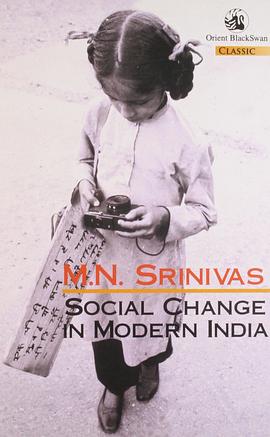
Social Change in Modern India
Douban
M.N. Srinivas publishing house: Orient Longman India 2000 - 1
This volume is a compilation of a series of lectures delivered by the eminent social anthropologist M. N. Srinivas. These lectures have been widely acclaimed and have since been recommended or prescribed as a text for students of sociology, anthropology and Indian studies. The book remains the ‘classic of social anthropology’ as it was hailed, when first published.
To read Nov. 16, 2016
2016.11.15 Dasgupta's
Srinivas
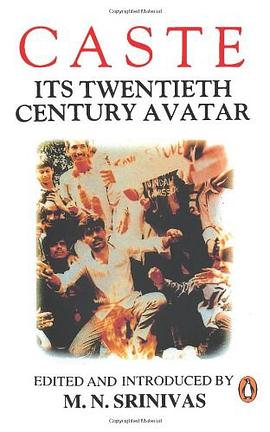
Caste
Douban
M. N. Srinivas publishing house: Penguin Books Australia 2003 - 3
Caste: Its Twentieth Century Avatar is a collection of essays by experts on the complex topic of the caste system prevalent in India. The book is an attempt to describe the effects of India’s caste system on the various political, social and economic aspects of the country. Caste is a kind of social division of people based on their lifestyle, occupation, hierarchical status, notion of purity and many other factors. The caste system in India is one of the primary drivers that divide the society into separate social groups. It has been a subject of numerous studies and also serves as a reference to the study of caste-like divisions outside of India. Caste: Its Twentieth Century Avatar edited and introduced by the author describes to the reader the influence of the caste system in the current scenario, in which India is on the brink of modernization. The book discusses how the ancient caste system of India, practiced even today, comes in the way of the country's progress. The book goes on to give an account of the role of women in keeping the caste system alive in the present day, the correlation between caste and the Indian economy and its effect on Hinduism. It also gives the reader an understanding of the backward classes’ movements and struggle for power in Tamil Nadu, Bihar and Uttar Pradesh. It also touches upon the topic of efficiency versus job reservation, caste systems existing among Indian Christians and Muslims, and critiques relating to the Mandal Commission Report and its subsequent judgement.