Subrahmanyam
葡萄牙帝国在亚洲1500-1700:政治和经济史
The Portuguese Empire in Asia, 1500-1700: A Political and Economic History Douban
桑贾伊·苏拉马尼亚姆 translator: 何吉贤 publishing house: 纪念葡萄牙发现事业澳门地区委员会 1997
Read Dec. 3, 2019
180502 | Portugal as a participant in the Asian "early modern" and the two mutually shape each other | Global economy, logic of states, commercial networks, 1500-1700
Subrahmanyam
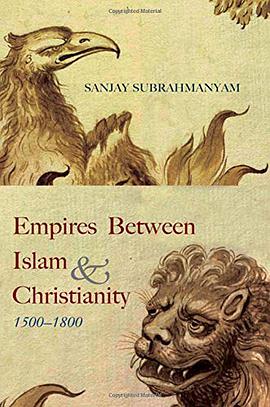
Empires between Islam and Christianity, 1500-1800
Douban
Sanjay Subrahmanyam publishing house: State University of New York Press 2019 - 1
A wide-ranging consideration of early modern Muslim and Christian empires, covering the Iberian, Ottoman, and Mughal worlds, including questions of political economy, images and representations, and historiography. Empires Between Islam and Christianity, 1500–1800 uses the innovative approach of “connected histories” to address a series of questions regarding the early modern world in the Indian Ocean, the Mediterranean, and the Atlantic. The period between 1500 and 1800 was one of intense inter-imperial competition involving the Iberians, the Ottomans, the Mughals, the British, and other actors. Rather than understand these imperial entities separately, Sanjay Subrahmanyam reads their archives and texts together to show unexpected connections and refractions. He further proposes, in this set of closely argued studies, that these empires often borrowed from each other, or built their projects with knowledge of other competing visions of empire. The emphasis on connections is also crucial for an understanding of how a variety of genres of imperial and global history writing developed in the early modern world. The book moves creatively between political, economic, intellectual, and cultural themes to suggest a fresh geographical conception for the epoch.
葡萄牙帝国在亚洲
Douban
[美] 桑贾伊·苏拉马尼亚姆 translator: 巫怀宇 publishing house: 广西师范大学出版社 2018 - 11
▼内容简介 本书初版于1992年,于2012年修订再版。如作者所述,本书并非一部考据葡萄牙亚洲殖民地的社会、政治和经济史实细节的作品,而是旨在提供一种对这一历史时期进行综合分析的图式。从1992年到现在,这种图式提出已有二十多年,但依然经受了考验,并未被后来的研究成果超越。 全书共分十章,既历时性地讲述了葡萄牙到来之前亚洲的地缘政治和经济变化以及葡萄牙自身的国家和社会结构、葡萄牙创立亚洲帝国的模式、逻辑及其兴衰历程,也具体地分析了葡萄牙亚洲社会的不同社群,最后的结论部分则对传统的观点提出挑战。 从方法论上,作者突破了单纯的亚洲史和欧洲史的视角,而是要求将葡萄牙的亚洲事业放在全球史的视域中考量,使得本书具有全面性;同时作者也反对模式化的解释,使得本书具有穿透力。因此我们了解到:早期近代亚洲绝非铁板一块,而是有着精英的流动,自身已然发生深刻的变化;葡萄牙在亚洲的地位被荷兰、英国取代,也绝非简单的“中世纪”被“近代”战胜的历史神话。 ▼名人推荐 桑贾伊•苏拉马尼亚姆对16世纪和17世纪葡萄牙亚洲帝国的经典研究已经受了时间的检验。该书坚实地立基于对葡语史料的娴熟掌握和对亚洲语境的深刻理解,以丰富的洞见和自如的清晰,描绘和解释了一段长期被无知、偏见和误解遮蔽的历史。 ——澳大利亚拉特罗布大学 A. R. 迪斯尼 作为我们这个时代最杰出的历史学家之一,桑贾伊•苏拉马尼亚姆给我们提供了对早期近代葡萄牙亚洲帝国的一个练达的综述,一项对葡萄牙和亚洲在16世纪和17世纪复杂互动的启迪性研究。该书对所涉领域进行了完全的重新定义,这也是为何它写于20年之前,却能克服自然“老化效应”的原因。 ——欧盟大学研究院 若热•弗洛雷斯
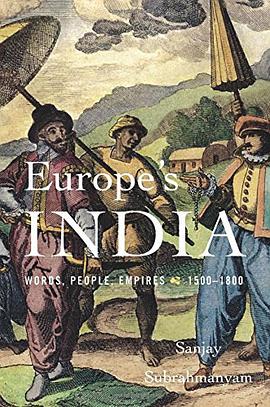
Europe’s India
Douban
Sanjay Subrahmanyam publishing house: Harvard University Press 2017 - 3
When Portuguese explorers first rounded the Cape of Good Hope and arrived in the subcontinent in the late fifteenth century, Europeans had little direct knowledge of India. The maritime passage opened new opportunities for exchange of goods as well as ideas. Traders were joined by ambassadors, missionaries, soldiers, and scholars from Portugal, England, Holland, France, Italy, and Germany, all hoping to learn about India for reasons as varied as their particular nationalities and professions. In the following centuries they produced a body of knowledge about India that significantly shaped European thought. Europe’s India tracks Europeans’ changing ideas of India over the entire early modern period. Sanjay Subrahmanyam brings his expertise and erudition to bear in exploring the connection between European representations of India and the fascination with collecting Indian texts and objects that took root in the sixteenth century. European notions of India’s history, geography, politics, and religion were strongly shaped by the manuscripts, paintings, and artifacts—both precious and prosaic—that found their way into Western hands. Subrahmanyam rejects the opposition between “true” knowledge of India and the self-serving fantasies of European Orientalists. Instead, he shows how knowledge must always be understood in relation to the concrete circumstances of its production. Europe’s India is as much about how the East came to be understood by the West as it is about how India shaped Europe’s ideas concerning art, language, religion, and commerce.
To read Sept. 28, 2016
Sanjay Subrahmanyam又出新书了!
Subrahmanyam
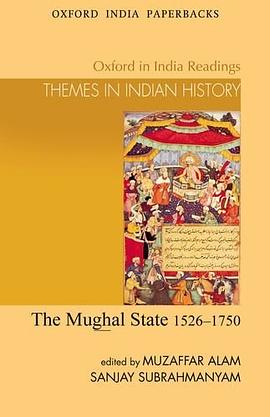
The Mughal State, 1526-1750
Douban
Muzaffar Alam / Sanjay Subrahmanyam publishing house: OUP India 2000 - 2
The Mughal state has, since the time of its existence, exercised a compelling effect on observers. A rich historiography in Indian and European languages has long existed, and in the present century debates have raged concerning its character, and the implications for the longer-term trajectory of the subcontinent. This book brings together some of the key interventions in that debate, while its detailed introduction surveys the main positions, and outlines possibilities for future research. It is the outcome of the collaboration of two scholars, one a leading specialist on Mughal studies, the other a social and economic historian of the early modern Indian Ocean world and southern India.
Read
Jan. 26, 2014
Very good historiographical overview and indispensable reference for early modern South Asia | 200105二读
Alam Subrahmanyam
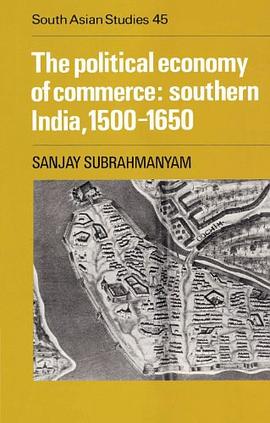
The Political Economy of Commerce
Douban
Sanjay Subrahmanyam publishing house: 劍橋大學出版社 2002 - 7
In The Political Economy of Commerce: Southern India 1500-1650 Sanjay Subrahmanyam explores the relationship between long-distance trade and the economic and political structure of southern India in the sixteenth and early seventeenth centuries. He questions the more traditional views that external demand was the force behind pre-colonial Indian economic growth or that external trade was insignificant in quantitative and qualitative terms compared with the vastness of the internal economy. Instead, Dr Subrahmanyam authoritatively demonstrates the interaction between south Indian developments and larger international processes within certain economic institutions - most notably the network of marketing villages, great coastal emporia and operations of revenue-farmers and 'portfolio' capitalists. This book is based on extensive and previously unused Portuguese and Dutch archival sources. Its secondary theme is to explore the relationship between the documentation used and the context within which it was generated, thus illuminating how Europeans and Asians reacted to one another.
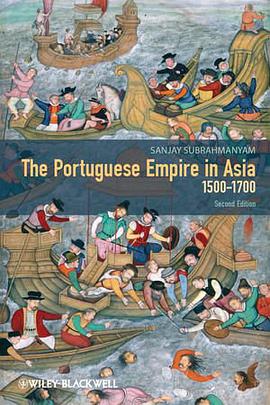
The Portuguese Empire in Asia, 1500-1700
Douban
Sanjay Subrahmanyam publishing house: Wiley-Blackwell 2012 - 4
Featuring updates and revisions that reflect recent historiography, this new edition of The Portuguese Empire in Asia 1500-1700 presents a comprehensive overview of Portuguese imperial history that considers Asian and European perspectives. Features an argument-driven history with a clear chronological structure Considers the latest developments in English, French, and Portuguese historiography Offers a balanced view in a divisive area of historical study Includes updated Glossary and Guide to Further Reading
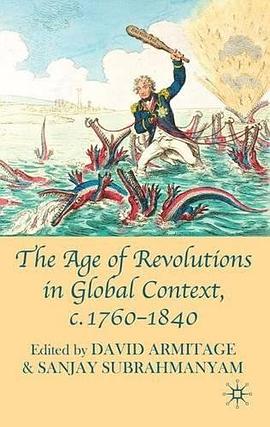
The Age of Revolutions in Global Context, c. 1760-1840
Douban
David Armitage, Sanjay Subrahmanyam publishing house: Palgrave Macmillan 2009
Distinguished historians provide uniquely broad coverage of the dynamics of global and regional change in the late eighteenth and nineteenth centuries. Sheds new light on the American, French and Haitian revolutions, alongside ground-breaking treatments of Africa's place in world history and Asia's age of revolutions.
Land, Politics and Trade in South Asia
Douban
Subrahmanyam, Sanjay 2004 - 10
Originally planned as a festschrift for Dharma Kumar, this collection of outstanding essays has recently appeared as a special issue of IESHR. The essays represent a diversity of views and methods, all of which are brought to bear on issues concerning various aspects of the economy, society and culture of colonial India. Particular topics focused on include the agrarian history of South India, common lands in western India, the nexus between trade and production, the textile trade in twentieth-century South India, the nature of collaboration and conflict between the Dutch East India Company and private Portuguese traders in the Indian Ocean, adventurers who accompanied and participated in the colonial transition in South India and the rise of the "coffee house" in colonial Tamil Nadu. In the Introduction Sanjay Subrahmanyam attempts to carry out the difficult exercise of "making sense of indian historiography". For the book version, the editor has expanded on this Introduction, and he has also added two more essays: Ravi Ahuja's 'State Formation and "Famine Policy" in Early Colonial India', and Thomas Trautmann's 'Dr Johnson and the Pandits: Imaging the Perfect Dictionary in Colonial Madras'.
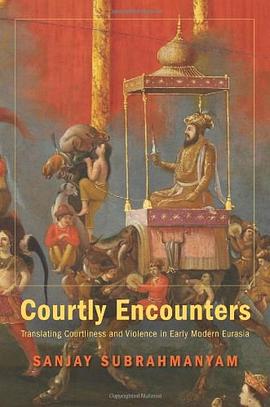
Courtly Encounters
Douban
Sanjay Subrahmanyam publishing house: Harvard University Press 2012 - 10
Cross-cultural encounters in Europe and Asia in the sixteenth and seventeenth centuries brought the potential for bafflement, hostility, and admiration. The court was the crucial site where expanding Eurasian states and empires met and were forced to make sense of one another. By looking at these interactions, Courtly Encounters provides a fresh cross-cultural perspective on the worlds of early modern Islam, Counter-Reformation Catholicism, Protestantism, and a newly emergent Hindu sphere. Both individual agents and objects such as texts and paintings helped mediate encounters between courts, which possessed rules and conventions that required decipherment and translation, whether in words or in pictures. Sanjay Subrahmanyam gives special attention to the depiction of South Asian empires in European visual representations, finding a complex history of cultural exchange: the Mughal paintings that influenced Rembrandt and other seventeenth-century Dutch painters had themselves been earlier influenced by Dutch naturalism. Courtly Encounters provides a rich array of images from Europe, the Islamic world, India, and Southeast Asia as aids for understanding the reciprocal nature of cross-cultural exchanges. It also looks closely at how insults and strategic use of martyrdom figured in courtly encounters. As he sifts through the historical record, Subrahmanyam finds little evidence for the cultural incommensurability many ethnohistorians have insisted on. Most often, he discovers negotiated ways of understanding one another that led to mutual improvisation, borrowing, and eventually change.
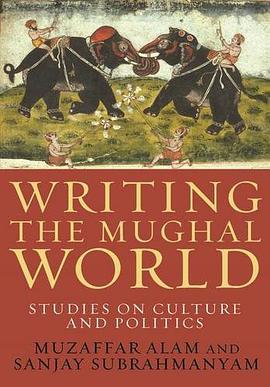
Writing the Mughal World
Douban
Muzaffar Alam / Sanjay Subrahmanyam publishing house: Columbia University Press 2011 - 8
Between the mid-sixteenth and early nineteenth century, the Mughal Empire was an Indo-Islamic dynasty that ruled as far as Bengal in the east and Kabul in the west, as high as Kashmir in the north and the Kaveri basin in the south. The Mughals constructed a sophisticated, complex system of government that facilitated an era of profound artistic and architectural achievement. They promoted the place of Persian culture in Indian society and set the groundwork for South Asia's future development. In this volume, two leading historians of early modern South Asia present nine major joint essays on the Mughal Empire, framed by an essential introductory reflection. Making creative use of materials written in Persian, Indian vernacular languages, and a variety of European languages, their chapters accomplish the most significant innovations in Mughal historiography in decades, intertwining political, cultural, and commercial themes while exploring diplomacy, state-formation, history-writing, religious debate, and political thought. Muzaffar Alam and Sanjay Subrahmanyam center on confrontations between different source materials that they then reconcile, enabling readers to participate in both the debate and resolution of competing claims. Their introduction discusses the comparative and historiographical approach of their work and its place within the literature on Mughal rule. Interdisciplinary and cutting-edge, this volume richly expands research on the Mughal state, early modern South Asia, and the comparative history of the Mughal, Ottoman, Safavid, and other early modern empires.
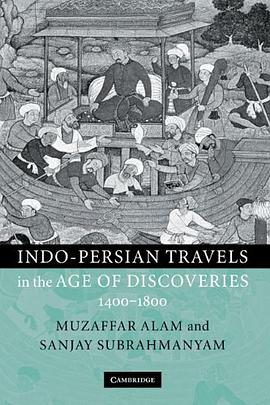
Indo-Persian Travels In The Age Of Discoveries, 1400-1800
Douban
Muzaffar Alam / Sanjay Subrahmanyam publishing house: 劍橋大學出版社 2007 - 2
Originally published in 2007, this fascinating work is based on detailed and sensitive readings of travel accounts in Persian, dealing with India, Iran and Central Asia between around 1400 and 1800. The first comprehensive treatment of this neglected genre of literature (safar nama), it links the Mughals, Safavids and Central Asia in a crucial period of transformation and cultural contact. The authors' close reading of these travel accounts help us enter the mental and moral worlds of the Muslim and non-Muslim literati who produced these valuable narratives. These accounts are presented in a comparative framework, which sets them side by side with other Asian accounts, as well as early modern European travel narratives, and opens up a rich and unsuspected vista of cultural and material history. This book can be read for a better understanding of the nature of early modern encounters, but also for the sheer pleasure of entering a new world.