Tagliacozzo
In Asian Waters
Douban
Eric Tagliacozzo publishing house: Princeton University Press 2022 - 5
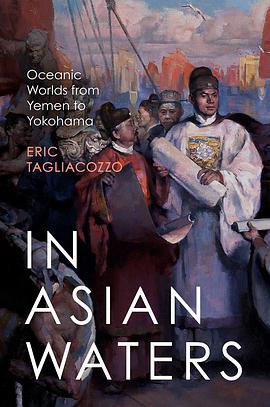
In the centuries leading up to our own, the volume of traffic across Asian sea routes—an area stretching from East Africa and the Middle East to Japan—exploded, eventually making them the busiest in the world. The result was a massive circulation of people, commodities, religion, culture, technology, and ideas. In this book, Eric Tagliacozzo chronicles how the seas and oceans of Asia have shaped the history of the largest continent for the past half millennium, leaving an indelible mark on the modern world in the process. Paying special attention to migration, trade, the environment, and cities, In Asian Waters examines the long history of contact between China and East Africa; the spread of Hinduism and Buddhism across the Bay of Bengal; and the intertwined histories of Islam and Christianity in the Philippines. The book illustrates how India became central to the spice trade; how the Indian Ocean became a “British lake” between the seventeenth and nineteenth centuries; and how lighthouses and sea mapping played important roles in imperialism. The volume ends by asking what may happen if China comes to rule the waves of Asia, as Britain once did. A novel account showing how Asian history can be seen as a whole when seen from the water, In Asian Waters presents a voyage into a past that is still alive in the present.
Chinese Circulations
Douban
Eric Tagliacozzo / Wen-chin Chang publishing house: Duke University Press Books 2011 - 4
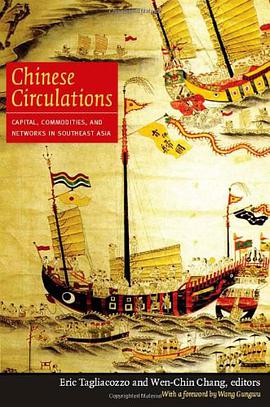
Chinese merchants have traded with Southeast Asia for centuries, sojourning and sometimes settling, during their voyages. These ventures have taken place by land and by sea, over mountains and across deserts, linking China with vast stretches of Southeast Asia in a broad, mercantile embrace. Chinese Circulations provides an unprecedented overview of this trade, its scope, diversity, and complexity. This collection of twenty groundbreaking essays foregrounds the commodities that have linked China and Southeast Asia over the centuries, including fish, jade, metal, textiles, cotton, rice, opium, timber, books, and edible birds’ nests. Human labor, the Bible, and the coins used in regional trade are among the more unexpected commodities considered. In addition to focusing on a certain time period or geographic area, each of the essays explores a particular commodity or class of commodities, following its trajectory from production, through exchange and distribution, to consumption. The first four pieces put Chinese mercantile trade with Southeast Asia in broad historical perspective; the other essays appear in chronologically ordered sections covering the precolonial period to the present. Incorporating research conducted in Chinese, Japanese, Vietnamese, Thai, Burmese, Malay, Indonesian, and several Western languages, Chinese Circulations is a major contribution not only to Sino-Southeast Asian studies but also to the analysis of globalization past and present. Contributors. Leonard Blussé, Wen-Chin Chang, Lucille Chia, Bien Chiang, Nola Cooke, Jean DeBernardi, C. Patterson Giersch, Takeshi Hamashita, Kwee Hui Kian, Li Tana, Lin Man-houng, Masuda Erika, Adam McKeown, Anthony Reid , Sun Laichen, Heather Sutherland, Eric Tagliacozzo, Carl A. Trocki, Wang Gungwu, Kevin Woods, Wu Xiao
Secret Trades, Porous Borders
Douban
Eric Tagliacozzo publishing house: Yale University Press 2009 - 1
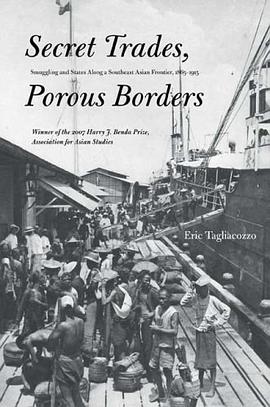
Over the course of the half century from 1865 to 1915, the British and Dutch delineated colonial spheres, in the process creating new frontiers. This book analyzes the development of these frontiers in Insular Southeast Asia, as well as the accompanying smuggling activities of the opium traders, currency runners, and human traffickers who pierced such newly drawn borders with growing success.The book presents a history of the evolution of this 3000-kilometre frontier, and then inquires into the smuggling of contraband: who smuggled and why, what routes were favoured, and how effectively the British and Dutch were able to enforce their economic, moral, and political will. Examining the history of states and smugglers playing off one another within a hidden but powerful economy of forbidden cargoes, the book also offers new insights into the modern political economies of Southeast Asia.
Burmese Lives
Douban
Wen-Chin Chang (Editor) / Eric Tagliacozzo (Editor) publishing house: Oxford University Press 2014 - 3
This volume explores the life stories of ordinary Burmese by drawing on the narratives of individual subjects and using an array of interdisciplinary approaches, covering anthropology, history, literature, ethnomusicology, economics and political science. Burma is one of the most diverse societies in Southeast Asia in terms of its ethnic composition. It has a long history of resistance from the public realm against colonial rule and post-independence regimes. However, its isolation for decades before 1988 deprived scholars of a close look into the many faces of this society. Looking into the life stories of members of several major ethnic communities, who hail from different occupations and are of different ages and genders, this book has a particular significance that would help reveal the multiplicities of Burma's modern history. The authors of this volume write about stories of their long-term informants, close friends, family members, or even themselves to bring out a wide range of issues relating to migration, economy, politics, religion and culture. The constituted stories jointly highlight the protagonists' survival strategies in everyday life that demonstrate their constant courage, pain and frustration in dealing with numerous social injustices and adversities. Through these stories, we see movement of lives as well as that of Burmese society.
Southeast Asia and the Middle East
Douban
Tagliacozzo, Eric publishing house: Stanford University Press 2009 - 5
Ties between Southeast Asia and the Middle East have been extremely important for well over seven hundred years, but historical linkages between the two regions have attracted little attention, and assessments of their significance are curiously lacking. Southeast Asia and the Middle East addresses this omission by exploring political, economic, familial, educational and religious bonds connecting these areas, both historically and in the contemporary world. Islam in Southeast Asia is conventionally understood as a synthesis of Middle Eastern and local ideas. While accepting that such a distinction exists, this volume shows how ongoing interactions have helped determine the character of both regions, and Southeast Asia in particular. The pervasiveness of these influences makes it clear that they will continue to shape political and economic relations, migration patterns, the dissemination of knowledge, and radials of Islamic militancy for a long time to come. Such relationships contribute to regional and global events in many crucial ways, making the present volume timely and important not only for scholars but also for anyone interested in the future of Asia and the Middle East.
Asia Inside Out
Douban
Eric Tagliacozzo / Helen F. Siu … publishing house: Harvard University Press 2015 - 1
The first of three volumes surveying the historical, spatial, and human dimensions of inter-Asian connections, Asia Inside Out: Changing Times brings into focus the diverse networks and dynamic developments that have linked peoples from Japan to Yemen over the past five centuries. Each author examines an unnoticed moment—a single year or decade—that redefined Asia in some important way. Heidi Walcher explores the founding of the Safavid dynasty in the crucial battle of 1501, while Peter C. Perdue investigates New World silver’s role in Sino–Portuguese and Sino–Mongolian relations after 1557. Victor Lieberman synthesizes imperial changes in Russia, Burma, Japan, and North India in the seventeenth century, Charles Wheeler focuses on Zen Buddhism in Vietnam to 1683, and Kerry Ward looks at trade in Pondicherry, India, in 1745. Nancy Um traces coffee exports from Yemen in 1636 and 1726, and Robert Hellyer follows tea exports from Japan to global markets in 1874. Anand Yang analyzes the diary of an Indian soldier who fought in China in 1900, and Eric Tagliacozzo portrays the fragility of Dutch colonialism in 1910. Andrew Willford delineates the erosion of cosmopolitan Bangalore in the mid-twentieth century, and Naomi Hosoda relates the problems faced by Filipino workers in Dubai in the twenty-first. Moving beyond traditional demarcations such as West, East, South, and Southeast Asia, this interdisciplinary study underscores the fluidity and contingency of trans-Asian social, cultural, economic, and political interactions. It also provides an analytically nuanced and empirically rich understanding of the legacies of Asian globalization.
Read June 2, 2016
Within the field of modern South Asian history, Anand Yang's piece seems a bit underwhelming. When are we going to end all this celebratory and pretentious Pan-Asian bhai-bhai thing?
Perdue Tagliacozzo 萧凤霞
Asia Inside Out
Douban
Eric Tagliacozzo / Helen F. Siu … publishing house: Harvard University Press 2015 - 6
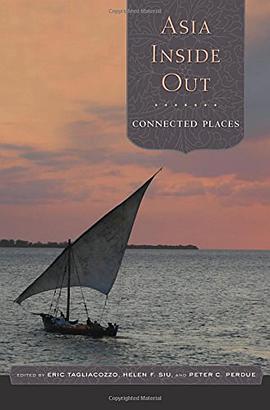
Asia Inside Out reveals the dynamic forces that have historically linked regions of the world’s largest continent, stretching from Japan and Korea to the South China Sea, Indian Ocean, and the Middle East. Connected Places, the second installment in this pioneering three-volume survey, highlights the transregional flows of goods, ideas, and people across natural and political boundaries—sea routes, delta ecologies, and mountain passes, ports and oasis towns, imperial capitals and postmodern cities. It challenges the conventional idea that defined geopolitical regions as land-based, state-centered, and possessing linear histories. Exploring themes of maritime connections, mobile landscapes, and spatial movements, the authors examine significant sites of linkage and disjuncture from the early modern period to the present. Readers discover how eighteenth-century pirates shaped the interregional networks of Vietnam’s Tonkin Gulf, how Kashmiri merchants provided intelligence of remote Himalayan territories to competing empires, and how for centuries a vibrant trade in horses and elephants fueled the Indian Ocean economy. Other topics investigated include cultural formations in the Pearl River delta, global trade in Chittagong’s transformation, gendered homemaking among mobile Samurai families, border zones in Qing China and contemporary Burma, colonial spaces linking India and Mesopotamia, transnational marriages in Oman’s immigrant populations, new cultural spaces in Korean Pop, and the unexpected adoption of the Latin script by ethnically Chinese Muslims in Central Asia. Connected Places shows the constant fluctuations over many centuries in the making of Asian territories and illustrates the confluence of factors in the historical construction of place and space.