Tambiah
Magic, Science and Religion and the Scope of Rationality
Douban
Stanley J. Tambiah publishing house: 劍橋大學出版社 1990 - 3
Professor Tambiah, one of today's leading anthropologists, is known particularly for his penetrating and scholarly studies of Buddhism. In this accessible and illuminating book he deals with the classical opposition between magic, science and religion. He reviews the great debates in classical Judaism, early Greek science, Renaissance philosophy, the Protestant Reformation, and the scientific revolution, and then reconsiders the three major interpretive approaches to magic in anthropology: the intellectualist and evolutionary theories of Tylor and Frazer, Malinowski's functionalism, and Levy Bruhl's philosophical anthropology, which posited a distinction between mystical and logical mentalities. There follows a wide-ranging and suggestive discussion of rationality and relativism. The book concludes with a discussion of thinking in the history and philosophy of science, which suggests interesting perspectives on the classical opposition between science and magic.
World Conqueror and World Renouncer
Douban
S. J. Tambiah publishing house: 劍橋大學出版社 1977 - 11
World Conqueror and World Renouncer is the first comprehensive and authoritative work on the relationship between Buddhism and the polity (political organization) in Thailand. The book conveys the historical background necessary for full comprehension of the contemporary structural relationship between Buddhism, the sangha (monastic order), and the polity, including the historic institution of kingship. Professor Tambiah delineates the overall relationship, as postulated in early Buddhism, between the monk's otherworldly quest on one side and the this-worldly ordinating role of the monarchy on the other. He also examines the complementary and dialectical tensions that occur in this classical relationship, the king's duty to both protect and purify the sangha being a notable example.
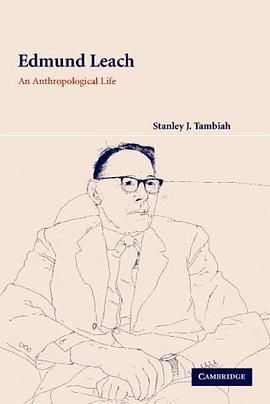
Edmund Leach
Douban
Stanley J. Tambiah publishing house: 劍橋大學出版社 2002 - 2
Stanley J. Tambiah discusses the life of Edmund Leach (1910-1989), one of Britain's foremost social and cultural anthropologists, and a man of extraordinary versatility, originality and intellectual breadth. His substantial contributions to anthropology deal with topics including kinship and social organization, hill tribes and valley peoples, tenure and peasant economy, aesthetics, British structural-functional methodology, the structuralism of Levi-Strauss, biblical narratives and the myths of Classical Greece. Leach was not wedded to any settled orthodoxy: what makes his work exciting is his experimentation with new ideas, and his expansions of the horizons of the discipline. His distinctive view of the comparative method allows him to transcend the stale dichotomy between 'them primitives' and 'us moderns', finding instead a dialectic between 'us' and 'them' which opens up the possibility for illuminating common human propensities and capacities.
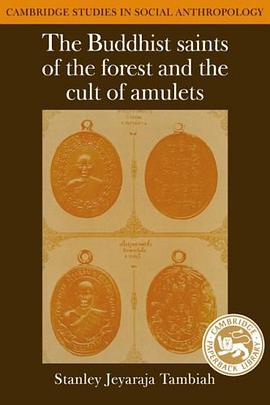
The Buddhist Saints of the Forest and the Cult of Amulets
Douban
Stanley Jeyaraja Tambiah publishing house: 劍橋大學出版社 1984 - 6
The central actors in this book are some reclusive forest-dwelling ascetic meditation masters who have been acclaimed as 'saints' in contemporary Thailand. These saints originally pursued their salvation quest among the isolated villages of the country's periphery, but once recognized as holy men endowed with charisma, they became the radiating centres of a country-wide cult of amulets. The amulets, blessed by the saints, are avidly sought by royalty, ruling generals, intelligentsia and common folk alike for their alleged powers to influence the success of worldly transactions, whether political, economic, martial or romantic.